![4-Nitrophenyl N-{[(2-methyl-2-propanyl)oxy]carbonyl}-L-isoleucinate structure](https://static.chemtradehub.com/structs/169/16948-38-2-c88f.webp "4-Nitrophenyl N-{[(2-methyl-2-propanyl)oxy]carbonyl}-L-isoleucinate structure")
4-Nitrophenyl N-{[(2-methyl-2-propanyl)oxy]carbonyl}-L-isoleucinate
CAS Number:
16948-38-2
Molecular Formula:
C17H24N2O6
Holger A. Erxleben, Michael K. Manion, David M. Hockenbery, Louis Scampavia, Jaromir Ruzicka
Monitoring extracellular acidification rates (ECARs) is important for the study of cellular activities, since it allows for the evaluation of factors that alter metabolic function, such as stimulants, inhibitors, toxins as well as receptor and non-receptor mediated events. While the light addressable potentiometric sensor (Cytosensor® Microphysiometer) has been the principal tool for ECARs measurement in the past, this work introduces a novel method that exploits an immobilized pH indicator on the surface of microcarrier beads (Sephadex®) and is probed with a fiber optic coupled spectrophotometer. Likewise, live cells under investigation were also immobilized on microcarrier beads (Cytopore®). These beads are metered, transported and monitored within a microfluidic system, termed as the Lab-on-Valve (LOV). Use of carrier beads in conjunction with Bead Injection Spectrophotometry and a Lab-on-Valve module (BIS-LOV), makes ECAR measurements reliable and automated. The feasibility of the BIS-LOV approach is demonstrated measuring ECARs of the mouse hepatocyte cell line, TABX.2S, grown on Cytopore® beads packed within the central channel of the LOV system. These immobilized cells were perfused in a phosphate buffer carrier solution (capacity: 1 mmol L−1, pH 7.4). Protons extruded from 105 to 106 cells were accumulated during a stopped flow period of 220 s followed by a pH measurement, detected by changes in absorbance of the pH indicator bonded to the microcarrier beads. Addition of metabolic inhibitors (sodium azide, oxamic acid) to the carrier buffer solution can induced an increase or decrease of the basal proton extrusion rate in a very reproducible manner. Comparison of the BIS-LOV technique to the Cytosensor® microphysiometer and literature confirms the validity of this novel approach, highlighting its advantages and suggesting future improvements that will make the BIS-LOV a practical tool for routine ECARs measurement.
HyukSu Han, Kang Min Kim, Chan-Woo Lee, Caroline S. Lee, Rajendra C. Pawar, Jacob L. Jones, Jeong Ho Ryu, Taeseup Song, Suk Hyun Kang, Heechae Choi, Sungwook Mhin
DOI: 10.1039/C7CP05523D
Gongli Ma, Guoliang Song, Zhen Hua Li
DOI: 10.1039/C7CP05538B
Antonio Salgado, Elene Tatunashvili, Ann Gogolashvili, Bezhan Chankvetadze, Federico Gago
DOI: 10.1039/C7CP04761D
Ryo Ishimura, Atsushi Nakagawa
DOI: 10.1039/C7CP05734B
Matti Hellström, Jörg Behler
DOI: 10.1039/C7CP05182D
J. Q. Li, S. Huang, Z. P. Chen, Y. Li, S. H. Song, F. S. Liu, W. Q. Ao
DOI: 10.1039/C7CP04931E
Jamoliddin Khanifaev, Rengin Peköz, Mine Konuk, Engin Durgun
DOI: 10.1039/C7CP05793H
Andrej Antušek, Martin Blaško, Miroslav Urban, Pavol Noga, Danilo Kisić, Miloš Nenadović, Davor Lončarević, Zlatko Rakočević
DOI: 10.1039/C7CP05637K
Merle Uudsemaa, Aleksander Trummal, Sophie de Reguardati, Patrik R. Callis
DOI: 10.1039/C7CP04735E
Waste containing 2-Ethyl-4-Methyl-1H-Imidazole-5-Carbaldehyde (CAS: 88634-80-4) ...
Triethoxy(octyl)silane (CAS: 1385031-14-0) is widely used in the pharmaceuticals...
Several alternatives to 3-iodo-7-nitro-1H-indazole (CAS: 864724-64-1) exist in t...
Yes, there are alternatives to Benzene, bis[(trimethoxysilyl)ethyl] (CAS: 266317...
Isothiazole-3-carbonitrile (CAS: 1452-17-1) is generally considered safe when us...
(3-Chlorophenyl)methanol (CAS: 873-63-2) is considered low to moderately toxic. ...
(2S,3S)-2-Hydroxy-3-({[(2-methyl-2-propanyl)oxy]carbonyl}amino)-3-(2-naphthyl)pr...
Proper handling of methyl 2-(bromomethyl)-5-methoxybenzoate requires the use of ...
6,8-Dibromoimidazo[1,2-a]pyridine-2-carboxylic acid (CAS: 904805-36-3) is an aro...
3-Amino-5-bromo-2-pyridinecarbonitrile is considered safe when handled under pro...

Analyst publishes analytical and bioanalytical research that reports premier fundamental discoveries and inventions, and the applications of those discoveries, unconfined by traditional discipline barriers.

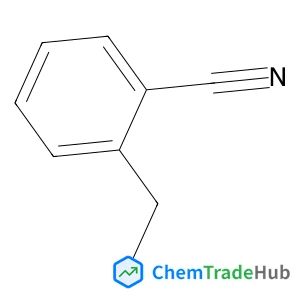
methanone structure](https://static.chemtradehub.com/structs/814/81449-01-6-786d.webp "[4-(Hydroxymethyl)phenyl](phenyl)methanone structure")