












Possible induced enhancement of dispersion forces by cellular phones
Literature Information
Publication Date
2004-02-23
DOI
10.1039/B312859H
Impact Factor
3.676
Authors
View Original
Abstract
We derive the dispersion forces between objects in the presence of a non-thermal radiation field. We apply the formalism to a model system representing two human blood cells in blood. By focusing the same radiation density, as in room-temperature thermal radiation, in the microwave region we find a huge enhancement of the attractive force. Related effects are predicted to occur also in other types of biological tissue. The quantitative results should not be taken at face value, since the model is crude. The effects are so large though, that further investigation is motivated. The origin of the effects lies in the variation of water and/or ion content. In the microwave region of the spectrum both the dipolar contributions from the water-molecules, and the mobile-ion contributions are important parts of the dielectric function, and cause the enhancement.
Related Literature
Composites hybridized with Ca(OH)2 and LaMnO3 synergistically improve phosphate adsorption properties
Keqiang Zhang
2024-01-03
Paper
DOI: 10.1039/D3NJ04596J
A convenient synthetic approach to highly hindered 3,3′-bis(2,4,6-tri-tert-butylphenyl)-BINOL-derived phosphoric acids
Zhiqiang Wang, Gen Li
2024-01-04
Communication
DOI: 10.1039/D3NJ05280J
Removal of total chromium in wastewater via simultaneous photocatalysis and adsorption using calcium silicate hydrate-based composites
Min Liu, Qi Liu, Xue-Ting Jin, Ya-Chen Zou, Di-Ning Li, Pan Feng, Yang-Hui Luo
2023-10-19
Paper
DOI: 10.1039/D3TA05384A
Tailoring the Pt/ionomer interface for enhancing the local oxygen transport in proton exchange membrane fuel cells
2023-10-17
Paper
DOI: 10.1039/D3TA03720G
Unraveling ligand exchange reactions in linear neutral Au(i) and Cu(i) N-heterocyclic carbene complexes for biological applications
Gustavo C. Rodrigues, Manoel V. F. Barrionuevo, Miguel A. San-Miguel, Camilla Abbehausen
2023-12-27
Paper
DOI: 10.1039/D3NJ04945K
Recent progress in polymer nanosheets for photocatalysis
Lei Wang, Jianyong Yue, Rong Wu, Zebo Fang, Yuxi Xu
2023-10-16
Review Article
DOI: 10.1039/D3TA05435G
Synthesis and spontaneous self-assembly of non-planar aromatic amide macrocycles
Rabban Rabban, Jinti Moni Kumar, Naiwrit Karmodak, Bappaditya Gole
2023-11-27
Communication
DOI: 10.1039/D3NJ05283D
Synergy of oxygen vacancies and Bi nanoparticles on BiOBr nanosheets for enhanced photocatalytic H2O2 production
Li Feng, Hanping Fu, Tianxiang Zhang, Qing Zhang, Shufen Ren, Jiayun Cheng, Qingshuang Liang, Xiufeng Xiao
2023-12-25
Paper
DOI: 10.1039/D3NJ03815G
You might also like
Compound Q&A
How should waste containing N-Methoxy-N-methyl-1,3-thiazole-5-carboxamide (CAS: 898825-89-3) be handled?
Waste containing N-Methoxy-N-methyl-1,3-thiazole-5-carboxamide (CAS: 898825-89-3...
898825-89-3N-Methoxy-N-methyl-1...
Compound Q&A
How should N-(4-Biphenylyl)dibenzo[b,d]furan-4-amine (CAS: 1318338-47-4) be stored?
N-(4-Biphenylyl)dibenzo[b,d]furan-4-amine should be stored in a tightly sealed c...
1318338-47-4N-(4-Biphenylyl)dibe...
Compound Q&A
What is the market or research trend for 3-Acetamido-5-amino-2,4,6-triiodobenzoic acid (CAS: 1713-07-1)?
The market for 3-Acetamido-5-amino-2,4,6-triiodobenzoic acid (CAS: 1713-07-1) is...
1713-07-13-Acetamido-5-amino-...
Compound Q&A
How should Benzyl 2-O-acetyl-3,4,6-tri-O-benzyl-beta-D-galactopyranoside (CAS: 61820-03-9) be stored?
Benzyl 2-O-acetyl-3,4,6-tri-O-benzyl-beta-D-galactopyranoside (CAS: 61820-03-9) ...
61820-03-9Benzyl 2-O-acetyl-3,...
Compound Q&A
What regulatory guidelines apply to 2-Ethylpiperazine dihydrochloride (CAS: 438050-52-3)?
2-Ethylpiperazine dihydrochloride (CAS: 438050-52-3) is regulated under the Glob...
438050-52-32-Ethylpiperazine di...
Compound Q&A
What regulatory guidelines apply to 1,1'-[1,3-Phenylenebis(methylene)]bis(3-methyl-1H-pyrrole-2,5-dione) (CAS: 119462-56-5)?
1,1'-[1,3-Phenylenebis(methylene)]bis(3-methyl-1H-pyrrole-2,5-dione) (CAS: 11946...
119462-56-51,1'-[1,3-Phenyleneb...
Compound Q&A
Are there alternatives to 5-Fluoro-2-(1-pyrrolidinyl)pyridine (CAS: 1287217-79-1) in synthesis?
Several alternatives can be used in the synthesis of 5-Fluoro-2-(1-pyrrolidinyl)...
1287217-79-15-Fluoro-2-(1-pyrrol...
Compound Q&A
What precautions should be taken when handling 1-((2R,3R,4R,5R)-5-((bis(4-methoxyphenyl)(phenyl)methoxy)methyl)-4-hydroxy-3-methoxytetrahydrofuran-2-yl)-5-methylpyrimidine-2,4(1H,3H)-dione (CAS: 153631-19-7)?
Proper personal protective equipment (PPE) must be worn when handling this compo...
153631-19-71-((2R,3R,4R,5R)-5-(...
Compound Q&A
What precautions should be taken when handling 6-Bromoimidazo[1,2-a]pyridin-8-amine (CAS: 676371-00-9)?
When handling 6-Bromoimidazo[1,2-a]pyridin-8-amine, it is important to wear appr...
676371-00-96-Bromoimidazo[1,2-a...
Compound Q&A
Are there alternatives to (2S,4R)-4-(4-Nitrobenzyl)pyrrolidine-2-carboxylic acid hydrochloride (CAS: 1049740-22-8) in synthesis?
Alternatives to (2S,4R)-4-(4-Nitrobenzyl)pyrrolidine-2-carboxylic acid hydrochlo...
1049740-22-8(2S,4R)-4-(4-Nitrobe...
Source Journal
Physical Chemistry Chemical Physics

CiteScore:
5.5
Self-citation Rate:
10.3%
Articles per Year:
3036
Physical Chemistry Chemical Physics (PCCP) is an international journal co-owned by 19 physical chemistry and physics societies from around the world. This journal publishes original, cutting-edge research in physical chemistry, chemical physics and biophysical chemistry. To be suitable for publication in PCCP, articles must include significant innovation and/or insight into physical chemistry; this is the most important criterion that reviewers and Editors will judge against when evaluating submissions. The journal has a broad scope and welcomes contributions spanning experiment, theory, computation and data science. Topical coverage includes spectroscopy, dynamics, kinetics, statistical mechanics, thermodynamics, electrochemistry, catalysis, surface science, quantum mechanics, quantum computing and machine learning. Interdisciplinary research areas such as polymers and soft matter, materials, nanoscience, energy, surfaces/interfaces, and biophysical chemistry are welcomed if they demonstrate significant innovation and/or insight into physical chemistry. Joined experimental/theoretical studies are particularly appreciated when complementary and based on up-to-date approaches.
Recommended Compounds

5,5',5''-(((2,4,6-Trimethylbenzene-1,3,5-triyl)tris(methylene))tris(oxy))triisophthalic acid
CAS Number:
1159974-70-5
Molecular Formula:
C36H30O15
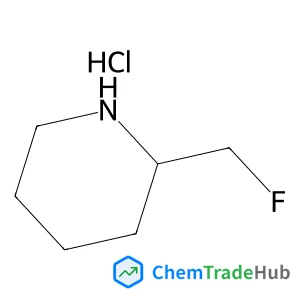
(2S)-2-(Fluoromethyl)piperidine hydrochloride (1:1)
CAS Number:
886216-73-5
Molecular Formula:
C6H13ClFN
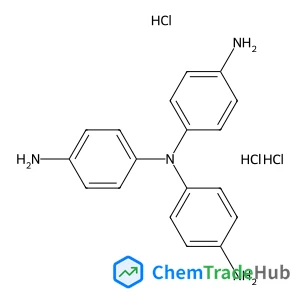
N1,N1-Bis(4-aminophenyl)benzene-1,4-diamine trihydrochloride
CAS Number:
114254-48-7
Molecular Formula:
C18H21Cl3N4
Recommended Suppliers




Disclaimer
This page provides academic journal information for reference and research purposes only. We are not affiliated with any journal publishers and do not handle publication submissions. For publication-related inquiries, please contact the respective journal publishers directly.
If you notice any inaccuracies in the information displayed, please contact us at support@chemtradehub.com. We will promptly review and address your concerns.