


Renewable hydrogen by aqueous-phase reforming of glucose
Literature Information
Publication Date
2003-11-20
DOI
10.1039/B310152E
Impact Factor
6.222
Authors
Rupali R. Davda, James A. Dumesic
View Original
Abstract
Hydrogen can be produced from aqueous solutions containing 10 wt% glucose with high selectivities through the combined use of a hydrogenation reactor for conversion of glucose to sorbitol, followed by a reforming reactor for conversion of sorbitol to H2 and CO2 and then a gas–liquid separator for the removal of high-pressure H2-rich reformate gas, ready for use in a fuel cell.
Recommended Journals

Anti-Corrosion Methods and Materials

Cement and Concrete Research

Australian Journal of Chemistry

Doklady Chemistry

Chemistry of Heterocyclic Compounds

Advances in Colloid and Interface Science

Journal of the Chinese Chemical Society

Journal of the American Chemical Society

Canadian Metallurgical Quarterly

Biopolymers
Related Literature
Characteristics of lateral and hybrid heterostructures based on monolayer MoS2: a computational study
Li-ping Feng, Jie Su, Zheng-tang Liu
2017-01-09
Paper
DOI: 10.1039/C6CP07825G
Ferromagnetic resonance of NiCoFe2O4 nanoparticles and microwave absorption properties of flexible NiCoFe2O4–carbon black/poly(vinyl alcohol) composites
Gopal Datt, Chetan Kotabage, A. C. Abhyankar
2017-07-11
Paper
DOI: 10.1039/C7CP03953K
Towards the analysis of attosecond dynamics in complex systems
C.-Z. Gao, P. M. Dinh, P.-G. Reinhard, E. Suraud
2017-06-07
Paper
DOI: 10.1039/C7CP00995J
Lysine-based amino-functionalized lipids for gene transfection: the protonation state in monolayers at the air–liquid interface
Stephanie Tassler, Christian Wölk, Christopher Janich, Bodo Dobner, Gerald Brezesinski
2017-07-11
Paper
DOI: 10.1039/C7CP03107F
Commensurate–incommensurate adsorption and diffusion in ordered crystalline microporous materials
Rajamani Krishna, Jasper M. van Baten
2017-07-25
Perspective
DOI: 10.1039/C7CP04101B
Initiation of wetting, filmwise condensation and condensate drainage from a surface in a gravity field
Sima Yaghoubian, C. A. Ward
2017-07-26
Paper
DOI: 10.1039/C7CP03039H
Growth and structure of ultrathin praseodymium oxide layers on ruthenium(0001)
Jan Höcker, Julian Cambeis, Alexei Zakharov, Yuran Niu, Gang Wei, Andreas Schaefer
2016-11-02
Paper
DOI: 10.1039/C6CP06853G
Fragmentation of pure and hydrated clusters of 5Br-uracil by low energy carbon ions: observation of hydrated fragments
M. C. Castrovilli, P. Markush, P. Bolognesi, P. Rousseau, S. Maclot, R. Delaunay, A. Domaracka, B. A. Huber, L. Avaldi
2017-06-13
Paper
DOI: 10.1039/C7CP02233F
The mechanism of roughness-induced CO2 microbubble nucleation in polypropylene foaming
Wei Zhang, Xiangdong Wang, Jianguo Mi, Jingjun Ma, Zhongjie Du
2017-07-13
Paper
DOI: 10.1039/C7CP02988H
You might also like
Compound Q&A
How should waste containing N-Methoxy-N-methyl-1,3-thiazole-5-carboxamide (CAS: 898825-89-3) be handled?
Waste containing N-Methoxy-N-methyl-1,3-thiazole-5-carboxamide (CAS: 898825-89-3...
898825-89-3N-Methoxy-N-methyl-1...
Compound Q&A
How should N-(4-Biphenylyl)dibenzo[b,d]furan-4-amine (CAS: 1318338-47-4) be stored?
N-(4-Biphenylyl)dibenzo[b,d]furan-4-amine should be stored in a tightly sealed c...
1318338-47-4N-(4-Biphenylyl)dibe...
Compound Q&A
What is the market or research trend for 3-Acetamido-5-amino-2,4,6-triiodobenzoic acid (CAS: 1713-07-1)?
The market for 3-Acetamido-5-amino-2,4,6-triiodobenzoic acid (CAS: 1713-07-1) is...
1713-07-13-Acetamido-5-amino-...
Compound Q&A
How should Benzyl 2-O-acetyl-3,4,6-tri-O-benzyl-beta-D-galactopyranoside (CAS: 61820-03-9) be stored?
Benzyl 2-O-acetyl-3,4,6-tri-O-benzyl-beta-D-galactopyranoside (CAS: 61820-03-9) ...
61820-03-9Benzyl 2-O-acetyl-3,...
Compound Q&A
What regulatory guidelines apply to 2-Ethylpiperazine dihydrochloride (CAS: 438050-52-3)?
2-Ethylpiperazine dihydrochloride (CAS: 438050-52-3) is regulated under the Glob...
438050-52-32-Ethylpiperazine di...
Compound Q&A
What regulatory guidelines apply to 1,1'-[1,3-Phenylenebis(methylene)]bis(3-methyl-1H-pyrrole-2,5-dione) (CAS: 119462-56-5)?
1,1'-[1,3-Phenylenebis(methylene)]bis(3-methyl-1H-pyrrole-2,5-dione) (CAS: 11946...
119462-56-51,1'-[1,3-Phenyleneb...
Compound Q&A
Are there alternatives to 5-Fluoro-2-(1-pyrrolidinyl)pyridine (CAS: 1287217-79-1) in synthesis?
Several alternatives can be used in the synthesis of 5-Fluoro-2-(1-pyrrolidinyl)...
1287217-79-15-Fluoro-2-(1-pyrrol...
Compound Q&A
What precautions should be taken when handling 1-((2R,3R,4R,5R)-5-((bis(4-methoxyphenyl)(phenyl)methoxy)methyl)-4-hydroxy-3-methoxytetrahydrofuran-2-yl)-5-methylpyrimidine-2,4(1H,3H)-dione (CAS: 153631-19-7)?
Proper personal protective equipment (PPE) must be worn when handling this compo...
153631-19-71-((2R,3R,4R,5R)-5-(...
Compound Q&A
What precautions should be taken when handling 6-Bromoimidazo[1,2-a]pyridin-8-amine (CAS: 676371-00-9)?
When handling 6-Bromoimidazo[1,2-a]pyridin-8-amine, it is important to wear appr...
676371-00-96-Bromoimidazo[1,2-a...
Compound Q&A
Are there alternatives to (2S,4R)-4-(4-Nitrobenzyl)pyrrolidine-2-carboxylic acid hydrochloride (CAS: 1049740-22-8) in synthesis?
Alternatives to (2S,4R)-4-(4-Nitrobenzyl)pyrrolidine-2-carboxylic acid hydrochlo...
1049740-22-8(2S,4R)-4-(4-Nitrobe...
Source Journal
Chemical Communications

CiteScore:
8.6
Self-citation Rate:
4.7%
Articles per Year:
2458
ChemComm publishes urgent research which is of outstanding significance and interest to experts in the field, while also appealing to the journal’s broad chemistry readership. Our communication format is ideally suited to short, urgent studies that are of such importance that they require accelerated publication. Our scope covers all topics in chemistry, and research at the interface of chemistry and other disciplines (such as materials science, nanoscience, physics, engineering and biology) where there is a significant novelty in the chemistry aspects. Major topic areas covered include: Analytical Chemistry Catalysis Chemical Biology and medicinal chemistry Computational Chemistry and Machine Learning Energy and sustainable chemistry Environmental Chemistry Green Chemistry Inorganic Chemistry Materials Chemistry Nanoscience Organic Chemistry Physical Chemistry Polymer Chemistry Supramolecular Chemistry
Recommended Compounds

(2S)-2-(Fluoromethyl)piperidine hydrochloride (1:1)
CAS Number:
886216-73-5
Molecular Formula:
C6H13ClFN

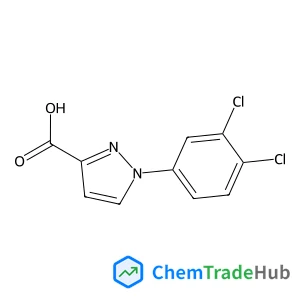
1-(3,4-Dichlorophenyl)-1H-pyrazole-3-carboxylic acid
CAS Number:
1152949-12-6
Molecular Formula:
C10H6Cl2N2O2
![4-[(2-{2-[2-(2-Aminoethoxy)ethoxy]ethoxy}ethyl)amino]-2-(2,6-dioxo-3-piperidinyl)-1H-isoindole-1,3(2H)-dione structure](https://static.chemtradehub.com/structs/209/2093416-31-8-3162.webp "4-[(2-{2-[2-(2-Aminoethoxy)ethoxy]ethoxy}ethyl)amino]-2-(2,6-dioxo-3-piperidinyl)-1H-isoindole-1,3(2H)-dione structure")
4-[(2-{2-[2-(2-Aminoethoxy)ethoxy]ethoxy}ethyl)amino]-2-(2,6-dioxo-3-piperidinyl)-1H-isoindole-1,3(2H)-dione
CAS Number:
2093416-31-8
Molecular Formula:
C21H28N4O7
Recommended Suppliers






Disclaimer
This page provides academic journal information for reference and research purposes only. We are not affiliated with any journal publishers and do not handle publication submissions. For publication-related inquiries, please contact the respective journal publishers directly.
If you notice any inaccuracies in the information displayed, please contact us at support@chemtradehub.com. We will promptly review and address your concerns.