













Influence of preparation method on surface and bulk properties of sunlight-active Ti–W mixed oxide photocatalysts
Literature Information
Publication Date
2003-06-03
DOI
10.1039/B303198E
Impact Factor
3.676
Authors
A. Fuerte, M. D. Hernández-Alonso, A. Iglesias-Juez, A. Martínez-Arias, J. C. Conesa, J. Soria, M. Fernández-García
View Original
Abstract
Thermal and hydrothermal treatments were applied to two amorphous Ti–W mixed oxide precursors with varying W ∶ Ti atomic ratio to obtain nanostructured particles having different properties. The photocatalytic behavior of these Ti–W mixed oxides has been tested in the photoelimination of toluene using sunlight-type excitation. These materials were prepared by a microemulsion method and their physico-chemical properties were characterized by a multitechnique approach using X-ray diffraction and photoelectron spectroscopy, as well as Raman and UV-vis spectroscopies. All samples contain substitutionally disordered Ti–W mixed oxides with anatase-type structure. The hydrothermal treatment allows introduction of a larger quantity of W into the anatase structure and produces particles with lower particle size and a moderate surface W enrichment (dependent upon treatment conditions). A Fourier transform infrared (FTIR) investigation of the catalysts under conditions prevailing during the test photoreaction together with EPR experiments of oxygen activation and DMPO spin trapping were carried out in an attempt to clarify the different photoactivities of the samples. W insertion into the anatase structure appears to potentially affect photoactivity using sunlight-type excitation by three different factors, namely the increasing absorption power in the visible region, the presence of surface W centers enhancing oxygen activation and, finally, the creation of new surface centers with modified interaction with toluene. The dependence of these factors on the preparation method and conditions and their influence on the photocatalytic activity of Ti–W systems are analyzed.
Recommended Journals
Related Literature
Microscopic effects of the bonding configuration of nitrogen-doped graphene on its reactivity toward hydrogen peroxide reduction reaction
Ping Wu, Pan Du, Hui Zhang, Chenxin Cai
2013-03-15
Paper
DOI: 10.1039/C3CP50900A
Computational study of the spin-state energies and UV-Visspectra of bis(1,4,7-triazacyclononane) complexes of some first-row transition metal cations
Matija Zlatar, Maja Gruden-Pavlović, Mireia Güell
2012-11-23
Paper
DOI: 10.1039/C2CP43735J
Raman microspectroscopy and vibrational sum frequency generation spectroscopy as probes of the bulk and surface compositions of size-resolved sea spray aerosol particles
Andrew P. Ault, Defeng Zhao, Carlena J. Ebben, Michael J. Tauber, Franz M. Geiger, Vicki H. Grassian
2013-02-19
Paper
DOI: 10.1039/C3CP43899F
Examination of the chemical behavior of the quercetin radical cation towards some bases
Zoran Marković, Dragan Amić, Dejan Milenković, Jasmina M. Dimitrić-Marković, Svetlana Marković
2013-03-22
Paper
DOI: 10.1039/C3CP44605K
Benchmark quantum-chemical calculations on a complete set of rotameric families of the DNA sugar–phosphate backbone and their comparison with modern density functional theory
Arnošt Mládek, Miroslav Krepl, Michal Otyepka, Pavel Banáš, Marie Zgarbová, Petr Jurečka
2013-03-18
Paper
DOI: 10.1039/C3CP44383C
A 3D-RISM-SCF method with dual solvent boxes for a highly polarized system: application to 1,6-anhydrosugar formation reaction of phenyl α- and β-d-glucosides under basic conditions
Shinji Aono, Takashi Hosoya, Shigeyoshi Sakaki
2013-03-01
Paper
DOI: 10.1039/C3CP43892A
Photoinduced energy and charge transfer in a p-phenylene-linked dyad of boron dipyrromethene and monostyryl boron dipyrromethene
Roel Menting, Jian-Yong Liu, Ying-Si Huang, Dennis K. P. Ng, Beate Röder
2013-03-15
Paper
DOI: 10.1039/C3CP50576F
Specific many-electron effects in X-ray spectra of simple metals and graphene
R. E. Ovcharenko, I. I. Tupitsyn, E. P. Savinov, E. N. Voloshina, B. Paulus, Yu. S. Dedkov, A. S. Shulakov
2013-03-14
Paper
DOI: 10.1039/C3CP44304C
Density-induced molecular arrangements of water inside carbon nanotubes
M. Sadeghi
2013-03-18
Paper
DOI: 10.1039/C3CP44563A
Potential energy surfaces for ground and excited electronic states of the CF3I molecule and their relevance to its A-band photodissociation
Aleksey B. Alekseyev, Heinz-Peter Liebermann, Robert J. Buenker
2013-02-15
Paper
DOI: 10.1039/C3CP44237C
You might also like
Compound Q&A
What precautions should be taken when handling 4-(2-Furylmethyl)thiomorpholine 1,1-dioxide (CAS: 79206-94-3)?
When handling 4-(2-Furylmethyl)thiomorpholine 1,1-dioxide (CAS: 79206-94-3), it ...
79206-94-34-(2-Furylmethyl)thi...
Compound Q&A
What precautions should be taken when handling 4-Chloro-N-[2-(4-morpholinyl)ethyl]benzamide (CAS: 71320-77-9)?
When handling 4-Chloro-N-[2-(4-morpholinyl)ethyl]benzamide (CAS: 71320-77-9), it...
71320-77-94-Chloro-N-[2-(4-mor...
Compound Q&A
How should waste containing 2-[2-(2-Methoxyethoxy)ethoxy]ethyl 4-methylbenzenesulfonate (CAS: 62921-74-8) be handled?
Waste containing this compound (CAS: 62921-74-8) should be handled according to ...
62921-74-82-[2-(2-Methoxyethox...
Compound Q&A
How should waste containing (S)-Methyl 2-amino-3-cyclohexylpropanoate be handled?
Waste containing (S)-Methyl 2-amino-3-cyclohexylpropanoate should be collected i...
40056-18-6(S)-Methyl 2-amino-3...
Compound Q&A
How is 5-({4-[(2S,4R)-4-Hydroxy-2-methyltetrahydro-2H-pyran-4-yl]-2-thienyl}sulfanyl)-1-methyl-1,3-dihydro-2H-indol-2-one (CAS: 166882-70-8) typically synthesized?
This compound can be synthesized using a multi-step process involving the conjug...
166882-70-85-({4-[(2S,4R)-4-Hyd...
Compound Q&A
Are there alternatives to (2E)-3-(3,4-Dichlorophenyl)acrylic acid (CAS: 7312-27-8) in synthesis?
There are several alternatives to (2E)-3-(3,4-Dichlorophenyl)acrylic acid in syn...
7312-27-8(2E)-3-(3,4-Dichloro...
Compound Q&A
How should Ethyl 6-(2-nitrophenyl)imidazo[2,1-b][1,3]thiazole-3-carboxylate (CAS: 925437-84-9) be stored?
Ethyl 6-(2-nitrophenyl)imidazo[2,1-b][1,3]thiazole-3-carboxylate (CAS: 925437-84...
925437-84-9Ethyl 6-(2-nitrophen...
Compound Q&A
How should waste containing 2-(1,3-Thiazol-2-yl)ethanamine (CAS: 18453-07-1) be handled?
Waste containing 2-(1,3-Thiazol-2-yl)ethanamine (CAS: 18453-07-1) should be coll...
18453-07-12-(1,3-Thiazol-2-yl)...
Compound Q&A
How is Methyl 5-iodo-2-methylbenzoate (CAS: 103440-54-6) typically synthesized?
Methyl 5-iodo-2-methylbenzoate can be synthesized through the iodination of meth...
103440-54-6Methyl 5-iodo-2-meth...
Compound Q&A
How is 5-Chloro[1,2,4]triazolo[1,5-a]pyridine (CAS: 1427399-34-5) typically synthesized?
5-Chloro[1,2,4]triazolo[1,5-a]pyridine is commonly synthesized via the condensat...
1427399-34-55-Chloro[1,2,4]triaz...
Source Journal
Physical Chemistry Chemical Physics

CiteScore:
5.5
Self-citation Rate:
10.3%
Articles per Year:
3036
Physical Chemistry Chemical Physics (PCCP) is an international journal co-owned by 19 physical chemistry and physics societies from around the world. This journal publishes original, cutting-edge research in physical chemistry, chemical physics and biophysical chemistry. To be suitable for publication in PCCP, articles must include significant innovation and/or insight into physical chemistry; this is the most important criterion that reviewers and Editors will judge against when evaluating submissions. The journal has a broad scope and welcomes contributions spanning experiment, theory, computation and data science. Topical coverage includes spectroscopy, dynamics, kinetics, statistical mechanics, thermodynamics, electrochemistry, catalysis, surface science, quantum mechanics, quantum computing and machine learning. Interdisciplinary research areas such as polymers and soft matter, materials, nanoscience, energy, surfaces/interfaces, and biophysical chemistry are welcomed if they demonstrate significant innovation and/or insight into physical chemistry. Joined experimental/theoretical studies are particularly appreciated when complementary and based on up-to-date approaches.
Recommended Compounds
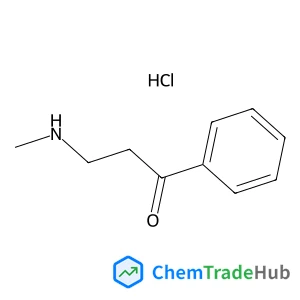
3-(Methylamino)-1-phenyl-1-propanone hydrochloride (1:1)
CAS Number:
2538-50-3
Molecular Formula:
C10H14ClNO



Recommended Suppliers





Disclaimer
This page provides academic journal information for reference and research purposes only. We are not affiliated with any journal publishers and do not handle publication submissions. For publication-related inquiries, please contact the respective journal publishers directly.
If you notice any inaccuracies in the information displayed, please contact us at support@chemtradehub.com. We will promptly review and address your concerns.