












![[4-Amino-2-(methylsulfanyl)-5-pyrimidinyl]methanol structure](https://static.chemtradehub.com/structs/588/588-36-3-fc73.webp "[4-Amino-2-(methylsulfanyl)-5-pyrimidinyl]methanol structure")
Heterogeneous combustion in electrical and magnetic fields: modification of combustion parameters and products
Literature Information
Publication Date
2003-05-02
DOI
10.1039/B300152K
Impact Factor
3.676
Authors
Maxim V. Kuznetsov, Sergey M. Busurin, Yury G. Morozov, Ivan P. Parkin
View Original
Abstract
A synthesis in the heterogeneous combustion regime passes through the chemical interaction of ions of origin reagents and can be characterized by the electromagnetic force (EMF) of combustion. External electrical and magnetic fields lead to modification of the combustion parameters and final product properties via a change in the diffusion movement of the ions and rearrangement of the reaction components.
Related Literature
Large-scale virtual high-throughput screening for the identification of new battery electrolyte solvents: computing infrastructure and collective properties
Tamara Husch, Nusret Duygu Yilmazer, Andrea Balducci, Martin Korth
2014-12-10
Paper
DOI: 10.1039/C4CP04338C
The effect of sugar stereochemistry on protein self-assembly: the case of β-casein micellization in different aldohexose solutions
Ofer Setter
2014-12-16
Paper
DOI: 10.1039/C4CP03686G
Fundamental frequency from classical molecular dynamics
Tomonori Yamada, Misako Aida
2014-12-03
Paper
DOI: 10.1039/C4CP04068F
Constrained control landscape for population transfer in a two-level system
Katharine Moore Tibbetts, Herschel Rabitz
2014-12-11
Paper
DOI: 10.1039/C4CP04792C
Magnetic γ-Fe2O3, Fe3O4, and Fe nanoparticles confined within ordered mesoporous carbons as efficient microwave absorbers
Jiacheng Wang, Jiandong Zhuang, Qian Liu
2014-12-11
Paper
DOI: 10.1039/C4CP04228J
Molecular dynamics simulation of planar elongational flow in a nematic liquid crystal based on the Gay–Berne potential
Sten Sarman, Aatto Laaksonen
2014-12-09
Paper
DOI: 10.1039/C4CP04891A
The role of oxygen vacancies and their location in the magnetic properties of Ce1−xCuxO2−δ nanorods
M. I. B. Bernardi, A. Mesquita, F. Béron, K. R. Pirota, A. O. de Zevallos, A. C. Doriguetto, H. B. de Carvalho
2014-12-02
Paper
DOI: 10.1039/C4CP04879B
An equation to calculate internuclear distances of covalent, ionic and metallic lattices
Peter F. Lang, Barry C. Smith
2014-12-16
Paper
DOI: 10.1039/C4CP05135A
Cyano-substituted oligo(p-phenylene vinylene) single-crystal with balanced hole and electron injection and transport for ambipolar field-effect transistors
Jian Deng, Jia Tang, Yuanxiang Xu, Liqun Liu, Yan Wang, Zengqi Xie, Yuguang Ma
2014-12-04
Paper
DOI: 10.1039/C4CP04265D
Probing a chemical compass: novel variants of low-frequency reaction yield detected magnetic resonance
Kiminori Maeda, Jonathan G. Storey, Paul A. Liddell, Devens Gust, P. J. Hore, C. J. Wedge, Christiane R. Timmel
2014-12-24
Paper
DOI: 10.1039/C4CP04095C
You might also like
Compound Q&A
What precautions should be taken when handling 4-(2-Furylmethyl)thiomorpholine 1,1-dioxide (CAS: 79206-94-3)?
When handling 4-(2-Furylmethyl)thiomorpholine 1,1-dioxide (CAS: 79206-94-3), it ...
79206-94-34-(2-Furylmethyl)thi...
Compound Q&A
What precautions should be taken when handling 4-Chloro-N-[2-(4-morpholinyl)ethyl]benzamide (CAS: 71320-77-9)?
When handling 4-Chloro-N-[2-(4-morpholinyl)ethyl]benzamide (CAS: 71320-77-9), it...
71320-77-94-Chloro-N-[2-(4-mor...
Compound Q&A
How should waste containing 2-[2-(2-Methoxyethoxy)ethoxy]ethyl 4-methylbenzenesulfonate (CAS: 62921-74-8) be handled?
Waste containing this compound (CAS: 62921-74-8) should be handled according to ...
62921-74-82-[2-(2-Methoxyethox...
Compound Q&A
How should waste containing (S)-Methyl 2-amino-3-cyclohexylpropanoate be handled?
Waste containing (S)-Methyl 2-amino-3-cyclohexylpropanoate should be collected i...
40056-18-6(S)-Methyl 2-amino-3...
Compound Q&A
How is 5-({4-[(2S,4R)-4-Hydroxy-2-methyltetrahydro-2H-pyran-4-yl]-2-thienyl}sulfanyl)-1-methyl-1,3-dihydro-2H-indol-2-one (CAS: 166882-70-8) typically synthesized?
This compound can be synthesized using a multi-step process involving the conjug...
166882-70-85-({4-[(2S,4R)-4-Hyd...
Compound Q&A
Are there alternatives to (2E)-3-(3,4-Dichlorophenyl)acrylic acid (CAS: 7312-27-8) in synthesis?
There are several alternatives to (2E)-3-(3,4-Dichlorophenyl)acrylic acid in syn...
7312-27-8(2E)-3-(3,4-Dichloro...
Compound Q&A
How should Ethyl 6-(2-nitrophenyl)imidazo[2,1-b][1,3]thiazole-3-carboxylate (CAS: 925437-84-9) be stored?
Ethyl 6-(2-nitrophenyl)imidazo[2,1-b][1,3]thiazole-3-carboxylate (CAS: 925437-84...
925437-84-9Ethyl 6-(2-nitrophen...
Compound Q&A
How should waste containing 2-(1,3-Thiazol-2-yl)ethanamine (CAS: 18453-07-1) be handled?
Waste containing 2-(1,3-Thiazol-2-yl)ethanamine (CAS: 18453-07-1) should be coll...
18453-07-12-(1,3-Thiazol-2-yl)...
Compound Q&A
How is Methyl 5-iodo-2-methylbenzoate (CAS: 103440-54-6) typically synthesized?
Methyl 5-iodo-2-methylbenzoate can be synthesized through the iodination of meth...
103440-54-6Methyl 5-iodo-2-meth...
Compound Q&A
How is 5-Chloro[1,2,4]triazolo[1,5-a]pyridine (CAS: 1427399-34-5) typically synthesized?
5-Chloro[1,2,4]triazolo[1,5-a]pyridine is commonly synthesized via the condensat...
1427399-34-55-Chloro[1,2,4]triaz...
Source Journal
Physical Chemistry Chemical Physics

CiteScore:
5.5
Self-citation Rate:
10.3%
Articles per Year:
3036
Physical Chemistry Chemical Physics (PCCP) is an international journal co-owned by 19 physical chemistry and physics societies from around the world. This journal publishes original, cutting-edge research in physical chemistry, chemical physics and biophysical chemistry. To be suitable for publication in PCCP, articles must include significant innovation and/or insight into physical chemistry; this is the most important criterion that reviewers and Editors will judge against when evaluating submissions. The journal has a broad scope and welcomes contributions spanning experiment, theory, computation and data science. Topical coverage includes spectroscopy, dynamics, kinetics, statistical mechanics, thermodynamics, electrochemistry, catalysis, surface science, quantum mechanics, quantum computing and machine learning. Interdisciplinary research areas such as polymers and soft matter, materials, nanoscience, energy, surfaces/interfaces, and biophysical chemistry are welcomed if they demonstrate significant innovation and/or insight into physical chemistry. Joined experimental/theoretical studies are particularly appreciated when complementary and based on up-to-date approaches.
Recommended Compounds
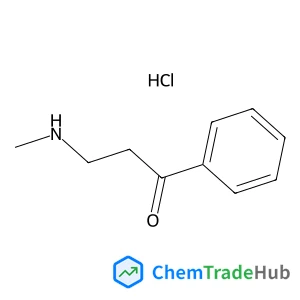
3-(Methylamino)-1-phenyl-1-propanone hydrochloride (1:1)
CAS Number:
2538-50-3
Molecular Formula:
C10H14ClNO
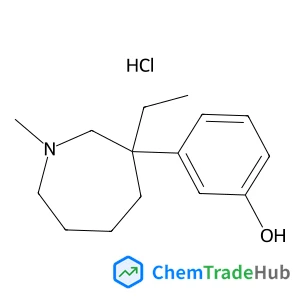
3-(3-Ethyl-1-methyl-3-azepanyl)phenol hydrochloride (1:1)
CAS Number:
59263-76-2
Molecular Formula:
C15H24ClNO
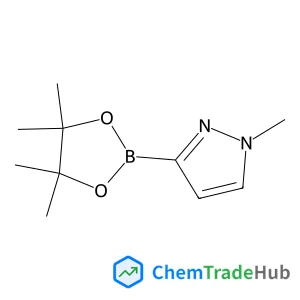
1-Methyl-3-(4,4,5,5-tetramethyl-1,3,2-dioxaborolan-2-yl)-1H-pyrazole
CAS Number:
1020174-04-2
Molecular Formula:
C10H17BN2O2
Recommended Suppliers





Disclaimer
This page provides academic journal information for reference and research purposes only. We are not affiliated with any journal publishers and do not handle publication submissions. For publication-related inquiries, please contact the respective journal publishers directly.
If you notice any inaccuracies in the information displayed, please contact us at support@chemtradehub.com. We will promptly review and address your concerns.