












Low temperature matrix-isolation and solid state vibrational spectra of 5-chlorotetrazole
Literature Information
Publication Date
2002-04-15
DOI
10.1039/B111329C
Impact Factor
3.676
Authors
Susana C. S. Bugalho, A. C. Serra, Leszek Lapinski, M. Lurdes S. Cristiano, Rui Fausto
View Original
Abstract
The vibrational spectra of 5-chlorotetrazole (CN4HCl) isolated in an argon matrix (T = 8.5 K) and in the solid state (at room temperature) were studied. The infrared spectrum of monomers of 5-chlorotetrazole isolated in an argon matrix agrees well with the spectrum predicted theoretically (DFT(B3LYP)/6-31G*) for the 2H-tautomer of the compound. The bands assigned to the 1H-tautomer appear in the experimental spectrum as very low intensity features. Based on the relative intensities of the bands in the spectra of the 1H- and 2H- tautomers, the relative amount of the first tautomer in this matrix can be estimated as 1%. Three matrixes were deposited with different nozzle temperatures and the enthalpy difference between the tautomers ΔH = 8.0 kJ mol−1 was estimated using the Van't Hoff relation. The internal energy difference between the two tautomers was predicted theoretically (DFT B3LYP/6-31G*) as 12.6 kJ mol−1. This is in reasonable agreement with experimental observations. In the crystalline phase, this compound exists in its 1H-tautomeric form. Accordingly, the IR spectrum of polycrystalline 5-chlorotetrazole is well reproduced by the spectrum predicted theoretically for the 1H- tautomer.
Related Literature
Highly efficient production of lactic acid from cellulose using lanthanide triflate catalysts
Fen-Fen Wang, Chun-Ling Liu, Wen-Sheng Dong
2013-06-21
Communication
DOI: 10.1039/C3GC40836A
Methods for the regeneration of nicotinamidecoenzymes
Hong Wu, Chunyong Tian, Xiaokai Song, Chuang Liu, Dong Yang, Zhongyi Jiang
2013-04-03
Critical Review
DOI: 10.1039/C3GC37129H
Comparative performance evaluation and systematic screening of solvents in a range of Grignard reactions
Asha Kadam, Mylinh Nguyen, Michael Kopach, Paul Richardson, Fabrice Gallou, Zhao-Kui Wan, Wei Zhang
2013-05-03
Paper
DOI: 10.1039/C3GC40702K
In situ coating of diatom frustules with silver nanoparticles
Jeremiah Toster, Qin Lin Zhou, Nicole M. Smith, K. Swaminathan Iyer, Federico Rosei, Colin L. Raston
2013-06-11
Communication
DOI: 10.1039/C3GC40660A
Graphene oxide as a facile acid catalyst for the one-pot conversion of carbohydrates into 5-ethoxymethylfurfural
Tiansheng Deng, Yingxiong Wang, Yongqin Qi, Xindong Mu, Xianglin Hou
2013-07-17
Communication
DOI: 10.1039/C3GC41109E
Palladium on iron oxide nanoparticles: the morphological effect of the support in glycerol hydrogenolysis
Junwei Ge, Ziyan Zeng, Fenglin Liao, Xinlin Hong
2013-06-18
Communication
DOI: 10.1039/C3GC40712H
Lignin to lipid bioconversion by oleaginous Rhodococci
Matyas Kosa, Arthur J. Ragauskas
2013-06-19
Communication
DOI: 10.1039/C3GC40434J
Non-catalytic synthesis of Chromogen I and III from N-acetyl-d-glucosamine in high-temperature water
Mitsumasa Osada, Kazushi Kikuta, Kohei Yoshida, Kazuhide Totani, Makoto Ogata, Taichi Usui
2013-08-14
Paper
DOI: 10.1039/C3GC41161C
Rhodium-catalyzed hydrogenation of olefins in γ-valerolactone-based ionic liquids
Andrea Strádi, Márk Molnár, Mihály Óvári, Gábor Dibó, Frank U. Richter, László T. Mika
2013-05-13
Communication
DOI: 10.1039/C3GC40360B
You might also like
Compound Q&A
What precautions should be taken when handling 4-Methyl-6-(trifluoromethyl)quinoline (CAS: 40716-16-3)?
When handling 4-Methyl-6-(trifluoromethyl)quinoline (CAS: 40716-16-3), safety go...
40716-16-34-Methyl-6-(trifluor...
Compound Q&A
What is 4-(3,5-Difluorophenyl)aniline (CAS: 405058-00-6)?
4-(3,5-Difluorophenyl)aniline is an aromatic organic compound with the CAS numbe...
405058-00-64-(3,5-Difluoropheny...
Compound Q&A
How is 5-{[4-(Trifluoromethyl)phenyl]sulfanyl}-1,2,3-thiadiazole-4-carboxylic acid (CAS: 338982-07-3) typically synthesized?
5-{[4-(Trifluoromethyl)phenyl]sulfanyl}-1,2,3-thiadiazole-4-carboxylic acid can ...
338982-07-35-{[4-(Trifluorometh...
Compound Q&A
What is the market or research trend for 4-Benzylaniline hydrochloride (CAS: 6317-57-3)?
The market for 4-Benzylaniline hydrochloride (CAS: 6317-57-3) is steadily growin...
6317-57-34-Benzylaniline hydr...
Compound Q&A
Is [3-(Diethylsulfamoyl)phenyl]boronic acid (CAS: 871329-58-7) safe?
[3-(Diethylsulfamoyl)phenyl]boronic acid is generally considered safe when handl...
871329-58-7[3-(Diethylsulfamoyl...
Compound Q&A
What are the main uses of 3-Bromo-2,5-dimethoxyaniline (CAS: 115929-62-9)?
3-Bromo-2,5-dimethoxyaniline is mainly used in the pharmaceutical and chemical i...
115929-62-93-Bromo-2,5-dimethox...
Compound Q&A
What regulatory guidelines apply to N-Methyl-1-(5-methyl-1H-indol-3-yl)methanamine (CAS: 915922-67-7)?
N-Methyl-1-(5-methyl-1H-indol-3-yl)methanamine (CAS: 915922-67-7) is subject to ...
915922-67-7N-Methyl-1-(5-methyl...
Compound Q&A
What industries use Carbamic acid, N-[(5S)-5,6-diamino-6-oxohexyl]-, 1,1-dimethylethyl ester (CAS: 24828-96-4)?
This compound is primarily used in the pharmaceutical industry for the synthesis...
24828-96-4Carbamic acid, N-[(5...
Compound Q&A
How should 2-Methyl-2-propanyl [(1S,3R)-3-aminocyclohexyl]carbamate (CAS: 1298101-47-9) be stored?
2-Methyl-2-propanyl [(1S,3R)-3-aminocyclohexyl]carbamate (CAS: 1298101-47-9) sho...
1298101-47-92-Methyl-2-propanyl ...
Compound Q&A
What industries use Ethyl 2-bromo-4,4,4-trifluorobutanoate (CAS: 367-33-9)?
Ethyl 2-bromo-4,4,4-trifluorobutanoate (CAS: 367-33-9) is utilized in the pharma...
367-33-9Ethyl 2-bromo-4,4,4-...
Source Journal
Physical Chemistry Chemical Physics

CiteScore:
5.5
Self-citation Rate:
10.3%
Articles per Year:
3036
Physical Chemistry Chemical Physics (PCCP) is an international journal co-owned by 19 physical chemistry and physics societies from around the world. This journal publishes original, cutting-edge research in physical chemistry, chemical physics and biophysical chemistry. To be suitable for publication in PCCP, articles must include significant innovation and/or insight into physical chemistry; this is the most important criterion that reviewers and Editors will judge against when evaluating submissions. The journal has a broad scope and welcomes contributions spanning experiment, theory, computation and data science. Topical coverage includes spectroscopy, dynamics, kinetics, statistical mechanics, thermodynamics, electrochemistry, catalysis, surface science, quantum mechanics, quantum computing and machine learning. Interdisciplinary research areas such as polymers and soft matter, materials, nanoscience, energy, surfaces/interfaces, and biophysical chemistry are welcomed if they demonstrate significant innovation and/or insight into physical chemistry. Joined experimental/theoretical studies are particularly appreciated when complementary and based on up-to-date approaches.
Recommended Compounds
![N-{3-[Benzyl(methyl)amino]propyl}-9-chloro-5,6,7,8-tetrahydro-2-acridinecarboxamide structure](https://static.chemtradehub.com/structs/142/1426944-49-1-1e4c.webp "N-{3-[Benzyl(methyl)amino]propyl}-9-chloro-5,6,7,8-tetrahydro-2-acridinecarboxamide structure")
N-{3-[Benzyl(methyl)amino]propyl}-9-chloro-5,6,7,8-tetrahydro-2-acridinecarboxamide
CAS Number:
1426944-49-1
Molecular Formula:
C25H28ClN3O
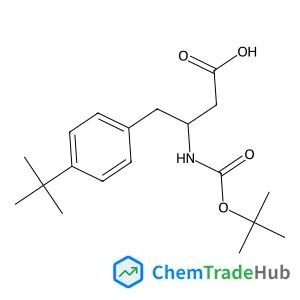
(S)-3-((tert-Butoxycarbonyl)amino)-4-(4-(tert-butyl)phenyl)butanoic acid
CAS Number:
403661-85-8
Molecular Formula:
C19H29NO4
Recommended Suppliers




Disclaimer
This page provides academic journal information for reference and research purposes only. We are not affiliated with any journal publishers and do not handle publication submissions. For publication-related inquiries, please contact the respective journal publishers directly.
If you notice any inaccuracies in the information displayed, please contact us at support@chemtradehub.com. We will promptly review and address your concerns.