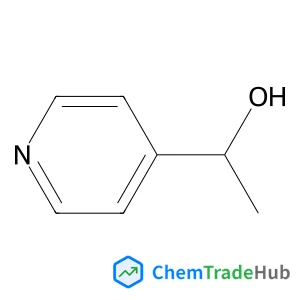
![Benzeneacetic acid, 2-[(2,6-dichlorophenyl)amino]-, compd. with 1-pyrrolidineethanol (1:1) structure](https://static.chemtradehub.com/structs/119/119623-66-4-5301.webp "Benzeneacetic acid, 2-[(2,6-dichlorophenyl)amino]-, compd. with 1-pyrrolidineethanol (1:1) structure")
Benzeneacetic acid, 2-[(2,6-dichlorophenyl)amino]-, compd. with 1-pyrrolidineethanol (1:1)
CAS Number:
119623-66-4
Molecular Formula:
C20H24Cl2N2O3
Tatyana Kuznetsova, Bjørn Kvamme
We performed molecular dynamics (MD) simulations of liquid–liquid and liquid–vapor interfaces between bulk water and carbon dioxide. Interfacial systems, constructed from periodically replicated slabs, were studied at different pressures and temperatures by means of npT and nVT MD. Constant-pressure runs of 3, 1.2, and 0.3 nanoseconds were used to estimate the water–CO2 interfacial tension at 284.5 K and 298 K for a liquid–liquid system comprising 108 SPC water molecules and 108 three-site CO2 molecules. The liquid–vapor interface was studied under nVT conditions using 108 water molecules and 32 CO2 molecules. Interfacial tension was obtained from the difference between pressure components normal and tangential to the interface. The results showed a surprisingly (CO2 potential used has been never optimized for water–CO2 interaction) good agreement with experimental data; our model system also reproduced the pressure–temperature relationship of the interfacial tension. A second liquid–liquid system of 256 SPC water and 108 CO2 molecules was tested for temperature persistence of the interface at higher pressures (100 atm and 300 atm). The results of the simulation prove the feasibility of using the model system to predict the key properties of liquid–liquid water–carbon dioxide interface under widely varying conditions, including those relevant for deep-sea disposal of carbon dioxide.
Mayte A. Martínez-Aguirre, Marcos Flores-Alamo, Felipe Medrano, Anatoly K. Yatsimirsky
DOI: 10.1039/D0OB00201A
Nicolo Tonali, Isabelle Correia, Jacopo Lesma, Guillaume Bernadat, Sandrine Ongeri, Olivier Lequin
DOI: 10.1039/C9OB02654A
Karlos Eduardo Pianoski, Julia Poletto, Michael Jackson Vieira da Silva, Jeniffer Nascimento Ascencio Camargo, Andrey Petita Jacomini, Davana Silva Gonçalves, Davi Fernando Back, Sidnei Moura, Fernanda Andreia Rosa
DOI: 10.1039/D0OB00319K
Raju Jannapu Reddy, Md. Waheed, Gamidi Rama Krishna
DOI: 10.1039/D0OB00442A
Xinjie Wu, Ming Jia, Mengmeng Huang, Jung Keun Kim, Zheng Zhao, Junkai Liu, Jinhu Xi, Yabo Li, Yangjie Wu
DOI: 10.1039/D0OB00479K
John B. McArthur, Abhishek Santra, Wanqing Li, Anoopjit S. Kooner, Ziqi Liu, Hai Yu, Xi Chen
DOI: 10.1039/C9OB02476J
Ilya M. Tkachenko, Polina A. Mankova, Victor B. Rybakov, Evgeniy V. Golovin, Yuri N. Klimochkin
DOI: 10.1039/C9OB02060H
Bo-Shun Huang, Todd L. Lowary
DOI: 10.1039/D0OB00260G
Amal Bouraoui, Rosy Ghanem, Mathieu Berchel, Laure Deschamps, Véronique Vié, Gilles Paboeuf, Tony Le Gall, Tristan Montier, Paul-Alain Jaffrès
DOI: 10.1039/C9OB02381J
6-Bromo-2-methylimidazo[1,2-a]pyrimidine (CAS: 1111638-05-1) falls under various...
While there are no direct alternatives, similar compounds like 1-Pyrrolidineetha...
4-Methyl-2,6-bis(2-methyl-2-propanyl)phenyl methylcarbamate (CAS: 1918-11-2) is ...
2-(3-Bromo-4-fluorophenyl)-1,3-dioxolane (CAS: 77771-04-1) should be stored in a...
4,5,6,7-Tetrahydro-1H-indazole hydrochloride is a white crystalline solid with a...
(2R)-1-Methoxy-3-phenyl-2-propanamine is a chiral organic compound with the CAS ...
Ethyl 1-(1-phenylethyl)-1H-imidazole-5-carboxylate is used in various industries...
4-[(1E,3S)-1-(4-Hydroxyphenyl)-1,4-pentadien-3-yl]phenol (CAS: 17676-24-3) falls...
(S)-3-Amino-5-phenylpentanoic acid hydrochloride is primarily used in the pharma...
7-Methoxy-1-benzothiophene-2-carboxylic acid is typically synthesized by reactin...

Physical Chemistry Chemical Physics (PCCP) is an international journal co-owned by 19 physical chemistry and physics societies from around the world. This journal publishes original, cutting-edge research in physical chemistry, chemical physics and biophysical chemistry. To be suitable for publication in PCCP, articles must include significant innovation and/or insight into physical chemistry; this is the most important criterion that reviewers and Editors will judge against when evaluating submissions. The journal has a broad scope and welcomes contributions spanning experiment, theory, computation and data science. Topical coverage includes spectroscopy, dynamics, kinetics, statistical mechanics, thermodynamics, electrochemistry, catalysis, surface science, quantum mechanics, quantum computing and machine learning. Interdisciplinary research areas such as polymers and soft matter, materials, nanoscience, energy, surfaces/interfaces, and biophysical chemistry are welcomed if they demonstrate significant innovation and/or insight into physical chemistry. Joined experimental/theoretical studies are particularly appreciated when complementary and based on up-to-date approaches.

![9H-Fluoren-9-ylmethyl {15-[(2,5-dioxo-1-pyrrolidinyl)oxy]-15-oxo-3,6,9,12-tetraoxapentadec-1-yl}carbamate structure](https://static.chemtradehub.com/structs/131/1314378-14-7-4316.webp "9H-Fluoren-9-ylmethyl {15-[(2,5-dioxo-1-pyrrolidinyl)oxy]-15-oxo-3,6,9,12-tetraoxapentadec-1-yl}carbamate structure")