













From atoms to crystallites: adsorption on oxide-supported metal particles
Literature Information
Publication Date
2000-08-16
DOI
10.1039/B004091F
Impact Factor
3.676
Authors
Martin Frank, Marcus Bäumer
View Original
Abstract
The properties of metal clusters and nanoparticles are attracting more and more attention in fundamental and applied research. The application of such structures in heterogeneous catalysis is a particularly important area. Nevertheless, there is only limited fundamental knowledge about the dependence of adsorption behaviour and catalytic activity on particle size. In this article, we describe an approach to tackle such questions on the basis of model systems which are prepared by metal vapour deposition under ultrahigh vacuum conditions. A thin alumina film grown on a metal substrate is used as support. This has the advantage that scanning tunneling microscopy and photoelectron spectroscopy can be applied without any charging problems. Firstly, structural data covering palladium, rhodium and iridium deposits demonstrate that a wide spectrum of particle sizes and morphologies may be obtained by taking advantage of kinetically controlled nucleation and growth processes. Subsequently, we discuss the adsorption of simple molecules on the particles, such as CO and ethene. These studies, which have been carried out using infrared and photoemission spectroscopy, illustrate possible variations in the adsorption and reaction behaviour as a function of particle size. Aspects which will be considered include: adsorption at facets and defects, size-dependent variation of adsorption sites, formation of surface complexes, decomposition of molecules as well as co-adsorption phenomena.
Related Literature
Dispersion of linear and nonlinear optical susceptibilities and the hyperpolarizability of 3-methyl-4-phenyl-5-(2-pyridyl)-1,2,4-triazole
S. Auluck, I. V. Kityk
2010-12-17
Paper
DOI: 10.1039/C0CP01601B
Processes in chemical reactions related to the environment, energy and materials sciences
2011-01-11
Editorial
DOI: 10.1039/C0CP90160A
Molecular dynamics simulations of ionic liquid–vapour interfaces: effect of cation symmetry on structure at the interface
S. S. Sarangi, S. G. Raju, S. Balasubramanian
2010-12-13
Paper
DOI: 10.1039/C0CP01272F
Simple synthesis of Pd–Fe3O4 heterodimer nanocrystals and their application as a magnetically recyclable catalyst for Suzuki cross-coupling reactions
Youngjin Jang, Jooyoung Chung, Seyoung Kim, Samuel Woojoo Jun, Byung Hyo Kim, Dong Won Lee, B. Moon Kim, Taeghwan Hyeon
2011-01-04
Paper
DOI: 10.1039/C0CP01680B
‘Shape effects’ in metal oxide supported nanoscale goldcatalysts
Matthew B. Boucher, Simone Goergen, Nan Yi, Maria Flytzani-Stephanopoulos
2011-01-17
Paper
DOI: 10.1039/C0CP02009E
Photocatalysis of PbS quantum dots in a quantum dot-sensitized solar cell: photovoltaic performance and characteristics
Beibei Ma, Liduo Wang, Haopeng Dong, Rui Gao, Yi Geng, Yifeng Zhu, Yong Qiu
2010-12-16
Communication
DOI: 10.1039/C0CP02415E
Intracule functional models. V. Recurrence relations for two-electron integrals in position and momentum space
Joshua W. Hollett, Peter M. W. Gill
2010-12-20
Paper
DOI: 10.1039/C0CP02154G
Determining excitation temperature of fragmented C60via momentum distributions of fragments
D. B. Qian, X. Ma, Z. Chen, X. L. Zhu, H. P. Liu
2011-01-24
Paper
DOI: 10.1039/C0CP00773K
The impact of protonation and deprotonation of 3-methyl-2′-deoxyadenosine on N-glycosidic bond cleavage
Ali Ebrahimi, Mostafa Habibi-Khorassani, Sophia Bazzi
2011-01-26
Paper
DOI: 10.1039/C0CP01279C
Effect of substituents on redox, spectroscopic and structural properties of conjugated diaryltetrazines—a combined experimental and theoretical study
Ewa Kurach, David Djurado, Jan Rimarčik, Aleksandra Kornet, Marek Wlostowski, Vladimir Lukeš, Jacques Pécaut, Malgorzata Zagorska, Adam Pron
2010-12-09
Paper
DOI: 10.1039/C0CP01553A
You might also like
Compound Q&A
What are the main uses of 1H-Indazole-6-carbonitrile (CAS: 141290-59-7)?
1H-Indazole-6-carbonitrile finds applications in pharmaceuticals, where it serve...
141290-59-71H-Indazole-6-carbon...
Compound Q&A
How should waste containing Dioctyl (2E)-2-butenedioate (CAS: 2997-85-5) be handled?
Waste containing Dioctyl (2E)-2-butenedioate (CAS: 2997-85-5) should be collecte...
2997-85-5Dioctyl (2E)-2-buten...
Compound Q&A
What industries use Sodium [(1,2-benzoxazol-3-ylmethyl)sulfonyl]azanide (CAS: 68291-98-5)?
Sodium [(1,2-benzoxazol-3-ylmethyl)sulfonyl]azanide is primarily used in pharmac...
68291-98-5Sodium [(1,2-benzoxa...
Compound Q&A
Are there alternatives to Dimethyl 4-(4,4,5,5-tetramethyl-1,3,2-dioxaborolan-2-yl)-2,6-pyridinedicarboxylate (CAS: 741709-66-0) in synthesis?
Dimethyl 4-(4,4,5,5-tetramethyl-1,3,2-dioxaborolan-2-yl)-2,6-pyridinedicarboxyla...
741709-66-0Dimethyl 4-(4,4,5,5-...
Compound Q&A
How should waste containing 2-Fluoro-6-hydrazinopyridine (CAS: 80714-39-2) be handled?
Waste containing 2-Fluoro-6-hydrazinopyridine (CAS: 80714-39-2) should be manage...
80714-39-22-Fluoro-6-hydrazino...
Compound Q&A
What is 6-Formyl-2-pyridinecarboxylic acid (CAS: 499214-11-8)?
6-Formyl-2-pyridinecarboxylic acid is an organic compound with the molecular for...
499214-11-86-Formyl-2-pyridinec...
Compound Q&A
What is the market or research trend for 3-(3,4-dimethoxyphenyl)-2,5-dimethyl-N-(2-morpholin-4-ylethyl)pyrazolo[1,5-a]pyrimidin-7-amine (CAS: 900874-91-1)?
Research trends for this compound indicate a focus on its potential applications...
900874-91-13-(3,4-dimethoxyphen...
Compound Q&A
How is 9H-Tribenzo[b,d,f]azepine (CAS: 29875-73-8) typically synthesized?
9H-Tribenzo[b,d,f]azepine is typically synthesized via a multi-step process invo...
29875-73-89H-Tribenzo[b,d,f]az...
Compound Q&A
How is 1-Cyclopropyl-7-ethoxy-6-fluoro-8-methoxy-4-oxo-1,4-dihydro-3-quinolinecarboxylic acid (CAS: 1797982-51-4) typically synthesized?
1-Cyclopropyl-7-ethoxy-6-fluoro-8-methoxy-4-oxo-1,4-dihydro-3-quinolinecarboxyli...
1797982-51-41-Cyclopropyl-7-etho...
Compound Q&A
How should waste containing Methyl 3-oxo-1,2,3,4-tetrahydro-6-quinoxalinecarboxylate (CAS: 671820-52-3) be handled?
Waste containing Methyl 3-oxo-1,2,3,4-tetrahydro-6-quinoxalinecarboxylate (CAS: ...
671820-52-3Methyl 3-oxo-1,2,3,4...
Source Journal
Physical Chemistry Chemical Physics

CiteScore:
5.5
Self-citation Rate:
10.3%
Articles per Year:
3036
Physical Chemistry Chemical Physics (PCCP) is an international journal co-owned by 19 physical chemistry and physics societies from around the world. This journal publishes original, cutting-edge research in physical chemistry, chemical physics and biophysical chemistry. To be suitable for publication in PCCP, articles must include significant innovation and/or insight into physical chemistry; this is the most important criterion that reviewers and Editors will judge against when evaluating submissions. The journal has a broad scope and welcomes contributions spanning experiment, theory, computation and data science. Topical coverage includes spectroscopy, dynamics, kinetics, statistical mechanics, thermodynamics, electrochemistry, catalysis, surface science, quantum mechanics, quantum computing and machine learning. Interdisciplinary research areas such as polymers and soft matter, materials, nanoscience, energy, surfaces/interfaces, and biophysical chemistry are welcomed if they demonstrate significant innovation and/or insight into physical chemistry. Joined experimental/theoretical studies are particularly appreciated when complementary and based on up-to-date approaches.
Recommended Compounds

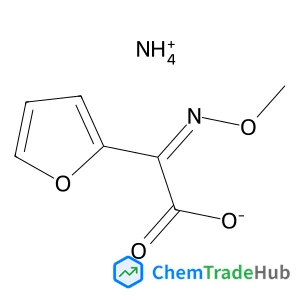
Ammonium (Z)-2-(furan-2-yl)-2-(methoxyimino)acetate
CAS Number:
97148-39-5
Molecular Formula:
C7H10N2O4

Recommended Suppliers






Disclaimer
This page provides academic journal information for reference and research purposes only. We are not affiliated with any journal publishers and do not handle publication submissions. For publication-related inquiries, please contact the respective journal publishers directly.
If you notice any inaccuracies in the information displayed, please contact us at support@chemtradehub.com. We will promptly review and address your concerns.