












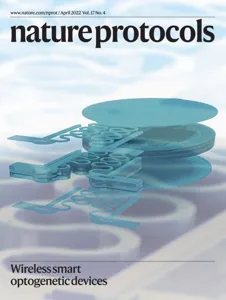
Nature Protocols
Basic Information
Brief Name:
NAT PROTOC
Impact Factor:
13.1
ISSN:
1754-2189
Research Field:
BIOLOGICAL
h-index:
206
Self-citation Rate:
0.8%
Articles per Year:
136
SCI Index Status:
Science Citation Index Expanded
Journal Website:
https://www.nature.com/nprot
Journal Introduction:
Nature Protocols publishes secondary research articles - predominantly Protocols (including Protocol Updates and Protocol Extensions), but also techniques-related Reviews, Perspectives, Correspondences, Matters Arising, Commentaries, and Consensus Statements - all of which are based on published primary research papers. We cover new techniques and technologies, as well as established methods, used in all fields of the biological, chemical and clinical sciences. Articles are commissioned by the editors. Authors are welcome to submit suggestions for articles as Presubmission Enquiries, which may then be formally commissioned by the editors. Each Protocol contains a full list of reagents and equipment, timing information, and step-by-step procedures (instructions for performing the experiment), as well as information on designing and adapting the technique, its advantages and limitations compared to alternatives, troubleshooting, analysing data, and interpreting results. We also encourage authors to submit videos for steps that are technically challenging. All of our Protocols have been proven to work already (used to generate data in published papers), with further validation provided by peer review of the Protocols themselves. As a supporting primary research paper is a requirement for publication, novelty is not a prerequisite. However, it is important that our Protocols add value to the published literature and expand significantly upon the information available in the supporting papers (for example, with additional detail relating to experimental design, troubleshooting, data analysis, etc.). As we are not a primary research journal, our articles do not include new (previously unpublished) research findings and should only contain minimal new supporting data relating specifically to development of the Protocol (e.g. validation, benchmarking, and troubleshooting data). To ensure we provide the most up-to-date version of a Protocol, the procedure may sometimes deviate slightly from the version used in the supporting paper, but all minor modifications must be clearly discussed. Any major improvements, adaptations, or extensions of a Protocol should be supported by the publication of an additional supporting primary research paper. In addition to Protocols, we also publish other types of techniques-related articles.
CiteScore
CiteScore
29.1
SJR
7.419
SNIP
3.387
| Subject | Rank | Percentile |
|---|---|---|
Biochemistry, Genetics and Molecular BiologyGeneral Biochemistry, Genetics and Molecular Biology |
5 / 221 | 97% |
Journal Statistics
Quarterly
Issues/Year
Submission to first editorial decision (median days): 14
Submission to acceptance (median days): 197
Review Cycle
Article Processing Fee
Submission Information
Submission Website:
https://mts-np.nature.com/Accepted Types:
Protocol, Protocol Update, Protocol Extension, Correspondence, Matters Arising, Perspective, Commentary, Review, Analysis
Recommended Journals
Related Articles
Eire. Report of the State Chemist for the year ended March 31st, 1940
Other
DOI: 10.1039/AN940650459A
South Africa. Annual Report of the Divison of Chemical Services, 1939
Other
DOI: 10.1039/AN940650229A
Spectrophotometric terms and symbols. Report of a panel appointed by the Publication Committee
Other
DOI: 10.1039/AN942670227A
Proceedings of the Society of Public Analysts and other Analytical Chemists
Other
DOI: 10.1039/AN939640077A
You might also like
Compound Q&A
What is Ethyl 3-cyclohexylpropanoate (CAS: 10094-36-7)?
Ethyl 3-cyclohexylpropanoate is a clear, colorless to light yellow liquid with a...
10094-36-7Ethyl 3-cyclohexylpr...
Compound Q&A
How should waste containing 2-(Hydroxymethyl)-5-(methoxycarbonyl)-6-methyl-4-(2-nitrophenyl)nicotinic acid (CAS: 34783-31-8) be handled?
Waste containing 2-(Hydroxymethyl)-5-(methoxycarbonyl)-6-methyl-4-(2-nitrophenyl...
34783-31-82-(Hydroxymethyl)-5-...
Compound Q&A
How should waste containing 2,4,6-Tris(pentafluoroethyl)-1,3,5-triazine (CAS: 858-46-8) be handled?
Waste containing 2,4,6-Tris(pentafluoroethyl)-1,3,5-triazine (CAS: 858-46-8) sho...
858-46-82,4,6-Tris(pentafluo...
Compound Q&A
What precautions should be taken when handling Chloroac-nle-oh (CAS: 56787-36-1)?
When handling Chloroac-nle-oh (CAS: 56787-36-1), it is essential to wear appropr...
56787-36-1Chloroac-nle-oh
Compound Q&A
What industries use Ethyl 6-phenylimidazo[2,1-b][1,3]thiazole-3-carboxylate (CAS: 752244-05-6)?
Ethyl 6-phenylimidazo[2,1-b][1,3]thiazole-3-carboxylate is primarily used in the...
752244-05-6Ethyl 6-phenylimidaz...
Compound Q&A
Are there alternatives to alpha-(2-Bromophenyl)benzylamine (CAS: 55095-15-3) in synthesis?
Alternatives to alpha-(2-Bromophenyl)benzylamine (CAS: 55095-15-3) in synthesis ...
55095-15-3alpha-(2-Bromophenyl...
Compound Q&A
How should waste containing 2-Chloro-5-methoxypyridine (CAS: 139585-48-1) be handled?
Waste containing 2-Chloro-5-methoxypyridine (CAS: 139585-48-1) should be managed...
139585-48-12-Chloro-5-methoxypy...
Compound Q&A
What industries use 1-(4-Methoxyphenyl)-2,5-dimethyl-1H-pyrrole (CAS: 5044-27-9)?
1-(4-Methoxyphenyl)-2,5-dimethyl-1H-pyrrole (CAS: 5044-27-9) is used in various ...
5044-27-91-(4-Methoxyphenyl)-...
Compound Q&A
Are there alternatives to 3-Bromo-5-(N-Boc)aminomethylisoxazole (CAS: 903131-45-3) in synthesis?
There are alternative reagents and compounds that can be used in the synthesis o...
903131-45-33-Bromo-5-(N-Boc)ami...
Compound Q&A
What is Tungsten(IV) oxide (CAS: 12036-22-5)?
Tungsten(IV) oxide, also known as tungsten dioxide, is a chemical compound with ...
12036-22-5Tungsten(IV) oxide
Recommended Compounds






Recommended Suppliers






Disclaimer
This page provides academic journal information for reference and research purposes only. We are not affiliated with any journal publishers and do not handle publication submissions. For publication-related inquiries, please contact the respective journal publishers directly.
If you notice any inaccuracies in the information displayed, please contact us at support@chemtradehub.com. We will promptly review and address your concerns.