













Mitochondrial DNA Part A
Basic Information
Brief Name:
MITOCHONDRIAL DNA A
Impact Factor:
1.1
ISSN:
2470-1394
Research Field:
BIOLOGICAL
h-index:
8
Self-citation Rate:
6.2%
Articles per Year:
8
SCI Index Status:
Science Citation Index Expanded
Journal Website:
https://www.tandfonline.com/journals/imdn21
Journal Introduction:
Mitochondrial DNA Part A publishes original high-quality manuscripts on physical, chemical, and biochemical aspects of mtDNA and proteins involved in mtDNA metabolism, and/or interactions. Manuscripts on cytosolic and extracellular mtDNA, and on dysfunction caused by alterations in mtDNA integrity as well as methodological papers detailing novel approaches for mtDNA manipulation in vitro and in vivo are welcome. Descriptive papers on DNA sequences from mitochondrial genomes, and also analytical papers in the areas of population genetics, phylogenetics and human evolution that use mitochondrial DNA as a source of evidence for studies will be considered for publication. The Journal also considers manuscripts that examine population genetic and systematic theory that specifically address the use of mitochondrial DNA sequences, as well as papers that discuss the utility of mitochondrial DNA information in medical studies and in human evolutionary biology. Please note, Mitochondrial DNA no longer accepts genome announcement papers. Submission of mitochondrial DNA announcements should be made to the new journal Mitochondrial DNA Part B: Resources . Peer Review Statement Mitochondrial DNA Part A is an international, peer-reviewed journal which publishes high quality, original research contributions to scientific knowledge. All manuscript submissions are subject to initial appraisal by the Editor, and, if found suitable for further consideration, to peer review by independent, anonymous expert referees. All peer review is single anonymized and submission is online via ScholarOne Manuscripts.
CiteScore
CiteScore
0.54
SJR
0.236
SNIP
0.392
| Subject | Rank | Percentile |
|---|---|---|
Biochemistry, Genetics and Molecular BiologyGenetics |
298 / 318 | 6% |
Journal Statistics
Issues/Year
58 days avg. from submission to first decision
Review Cycle
Article Processing Fee
Submission Information
Submission Website:
https://mc.manuscriptcentral.com/gdnaRecommended Journals
Related Articles
Structure and magnetic properties of (Fe2O3)n clusters (n = 1–5)
A. Erlebach, C. Hühn, R. Jana, M. Sierka
2014-06-23
Communication
DOI: 10.1039/C4CP02099E
Hydrocarbon growth via ion-molecule reactions: computational studies of the isomers of C4H2+, C6H2+ and C6H4+ and their formation paths from acetylene and its fragments
Timothy J. Lee
2014-11-26
Paper
DOI: 10.1039/C4CP04480K
Modulation of physical properties of supramolecular hydrogels based on a hydrophobic core
Masashi Ohno, Shun Fujita, Kowichiro Saruhashi, Nobuhide Miyachi, Katsuaki Miyaji
2014-11-26
Paper
DOI: 10.1039/C4CP04395B
Analytic gradients, geometry optimization and excited state potential energy surfaces from the particle-particle random phase approximation
Du Zhang, Degao Peng, Peng Zhang
2014-11-12
Paper
DOI: 10.1039/C4CP04109G
A class of polysulfide catholytes for lithium–sulfur batteries: energy density, cyclability, and voltage enhancement
Xingwen Yu, Arumugam Manthiram
2014-11-28
Paper
DOI: 10.1039/C4CP04895D
Concentration effects on intrachain polaron recombination in conjugated polymers
Luiz Antonio Ribeiro Junior, Wiliam Ferreira da Cunha, Antonio Luciano de Almeida Fonseca, Ricardo Gargano, Geraldo Magela e Silva
2014-11-18
Paper
DOI: 10.1039/C4CP04514A
Formation of dibenzofuran, dibenzo-p-dioxin and their hydroxylated derivatives from catechol
Mohammednoor Altarawneh, Bogdan Z. Dlugogorski
2014-11-21
Paper
DOI: 10.1039/C4CP04168B
Electronic structure aspects of the complete O2 transfer reaction between Ni(ii) and Mn(ii) complexes with cyclam ligands
Jhon Zapata-Rivera, Rosa Caballol, Carmen J. Calzado
2014-12-05
Paper
DOI: 10.1039/C4CP05127K
NMR studies of DNA microcapsules prepared using sonochemical methods
Keren Keinan-Adamsky, Jordan H. Chill, Hugo E. Gottlieb, Gil Goobes
2014-11-21
Paper
DOI: 10.1039/C4CP04312J
Compressibility, thermal expansion coefficient and heat capacity of CH4 and CO2 hydrate mixtures using molecular dynamics simulations
F. L. Ning, K. Glavatskiy, Z. Ji, T. J. H. Vlugt
2014-12-03
Paper
DOI: 10.1039/C4CP04212C
You might also like
Compound Q&A
What is Ethyl 3-cyclohexylpropanoate (CAS: 10094-36-7)?
Ethyl 3-cyclohexylpropanoate is a clear, colorless to light yellow liquid with a...
10094-36-7Ethyl 3-cyclohexylpr...
Compound Q&A
How should waste containing 2-(Hydroxymethyl)-5-(methoxycarbonyl)-6-methyl-4-(2-nitrophenyl)nicotinic acid (CAS: 34783-31-8) be handled?
Waste containing 2-(Hydroxymethyl)-5-(methoxycarbonyl)-6-methyl-4-(2-nitrophenyl...
34783-31-82-(Hydroxymethyl)-5-...
Compound Q&A
How should waste containing 2,4,6-Tris(pentafluoroethyl)-1,3,5-triazine (CAS: 858-46-8) be handled?
Waste containing 2,4,6-Tris(pentafluoroethyl)-1,3,5-triazine (CAS: 858-46-8) sho...
858-46-82,4,6-Tris(pentafluo...
Compound Q&A
What precautions should be taken when handling Chloroac-nle-oh (CAS: 56787-36-1)?
When handling Chloroac-nle-oh (CAS: 56787-36-1), it is essential to wear appropr...
56787-36-1Chloroac-nle-oh
Compound Q&A
What industries use Ethyl 6-phenylimidazo[2,1-b][1,3]thiazole-3-carboxylate (CAS: 752244-05-6)?
Ethyl 6-phenylimidazo[2,1-b][1,3]thiazole-3-carboxylate is primarily used in the...
752244-05-6Ethyl 6-phenylimidaz...
Compound Q&A
Are there alternatives to alpha-(2-Bromophenyl)benzylamine (CAS: 55095-15-3) in synthesis?
Alternatives to alpha-(2-Bromophenyl)benzylamine (CAS: 55095-15-3) in synthesis ...
55095-15-3alpha-(2-Bromophenyl...
Compound Q&A
How should waste containing 2-Chloro-5-methoxypyridine (CAS: 139585-48-1) be handled?
Waste containing 2-Chloro-5-methoxypyridine (CAS: 139585-48-1) should be managed...
139585-48-12-Chloro-5-methoxypy...
Compound Q&A
What industries use 1-(4-Methoxyphenyl)-2,5-dimethyl-1H-pyrrole (CAS: 5044-27-9)?
1-(4-Methoxyphenyl)-2,5-dimethyl-1H-pyrrole (CAS: 5044-27-9) is used in various ...
5044-27-91-(4-Methoxyphenyl)-...
Compound Q&A
Are there alternatives to 3-Bromo-5-(N-Boc)aminomethylisoxazole (CAS: 903131-45-3) in synthesis?
There are alternative reagents and compounds that can be used in the synthesis o...
903131-45-33-Bromo-5-(N-Boc)ami...
Compound Q&A
What is Tungsten(IV) oxide (CAS: 12036-22-5)?
Tungsten(IV) oxide, also known as tungsten dioxide, is a chemical compound with ...
12036-22-5Tungsten(IV) oxide
Recommended Compounds


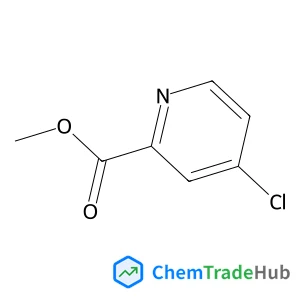
![1-(Hexopyranosyloxy)-4a,5-dihydroxy-7-methyl-1,4a,5,6,7,7a-hexahydrocyclopenta[c]pyran-7-yl 3-phenylacrylate structure](https://static.chemtradehub.com/structs/192/19210-12-9-ecae.webp "1-(Hexopyranosyloxy)-4a,5-dihydroxy-7-methyl-1,4a,5,6,7,7a-hexahydrocyclopenta[c]pyran-7-yl 3-phenylacrylate structure")
1-(Hexopyranosyloxy)-4a,5-dihydroxy-7-methyl-1,4a,5,6,7,7a-hexahydrocyclopenta[c]pyran-7-yl 3-phenylacrylate
CAS Number:
19210-12-9
Molecular Formula:
C24H30O11
![2-{3-[4-(3-Chlorophenyl)-1-piperazinyl]propyl}[1,2,4]triazolo[4,3-a]pyridin-3(2H)-one hydrochloride (1:1) structure](https://static.chemtradehub.com/structs/253/25332-39-2-496e.webp "2-{3-[4-(3-Chlorophenyl)-1-piperazinyl]propyl}[1,2,4]triazolo[4,3-a]pyridin-3(2H)-one hydrochloride (1:1) structure")
2-{3-[4-(3-Chlorophenyl)-1-piperazinyl]propyl}[1,2,4]triazolo[4,3-a]pyridin-3(2H)-one hydrochloride (1:1)
CAS Number:
25332-39-2
Molecular Formula:
C19H23Cl2N5O

Recommended Suppliers




Disclaimer
This page provides academic journal information for reference and research purposes only. We are not affiliated with any journal publishers and do not handle publication submissions. For publication-related inquiries, please contact the respective journal publishers directly.
If you notice any inaccuracies in the information displayed, please contact us at support@chemtradehub.com. We will promptly review and address your concerns.