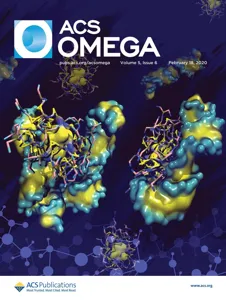
ACS Omega

Basic Information

Brief Name: ACS Omega
Impact Factor: 3.7
ISSN: 2470-1343
Research Field: CHEMICAL
h-index: 0
Self-citation Rate: 5.4%
Articles per Year: 4363

SCI Index Status:
Journal Website: https://pubs.acs.org/journal/acsodf
Journal Introduction:

ACS Omega publishes new peer-reviewed findings in chemistry and the interfacing sciences, including interdisciplinary studies. The editors seek content supported by sound scientific principles and robust experimental protocols, without a requirement for wider significance. Reports of negative results that meet these expectations are welcome. ACS Omega welcomes work on topics including (but not limited to): Core chemistry (inorganic chemistry, organic chemistry, analytical chemistry, physical chemistry) Agriculture and food chemistry Applied chemistry Astrochemistry Chemical biology, biological chemistry and medicinal chemistry Catalysis Chemical engineering and industrial chemistry Energy Environmental and sustainable chemistry Materials science Measurement science Nanoscience Polymer science Theoretical and computational chemistry

CiteScore

CiteScore
6.6
SJR
0.71
SNIP
0.919
Subject Rank Percentile
ChemistryGeneral Chemistry
96 / 408 76%

Journal Statistics

Weekly
Issues/Year
Submission to First Editorial Decision (Median Days): 9.8 Submission to First Decision with Peer Review (Median Days): 28 Submission to Accept (Median Days): 71 Accept to ASAP Publication (Median Days): 15
Review Cycle
CC BY 4.0 license (USD): $1,935 CC BY‑NC‑ND 4.0 license (USD): $1,935
Article Processing Fee

Submission Information

Submission Website:

https://acs.manuscriptcentral.com/acs

Accepted Types:

Research Articles
Perspectives
Mini-Reviews

Related Articles

Remarkable switching behavior of bimodally stimuli-responsive photochromic dithienylethenes with redox-active organometallic attachments

Keiko Motoyama, Takashi Koike, Munetaka Akita

2008-10-02 Communication

DOI: 10.1039/B809318K

The doping effect of fluorinated aromatic hydrocarbon solvents on the performance of common olefin metathesis catalysts: application in the preparation of biologically active compounds

Cezary Samojłowicz, Michał Bieniek, Andrzej Zarecki, Renat Kadyrov, Karol Grela

2008-10-22 Communication

DOI: 10.1039/B816567J

Thermal cyclotrimerization of tetraphenyl[5]cumulene(tetraphenylhexapentaene) to a tricyclodecadiene derivative

Nazrul Islam, Takashi Ooi, Tetsuo Iwasawa, Masaki Nishiuchi, Yasuhiko Kawamura

2008-12-15 Communication

DOI: 10.1039/B815620D

Wet-chemical approach for the halogenation of hydrogenated boron-doped diamond electrodes

Manash R. Das, Vera G. Praig, Francois LeNormand, Musen Li, Rabah Boukherroub

2008-10-22 Communication

DOI: 10.1039/B810975C

Silver-enhanced fluorescence emission of single quantum dot nanocomposites

Yi Fu, Jian Zhang, Joseph R. Lakowicz

2008-11-19 Communication

DOI: 10.1039/B816736B

Sensitive liposomes encoded with oligonucleotideamphiphiles: a biocompatible switch

Gregory Giannone

2008-09-23 Communication

DOI: 10.1039/B812398E

Back matter

Front/Back Matter

DOI: 10.1039/B819970C

Relaxation rates for spirocyclohexyl nitroxyl radicals are suitable for interspin distance measurements at temperatures up to about 125 K

Velavan Kathirvelu, Christopher Smith, Christopher Parks, Md. Abdul Mannan, Yozo Miura, Keizo Takeshita, Sandra S. Eaton, Gareth R. Eaton

2008-11-25 Communication

DOI: 10.1039/B817758A

You might also like

Compound Q&A

What is Ethyl 3-cyclohexylpropanoate (CAS: 10094-36-7)?

Ethyl 3-cyclohexylpropanoate is a clear, colorless to light yellow liquid with a...

10094-36-7Ethyl 3-cyclohexylpr...
Compound Q&A

How should waste containing 2-(Hydroxymethyl)-5-(methoxycarbonyl)-6-methyl-4-(2-nitrophenyl)nicotinic acid (CAS: 34783-31-8) be handled?

Waste containing 2-(Hydroxymethyl)-5-(methoxycarbonyl)-6-methyl-4-(2-nitrophenyl...

34783-31-82-(Hydroxymethyl)-5-...
Compound Q&A

How should waste containing 2,4,6-Tris(pentafluoroethyl)-1,3,5-triazine (CAS: 858-46-8) be handled?

Waste containing 2,4,6-Tris(pentafluoroethyl)-1,3,5-triazine (CAS: 858-46-8) sho...

858-46-82,4,6-Tris(pentafluo...
Compound Q&A

What precautions should be taken when handling Chloroac-nle-oh (CAS: 56787-36-1)?

When handling Chloroac-nle-oh (CAS: 56787-36-1), it is essential to wear appropr...

56787-36-1Chloroac-nle-oh
Compound Q&A

What industries use Ethyl 6-phenylimidazo[2,1-b][1,3]thiazole-3-carboxylate (CAS: 752244-05-6)?

Ethyl 6-phenylimidazo[2,1-b][1,3]thiazole-3-carboxylate is primarily used in the...

752244-05-6Ethyl 6-phenylimidaz...
Compound Q&A

Are there alternatives to alpha-(2-Bromophenyl)benzylamine (CAS: 55095-15-3) in synthesis?

Alternatives to alpha-(2-Bromophenyl)benzylamine (CAS: 55095-15-3) in synthesis ...

55095-15-3alpha-(2-Bromophenyl...
Compound Q&A

How should waste containing 2-Chloro-5-methoxypyridine (CAS: 139585-48-1) be handled?

Waste containing 2-Chloro-5-methoxypyridine (CAS: 139585-48-1) should be managed...

139585-48-12-Chloro-5-methoxypy...
Compound Q&A

What industries use 1-(4-Methoxyphenyl)-2,5-dimethyl-1H-pyrrole (CAS: 5044-27-9)?

1-(4-Methoxyphenyl)-2,5-dimethyl-1H-pyrrole (CAS: 5044-27-9) is used in various ...

5044-27-91-(4-Methoxyphenyl)-...
Compound Q&A

Are there alternatives to 3-Bromo-5-(N-Boc)aminomethylisoxazole (CAS: 903131-45-3) in synthesis?

There are alternative reagents and compounds that can be used in the synthesis o...

903131-45-33-Bromo-5-(N-Boc)ami...
Compound Q&A

What is Tungsten(IV) oxide (CAS: 12036-22-5)?

Tungsten(IV) oxide, also known as tungsten dioxide, is a chemical compound with ...
12036-22-5Tungsten(IV) oxide
Disclaimer
This page provides academic journal information for reference and research purposes only. We are not affiliated with any journal publishers and do not handle publication submissions. For publication-related inquiries, please contact the respective journal publishers directly.
If you notice any inaccuracies in the information displayed, please contact us at support@chemtradehub.com. We will promptly review and address your concerns.