Compound Q&A
How should waste containing 2,6-Dichloroindophenol (CAS: 956-48-9) be handled?
Answer
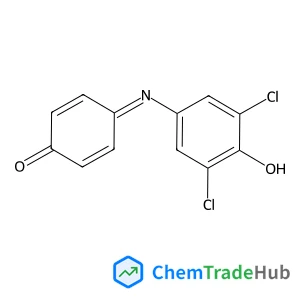
Waste containing 2,6-Dichloroindophenol should be collected in appropriate containers and stored separately. It should be treated as a hazardous waste and disposed of according to local regulations. Incineration is a common method, but professional waste disposal services should be used. Environmental protection measures include ensuring no spills occur and that waste is appropriately labeled and tracked throughout the disposal process.
About
CAS No
956-48-9
English Name
2,6-Dichloroindophenol
Molecular Formula
C12H7Cl2NO2
Molecular Weight
268.099 g/mol
SMILES
C1=CC(=O)C=CC1=NC2=CC(=C(C(=C2)Cl)O)Cl
InChIKey
CCBICDLNWJRFPO-UHFFFAOYSA-N
Last Updated: 2025-10-08 20:02