Compound Q&A
How should waste containing 2,4-Dinitrobenzaldehyde (CAS: 528-75-6) be handled?
Answer
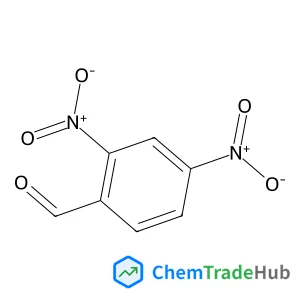
Waste containing 2,4-Dinitrobenzaldehyde (CAS: 528-75-6) should be collected in appropriate containers and labeled as hazardous waste. Proper disposal methods include incineration, which should be carried out at an authorized facility, or professional waste disposal services. Environmental protection precautions include ensuring no spillage or runoff occurs and following all local and national regulations. Safe handling and storage are critical to prevent any potential hazards during transportation and disposal.
About
CAS No
528-75-6
English Name
2,4-Dinitrobenzaldehyde
Molecular Formula
C7H4N2O5
Molecular Weight
196.12 g/mol
SMILES
C1=CC(=C(C=C1[N+](=O)[O-])[N+](=O)[O-])C=O
InChIKey
ZILXIZUBLXVYPI-UHFFFAOYSA-N
Last Updated: 2025-09-11 18:29