



AD
1,4-DIIODOBENZENE(CAS: 624-38-4)

CAS Number
Related Products

(TRIFLUOROMETYL)TRIMETHYLSILANE
CAS Number: 81290-20-2
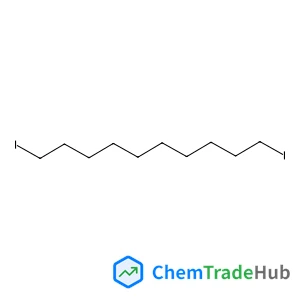
1,10-DIIODODECANE
CAS Number: 16355-92-3
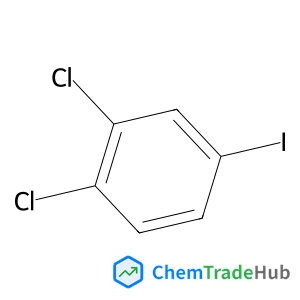
1,2-DICHLORO-4-IODOBENZENE
CAS Number: 20555-91-3
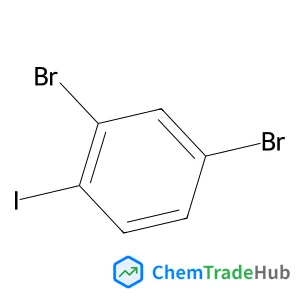
1,3-DIBROMO-4-IODOBENZENE
CAS Number: 19393-94-3
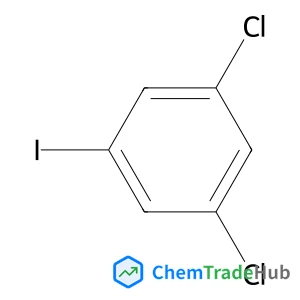
1,3-DICHLORO-4-IODOBENZENE
CAS Number: 3032-81-3
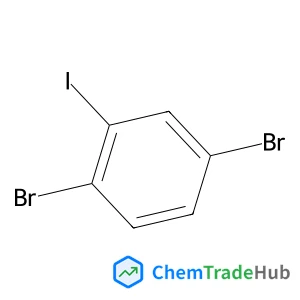
1,4-DIBROMO-2-IODOBENZENE
CAS Number: 89284-52-6

1,4-DIIODOOCTAFLUOROBUTANE
CAS Number: 375-50-8

1,4-DIVINYLPERFLUOROBUTANE
CAS Number: 678-65-9

1,6-DIIODOPERFLUOROHEXANE
CAS Number: 375-80-4
Other Suppliers for 1,4-DIIODOBENZENE

Basic Information
Molecular Formula
C6H4I2
Molecular Weight
329.91 g/mol
Physical Properties
Melting Point
128.0 and le 132.0 deg-C
Boiling Point
285 °C(lit.)
Density
2.350
Flash Point
285℃
Water Solubility
Soluble in ether and ethanol. Insoluble in water.
Chemical Identifiers
SMILES
C1=CC(=CC=C1I)I
InChIKey
LFMWZTSOMGDDJU-UHFFFAOYSA-N
Database References
MDL Number
MFCD00001054
Beilstein Registry Number
1904546
FAQ
1,4-Diiodobenzene is an organic compound with the chemical formula C6H4I2. It is a white crystalline solid at room temperature and is known for its low solubility in water but higher solubility in organic solvents. The compound exhibits moderate melting point and is commonly used in chemical synthesis due to its stability and reactivity.
1,4-Diiodobenzene is primarily used as an intermediate in the synthesis of pharmaceuticals, dyes, and other organic compounds. It also finds applications in research for functional group transformations and in industrial processes for producing various chemical derivatives. Its role in chemical reactions makes it valuable in both academic and commercial settings.
1,4-Diiodobenzene is considered toxic and should be handled with care. It may cause skin and eye irritation, and inhalation can be harmful. Safety standards recommend using appropriate personal protective equipment (PPE) and ensuring good ventilation when working with this compound. It is classified as a hazardous substance under certain regulations.
1,4-Diiodobenzene should be stored in a cool, dry, and well-ventilated area, away from light. It is typically kept in sealed glass containers to prevent moisture absorption and contamination. Proper storage conditions ensure stability and extend shelf life, while minimizing the risk of chemical reactions or degradation.
Safety Notice
Please verify product specifications and safety data before use. Contact the supplier for detailed safety information.
Always follow proper handling procedures
Contact Information
Contact Person
Michael East
Mobile
614-277-4348 ()
Telephone
614-277-4348 ()
Fax
81-3-5427-5216
Visit Website
http://www.tosoh.com/