



AD
(1S,4S,8R,9R,12S,13S,14R,16S)-9,14-Dihydroxy-7,7-dimethyl-17-methylene-3,10-dioxapentacyclo[14.2.1.0~1,13~.0~4,12~.0~8,12~]nonadecane-2,18-dione(CAS: 10391-09-0)
![(1S,4S,8R,9R,12S,13S,14R,16S)-9,14-Dihydroxy-7,7-dimethyl-17-methylene-3,10-dioxapentacyclo[14.2.1.0~1,13~.0~4,12~.0~8,12~]nonadecane-2,18-dione](https://static.chemtradehub.com/structs/103/10391-09-0-bd6f.webp "(1S,4S,8R,9R,12S,13S,14R,16S)-9,14-Dihydroxy-7,7-dimethyl-17-methylene-3,10-dioxapentacyclo[14.2.1.0~1,13~.0~4,12~.0~8,12~]nonadecane-2,18-dione")
CAS Number
Related Products
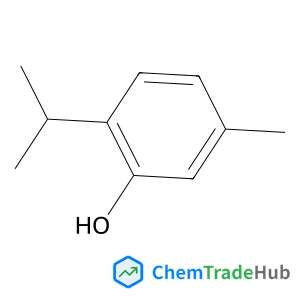
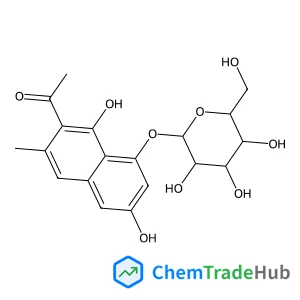
![(2R,3R)-6,8-Dihydroxy-3-(4-hydroxy-3-methoxyphenyl)-2-(hydroxymethyl)-9-(4-hydroxyphenyl)-2,3-dihydro-7H-[1,4]dioxino[2,3-h]chromen-7-one](https://static.chemtradehub.com/structs/868/86831-53-0-244c.webp)
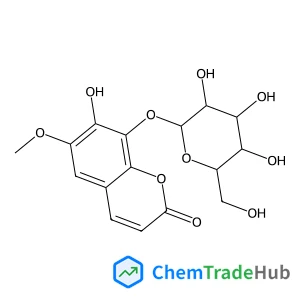
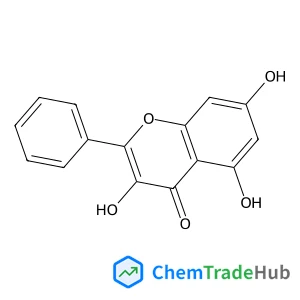
![2-(1-Hydroxy-3-{4-hydroxy-3-[(4-{3-hydroxy-2-[2-hydroxy-5-(3-hydroxypropyl)-3-methoxyphenyl]propyl}-2-methoxyphenoxy)methoxy]phenyl}-2-propanyl)-4-(3-hydroxypropyl)-6-methoxyphenol](https://static.chemtradehub.com/structs/523/5234-70-8-e062.webp)
Other Suppliers for (1S,4S,8R,9R,12S,13S,14R,16S)-9,14-Dihydroxy-7,7-dimethyl-17-methylene-3,10-dioxapentacyclo[14.2.1.0~1,13~.0~4,12~.0~8,12~]nonadecane-2,18-dione
![(1S,4S,8R,9R,12S,13S,14R,16S)-9,14-Dihydroxy-7,7-dimethyl-17-methylene-3,10-dioxapentacyclo[14.2.1.0~1,13~.0~4,12~.0~8,12~]nonadecane-2,18-dione — Shanghai Yinxin Laboratory Equipment Co., Ltd.](https://static.chemtradehub.com/suppliers/67cdd97a57537e5c8069adfb/67cdd97a57537e5c8069adfb-logo.webp)
![(1S,4S,8R,9R,12S,13S,14R,16S)-9,14-Dihydroxy-7,7-dimethyl-17-methylene-3,10-dioxapentacyclo[14.2.1.0~1,13~.0~4,12~.0~8,12~]nonadecane-2,18-dione — Guangdong Wanzhang Chemical Reagent Co., Ltd.](https://static.chemtradehub.com/suppliers/67ce43292b2de6e8e95a42fd/67ce43292b2de6e8e95a42fd-logo.webp)
![(1S,4S,8R,9R,12S,13S,14R,16S)-9,14-Dihydroxy-7,7-dimethyl-17-methylene-3,10-dioxapentacyclo[14.2.1.0~1,13~.0~4,12~.0~8,12~]nonadecane-2,18-dione — East Asia Chemical Co., Ltd. Shandong](https://static.chemtradehub.com/suppliers/67cde87857537e5c8069af31/67cde87857537e5c8069af31-logo.webp)
![(1S,4S,8R,9R,12S,13S,14R,16S)-9,14-Dihydroxy-7,7-dimethyl-17-methylene-3,10-dioxapentacyclo[14.2.1.0~1,13~.0~4,12~.0~8,12~]nonadecane-2,18-dione — Shanghai Yuyeh Biotechnology Co., Ltd.](https://static.chemtradehub.com/suppliers/67ce9f132b2de6e8e95a48fe/67ce9f132b2de6e8e95a48fe-logo.webp)
![(1S,4S,8R,9R,12S,13S,14R,16S)-9,14-Dihydroxy-7,7-dimethyl-17-methylene-3,10-dioxapentacyclo[14.2.1.0~1,13~.0~4,12~.0~8,12~]nonadecane-2,18-dione — ShangHaiJiZhiShengHua Technology Co Ltd](https://static.chemtradehub.com/suppliers/67cecbee2b2de6e8e95a5b72/67cecbee2b2de6e8e95a5b72-logo.webp)
Basic Information
Molecular Formula
C20H26O6
Molecular Weight
362.42 g/mol
Physical State
Powder
Chemical Identifiers
SMILES
CC1(CCC2C3(C1C(OC3)O)C4C(CC5CC4(C(=O)C5=C)C(=O)O2)O)C
InChIKey
WZYJEEIAFBHYJS-SONIPUFESA-N
Database References
MDL Number
MFCD20261062
FAQ
The compound is a solid at room temperature with a high melting point. Its molecular weight is approximately 424.44 g/mol. It has very low solubility in water but is soluble in organic solvents like methanol and ethanol. It is reactive towards nucleophiles and can undergo various types of organic transformations. The compound is not flammable and has a low volatility. It is stable under normal storage conditions and has limited reactivity in most common experimental conditions.
The compound can be synthesized via a multistep process involving Diels-Alder reactions, Wittig reactions, and intramolecular cyclizations. Key reagents include methyl vinyl ketone, triphenylphosphine, and appropriate alkenes. The synthetic route involves the use of transition metal catalysts to enhance reactivity and control the stereochemistry. The overall yield can be improved by optimizing reaction conditions and protecting groups.
This compound is primarily used in the pharmaceutical industry for the development of novel therapeutic agents. It also has applications in the polymer industry, where it can be used as a monomer or in the synthesis of biodegradable polymers. Additionally, it has potential uses in the production of sensors and semiconductors due to its unique chemical structure and reactivity.
Proper personal protective equipment (PPE) should be worn, including gloves, goggles, and a lab coat. Handling should be conducted in a well-ventilated area or under a fume hood. Spills should be cleaned up immediately using appropriate absorbents and disposed of according to local waste management regulations. An SDS (Safety Data Sheet) should be consulted for detailed safety information and emergency procedures. The compound is not particularly hazardous, but care should be taken to avoid skin contact and inhalation of dust or fumes.
Safety Notice
Please verify product specifications and safety data before use. Contact the supplier for detailed safety information.
Always follow proper handling procedures
Contact Information
3587493084@qq.com