AD
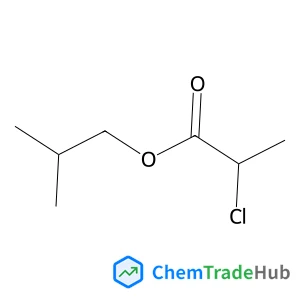
Isobutyl (2S)-2-chloropropanoate(CAS: 83261-15-8)
CAS Number
Related Products
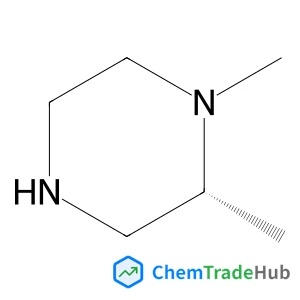
(2R)-1,2-Dimethylpiperazine
CAS Number: 623586-02-7
![(2S)-4-Hydroxy-7-(hydroxymethyl)-2-(2-hydroxy-2-propanyl)-2,3-dihydro-5H-furo[3,2-g]chromen-5-one](https://static.chemtradehub.com/structs/496/49624-66-0-7116.webp)
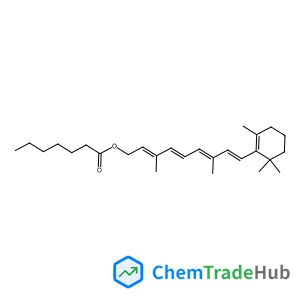
O~15~-Heptanoylretinol
CAS Number: 88641-44-5
![1-Methoxy-2-[1-(4-methoxyphenyl)propyl]benzene](https://static.chemtradehub.com/structs/334/33451-22-8-2ef2.webp)
CAS Number: 1350524-27-4
Other Suppliers for Isobutyl (2S)-2-chloropropanoate


Basic Information
Molecular Formula
C7H13ClO2
Molecular Weight
164.63 g/mol
Physical Properties
Melting Point
<-20°C
Boiling Point
175-177°C
Density
1.017
Flash Point
69°C
Chemical Identifiers
SMILES
CC(C)COC(=O)C(C)Cl
InChIKey
AEEGJNJYJCGJFZ-LURJTMIESA-N
Database References
MDL Number
MFCD00082209
FAQ
Isobutyl (2S)-2-chloropropanoate (CAS: 83261-15-8) is subject to various regulatory guidelines including GHS classification, REACH regulations, and FDA/EPA requirements. GHS classifies it as a Category 2 skin corrosive and a Category 2 serious eye damage/eye irritation. REACH requires registration for substances above 1 tonne per year and includes information on health and environmental hazards. FDA and EPA regulations govern its use in pharmaceuticals and environmental emissions, respectively.
Alternatives to Isobutyl (2S)-2-chloropropanoate (CAS: 83261-15-8) include other esters and chlorinated compounds. Common alternatives in synthesis include methyl (2S)-2-chloropropanoate and ethyl (2S)-2-chloropropanoate. Isomers and analogs, such as (2R)-isomers, can also be explored. These alternatives offer similar functionalities but with different physical and chemical properties.
The market for Isobutyl (2S)-2-chloropropanoate (CAS: 83261-15-8) is growing due to its use in pharmaceuticals, agrochemicals, and as a precursor in organic synthesis. Research trends focus on its application in developing new drugs and bioactive compounds. Additionally, there is increasing interest in exploring its use in sustainable chemical processes and as a more environmentally friendly alternative to traditional synthesis methods.
Waste containing Isobutyl (2S)-2-chloropropanoate (CAS: 83261-15-8) should be collected in sealed, leak-proof containers and stored in an appropriate location away from heat and ignition sources. It should be treated as a hazardous waste and disposed of through professional waste disposal services. Incineration is a common method for waste disposal, but it must be conducted under controlled conditions to minimize the release of chlorinated compounds. Environmental protection measures include ensuring proper handling and disposal to prevent soil and water contamination.
Safety Notice
Please verify product specifications and safety data before use. Contact the supplier for detailed safety information.
Always follow proper handling procedures