



AD
4-Chloro-2-pyridinecarbonitrile(CAS: 19235-89-3)
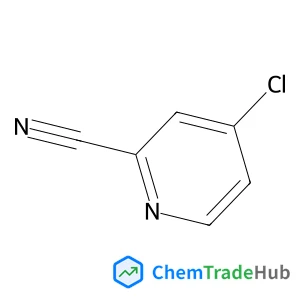
CAS Number
Related Products


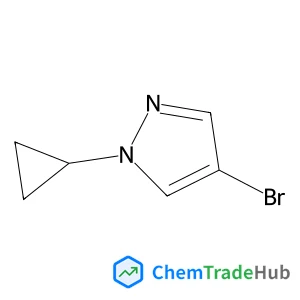
4-Bromo-1-cyclopropyl-1H-pyrazole
CAS Number: 1151802-23-1
![2-Methyl-2-propanyl 2-azaspiro[3.3]hept-6-ylcarbamate](https://static.chemtradehub.com/structs/111/1118786-85-8-1296.webp)

ethyl 5-methyl-1H-indole-2-carboxylate
CAS Number: 16382-15-3



3-Bromo-1-nitronaphthalene
CAS Number: 102153-47-9

Methyl 2,5-dichloronicotinate
CAS Number: 67754-03-4
Other Suppliers for 4-Chloro-2-pyridinecarbonitrile






Basic Information
Molecular Formula
C6H3ClN2
Molecular Weight
138.55 g/mol
Physical State
Solid
Physical Properties
Melting Point
81-85 °C
Boiling Point
308.2℃ at 760 mmHg
Chemical Identifiers
SMILES
C1=CN=C(C=C1Cl)C#N
InChIKey
DYEZRXLVZMZHQT-UHFFFAOYSA-N
Database References
MDL Number
MFCD06009833
FAQ
4-Chloro-2-pyridinecarbonitrile (CAS: 19235-89-3) falls under the scope of the Globally Harmonized System of Classification and Labelling of Chemicals (GHS), REACH regulations in the European Union, and FDA and EPA requirements in the United States. It is classified as a hazardous substance due to its potential for skin and eye irritation. Proper labeling, storage, and handling are essential to comply with these regulations.
There are several alternatives to 4-Chloro-2-pyridinecarbonitrile (CAS: 19235-89-3) in synthesis, such as 4-bromo-2-pyridinecarbonitrile and 4-fluoro-2-pyridinecarbonitrile. These alternatives can be used depending on the specific synthetic route and desired properties of the final product. Isomers and analogs can also be explored based on the chemical structure and reactivity.
The market for 4-Chloro-2-pyridinecarbonitrile (CAS: 19235-89-3) is currently stable, with increasing research interest in its application as a precursor for organic synthesis and pharmaceuticals. There is a growing trend towards developing more sustainable and environmentally friendly synthetic routes. Researchers are also exploring its use in agrochemicals and as a potential herbicide component.
Waste containing 4-Chloro-2-pyridinecarbonitrile (CAS: 19235-89-3) should be collected in appropriate containers and managed according to local and national regulations. Incineration is a common method for disposal, but it must be conducted in an enclosed system to minimize emissions. Professional waste disposal services can ensure safe and compliant handling. Environmental protection measures, including the use of personal protective equipment, are essential to prevent exposure and contamination.
Safety Notice
Please verify product specifications and safety data before use. Contact the supplier for detailed safety information.
Always follow proper handling procedures

Contact Information
Contact Person
Li Mo
lixing@pharmahuici.com
Mobile
19821860623
Visit Website
http://www.pharmahuici.comAddress
No. 8 Xiaoye Road, Building C, Fengxin Town, Shanghai