



AD
9-Phenylanthracene(CAS: 602-55-1)
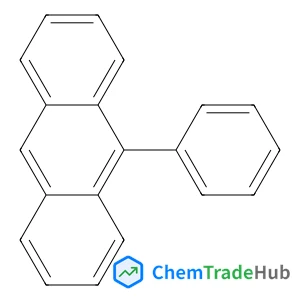
CAS Number
Related Products
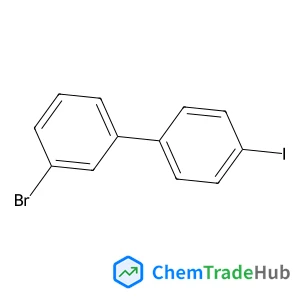
3-Bromo-4'-iodobiphenyl
CAS Number: 187275-73-6
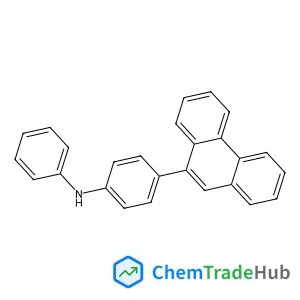
4-(Phenanthren-9-yl)-N-phenylaniline
CAS Number: 936916-08-4
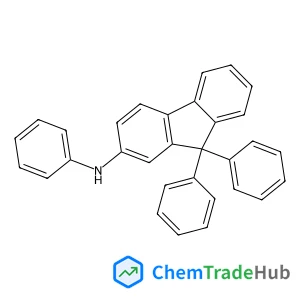
N,9,9-Triphenyl-9H-fluoren-2-amine
CAS Number: 860465-14-1
![[4-(1-Naphthyl)phenyl]boronic acid](https://static.chemtradehub.com/structs/870/870774-25-7-a673.webp)
[4-(1-Naphthyl)phenyl]boronic acid
CAS Number: 870774-25-7
![2-(Dibenzo[b,d]furan-4-yl)dodecahydro-1H-carbazole](https://static.chemtradehub.com/structs/192/1922121-95-6-f875.webp)
![4-Bromo-9,9'-spirobi[fluorene]](https://static.chemtradehub.com/structs/116/1161009-88-6-d159.webp)
4-Bromo-9,9'-spirobi[fluorene]
CAS Number: 1161009-88-6
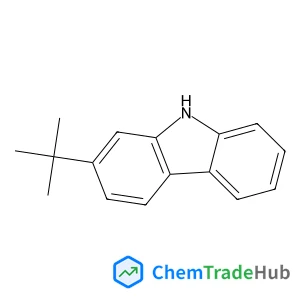
2-(2-Methyl-2-propanyl)-9H-carbazole
CAS Number: 69386-36-3
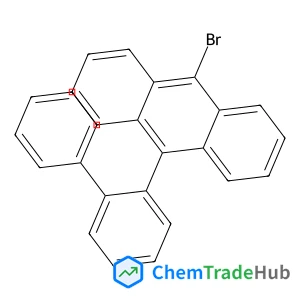
9-(2-Biphenylyl)-10-bromoanthracene
CAS Number: 400607-16-1
Other Suppliers for 9-Phenylanthracene






Basic Information
Molecular Formula
C20H14
Molecular Weight
254.33 g/mol
Physical Properties
Melting Point
152.0 to 157.0 deg-C
Boiling Point
417 °C(lit.)
Density
1.1180 (estimate)
Flash Point
192.1 °C
Chemical Identifiers
SMILES
C1=CC=C(C=C1)C2=C3C=CC=CC3=CC4=CC=CC=C42
InChIKey
LUBXLGUQZVKOFP-UHFFFAOYSA-N
Database References
MDL Number
MFCD00001252
FAQ
9-Phenylanthracene (CAS: 602-55-1) is classified under the Globally Harmonized System of Classification and Labeling of Chemicals (GHS) as a Category 3 carcinogen. In the European Union, it falls under the REACH regulation, requiring suppliers to provide Material Safety Data Sheets (MSDS) and Safety Data Sheets (SDS). For the United States, the Environmental Protection Agency (EPA) regulates its handling and disposal, while the Food and Drug Administration (FDA) may have restrictions in pharmaceutical applications. Compliance with local regulations is essential for safe handling and use.
Alternative reagents such as 9-Phenylacene or 9-Hydroxyphenanthrene can be considered as substitutes in synthesis. These compounds have similar structures and can be used to achieve comparable results. However, their availability and cost should be evaluated. Additionally, researchers may explore other aromatics depending on the specific application and desired properties.
Research on 9-Phenylanthracene (CAS: 602-55-1) is primarily focused on its photophysical properties and potential applications in organic electronics and optoelectronics. Market trends indicate increasing interest due to its unique optical properties. However, its usage in commercial products is still limited due to safety concerns and regulatory challenges. Emerging research is exploring its use in anti-cancer drugs and photodynamic therapy.
Waste containing 9-Phenylanthracene (CAS: 602-55-1) should be collected in sealed, leak-proof containers and stored in a cool, dry place away from ignition sources. Professional waste disposal services should be used for incineration or other safe disposal methods. Environmental protection precautions include ensuring no spillage and proper ventilation during handling. Compliance with local waste management regulations is crucial to prevent environmental contamination and ensure safe disposal.
Safety Notice
Please verify product specifications and safety data before use. Contact the supplier for detailed safety information.
Always follow proper handling procedures
Contact Information
3173480026@qq.com