



AD
4-Amino(~2~H_6_)butanoic acid(CAS: 70607-85-1)
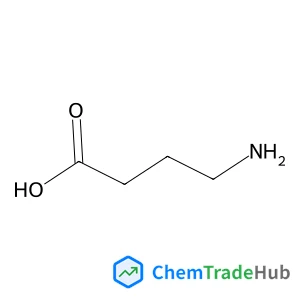
CAS Number
Related Products
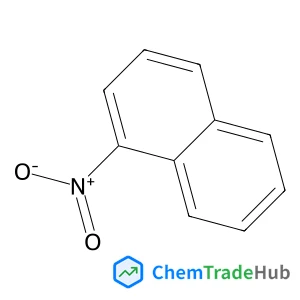
1-Nitro(~2~H_7_)naphthalene
CAS Number: 80789-77-1
pentanoic acid](https://static.chemtradehub.com/structs/877/87745-17-3-0d92.webp)
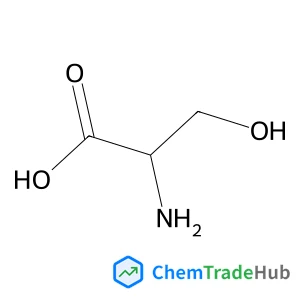
(2,3,3-~2~H_3_)Serine
CAS Number: 70094-78-9
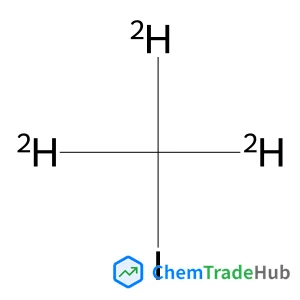
Iodo(~2~H_3_)methane
CAS Number: 865-50-9
![4-[2-Amino(2,2-~2~H_2_)ethyl]-1,2-benzenediol hydrochloride (1:1)](https://static.chemtradehub.com/structs/830/83008-33-7-f93c.webp)
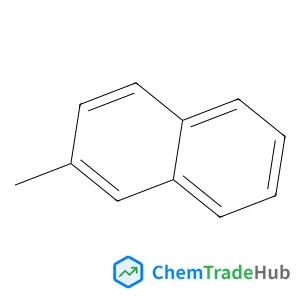
2-(~2~H_3_)Methyl(~2~H_7_)naphthalene
CAS Number: 7297-45-2
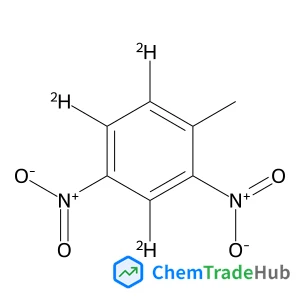
1-Methyl-2,4-dinitro(~2~H_3_)benzene
CAS Number: 93951-68-9
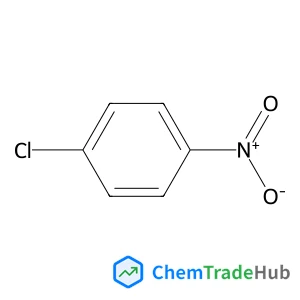
1-Chloro-4-nitro(~2~H_4_)benzene
CAS Number: 68239-23-6
Other Suppliers for 4-Amino(~2~H_6_)butanoic acid






Basic Information
Molecular Formula
C4H3D6NO2
Molecular Weight
109.16 g/mol
Physical Properties
Melting Point
195 °C (dec.)(lit.)
Chemical Identifiers
SMILES
C(CC(=O)O)CN
InChIKey
BTCSSZJGUNDROE-NMFSSPJFSA-N
Database References
MDL Number
MFCD01073982
FAQ
4-Amino(~2~H_6_)butanoic acid is a crystalline solid with a molecular weight of approximately 152.17 g/mol. It has a pKa of about 4.9 and is soluble in water and organic solvents. This compound is reactive towards nucleophiles and can undergo condensation reactions. It has a melting point of around 230-231°C and a boiling point of approximately 310°C. Its solubility in water is 1.5 g/100 mL at 25°C.
4-Amino(~2~H_6_)butanoic acid is typically synthesized via the reduction of 4-cyanobutanoic acid using hydrogen and a palladium catalyst. The reduction is performed under mild conditions to ensure selectivity. The yield is generally around 70-80%, and the purity can be increased through recrystallization. This method offers good control over the stereochemistry and is suitable for both laboratory and industrial scale production.
4-Amino(~2~H_6_)butanoic acid is used in various industries, particularly in pharmaceuticals for intermediate synthesis, in polymers as a monomer for functionalized polymers, and in sensors for functional groups that enhance sensor sensitivity. It also finds applications in semiconductor processing as a dopant or precursor in thin-film deposition processes.
When handling 4-Amino(~2~H_6_)butanoic acid, it is essential to wear appropriate personal protective equipment (PPE) such as gloves, safety goggles, and a lab coat. Work should be conducted in a well-ventilated area or a fume hood to minimize inhalation risks. Spills should be managed with appropriate absorbent materials, and the area should be cleaned thoroughly. In case of skin contact or eye exposure, flush with water for at least 15 minutes and seek medical attention. Always consult the Material Safety Data Sheet (MSDS) for detailed safety information and emergency procedures.
Safety Notice
Please verify product specifications and safety data before use. Contact the supplier for detailed safety information.
Always follow proper handling procedures
Contact Information
lihong.zhu@haolvbiotech.com