



AD
4-Hydroxy-4-(6-methoxy-3-pyridinyl)cyclohexanone(CAS: 708273-57-8)
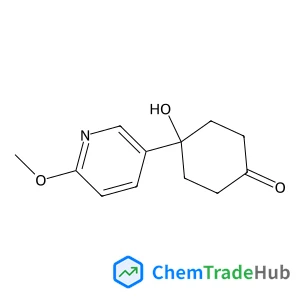
CAS Number
Related Products
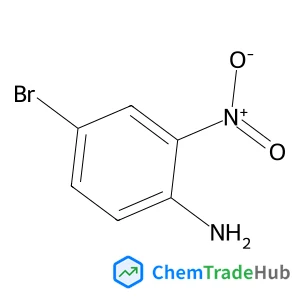
4-Bromo-2-nitroaniline
CAS Number: 875-51-4
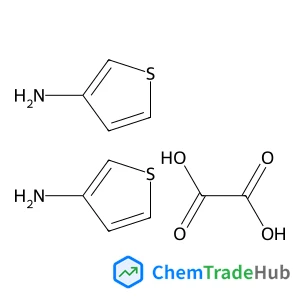
3-Thiophenamine ethanedioate (2:1)
CAS Number: 861965-63-1
![Ethyl 5-bromo-1H-pyrrolo[2,3-c]pyridine-2-carboxylate](https://static.chemtradehub.com/structs/800/800401-70-1-a33c.webp)
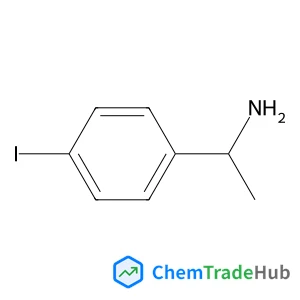
1-(4-Iodophenyl)ethanamine
CAS Number: 90086-41-2
![(1R,8S)-10-Azoniatricyclo[6.3.1.0~2,7~]dodeca-2,4,6-triene 4-methylbenzenesulfonate](https://static.chemtradehub.com/structs/697/69718-72-5-db8c.webp)
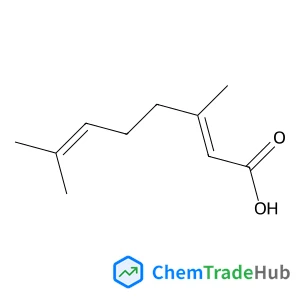
Nerolic acid
CAS Number: 4613-38-1

2-Fluoro-1,4-dimethoxybenzene
CAS Number: 82830-49-7
![2-Methyl-2-propanyl [5-(2-aminoethyl)-1,3-thiazol-2-yl]carbamate](https://static.chemtradehub.com/structs/875/875798-81-5-de0a.webp)
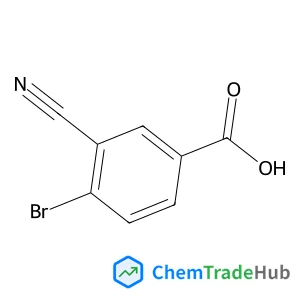
4-Bromo-3-cyanobenzoic acid
CAS Number: 887757-25-7
Other Suppliers for 4-Hydroxy-4-(6-methoxy-3-pyridinyl)cyclohexanone





Basic Information
Molecular Formula
C12H15NO3
Molecular Weight
221.26 g/mol
Physical Properties
Boiling Point
389.6 ℃ at 760 mmHg
Density
1.230
Chemical Identifiers
SMILES
COC1=NC=C(C=C1)C2(CCC(=O)CC2)O
InChIKey
VQZVMRZEBPGSFQ-UHFFFAOYSA-N
Database References
MDL Number
MFCD13185918
FAQ
4-Hydroxy-4-(6-methoxy-3-pyridinyl)cyclohexanone is a colorless to white crystalline solid with a molecular weight of approximately 253.22 g/mol. It has a solubility of about 1.5 g/L in water. It exhibits moderate reactivity under acidic conditions and is stable under basic conditions. It exhibits characteristic absorption bands in the UV-Vis spectrum, which can be used for identification purposes.
4-Hydroxy-4-(6-methoxy-3-pyridinyl)cyclohexanone can be synthesized via a multi-step process involving the condensation of 6-methoxy-3-pyridinone with cyclohexanone, followed by hydroxylation. This process requires careful control of the reaction conditions to achieve high selectivity and yield. Catalysts such as palladium complexes are typically used to improve the reaction efficiency.
4-Hydroxy-4-(6-methoxy-3-pyridinyl)cyclohexanone is primarily used in the pharmaceutical industry for the synthesis of certain drugs. It also has potential applications in the sensor technology sector, particularly in the development of chemical sensors for detecting specific analytes.
When handling 4-Hydroxy-4-(6-methoxy-3-pyridinyl)cyclohexanone, it is important to wear appropriate personal protective equipment (PPE) such as gloves, safety goggles, and a lab coat. This compound should be handled in a well-ventilated area or a fume hood to minimize inhalation risks. Spills should be cleaned up immediately using an appropriate absorbent material, and any waste should be disposed of in accordance with local regulations. Always refer to the Safety Data Sheet (SDS) for detailed safety information.
Safety Notice
Please verify product specifications and safety data before use. Contact the supplier for detailed safety information.
Always follow proper handling procedures
Contact Information
rs@raise-chem.com