



AD
1,1,1,3,3,3-Hexafluoro-2-(fluoromethoxy)propane(CAS: 28523-86-6)

CAS Number
Related Products
![[9,10-Di(1-naphthyl)-2-anthryl]boronic acid](https://static.chemtradehub.com/structs/867/867044-35-7-b844.webp)
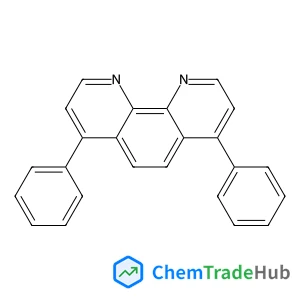
4,7-Diphenyl-1,10-phenanthroline
CAS Number: 1662-01-7
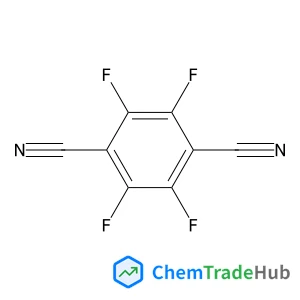
2,3,5,6-Tetrafluoroterephthalonitrile
CAS Number: 1835-49-0
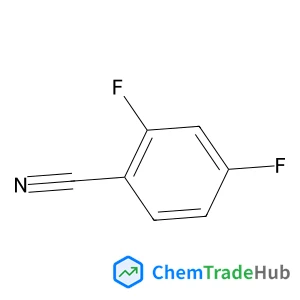
2,4-Difluorobenzonitrile
CAS Number: 3939-09-1
![9-Phenyl-9H,9'H-[3,3']bicarbazolyl](https://static.chemtradehub.com/structs/106/1060735-14-9-87a6.webp)
9-Phenyl-9H,9'H-[3,3']bicarbazolyl
CAS Number: 1060735-14-9
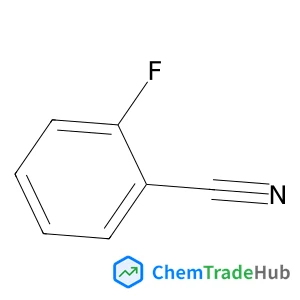
2-Fluorobenzonitrile
CAS Number: 394-47-8
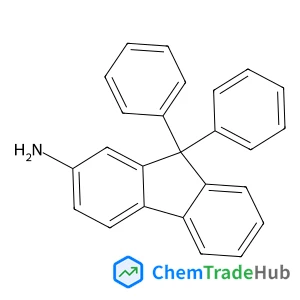
9,9-Diphenyl-9H-fluoren-2-amine
CAS Number: 1268519-74-9

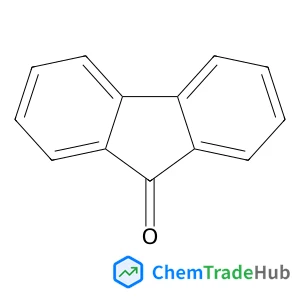
9H-Fluoren-9-one
CAS Number: 486-25-9
Other Suppliers for 1,1,1,3,3,3-Hexafluoro-2-(fluoromethoxy)propane




Basic Information
Molecular Formula
C4H3F7O
Molecular Weight
200.05 g/mol
Physical Properties
Melting Point
<25°C
Boiling Point
58°C(lit.)
Flash Point
58°C
Water Solubility
Slightly miscible with water.
Chemical Identifiers
SMILES
C(OC(C(F)(F)F)C(F)(F)F)F
InChIKey
DFEYYRMXOJXZRJ-UHFFFAOYSA-N
Database References
MDL Number
MFCD00153189
Beilstein Registry Number
2041023
FAQ
1,1,1,3,3,3-Hexafluoro-2-(fluoromethoxy)propane (CAS: 28523-86-6) is regulated under the Globally Harmonized System of Classification and Labelling of Chemicals (GHS), REACH regulations, and FDA/EPA requirements. It must be labeled with appropriate hazard statements and pictograms. Manufacturers and importers must ensure compliance with REACH registration and reporting obligations, and adhere to FDA and EPA guidelines for handling and storage.
Yes, alternatives to 1,1,1,3,3,3-Hexafluoro-2-(fluoromethoxy)propane (CAS: 28523-86-6) include perfluorocyclohexanol and fluoromethyl ether. These analogs and isomers can be used as substitutes in certain synthetic pathways, depending on the desired properties and reactivity. However, the choice of alternative depends on the specific chemical reaction and the availability of reagents.
The market for 1,1,1,3,3,3-Hexafluoro-2-(fluoromethoxy)propane (CAS: 28523-86-6) is growing due to its use in flame retardants, solvents, and as a precursor in the synthesis of other fluorinated compounds. Research trends focus on its applications in the electronics industry and as a component in advanced materials. Innovations in synthesis methods and the development of greener alternatives are also key areas of interest.
Waste containing 1,1,1,3,3,3-Hexafluoro-2-(fluoromethoxy)propane (CAS: 28523-86-6) should be collected in appropriate containers and stored in a secure location. It should be disposed of through professional waste disposal services that comply with local regulations. Incineration is a common method, but other disposal methods like chemical destruction or reclamation processes may also be used. Environmental precautions include monitoring for leaks and ensuring proper containment to prevent environmental contamination.
Safety Notice
Please verify product specifications and safety data before use. Contact the supplier for detailed safety information.
Always follow proper handling procedures
Contact Information
358927827@qq.com