



AD
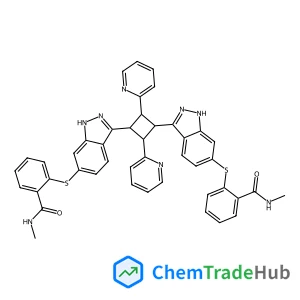
Axitinib Impurity 2(CAS: 1428728-83-9)
CAS Number
Related Products
![3-[4-Fluoro-2-(trifluoromethyl)phenyl]propanoic acid](https://static.chemtradehub.com/structs/916/916420-73-0-ee37.webp)
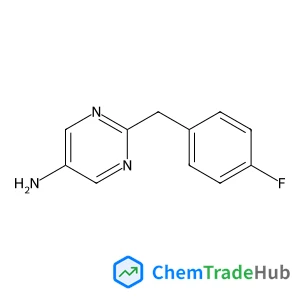
2-(4-Fluorobenzyl)-5-pyrimidinamine
CAS Number: 1152557-45-3
![Methyl [4-cyano-3-(3-thienyl)-1H-pyrazol-1-yl]acetate](https://static.chemtradehub.com/structs/209/2098083-01-1-68bf.webp)
![3-[4-Cyclopentyl-5-(methylsulfanyl)-4H-1,2,4-triazol-3-yl]-1-propanamine hydroiodide (1:1)](https://static.chemtradehub.com/structs/119/1197609-28-1-10f2.webp)
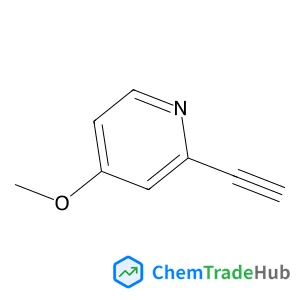
2-Ethynyl-4-methoxypyridine
CAS Number: 1211533-95-7
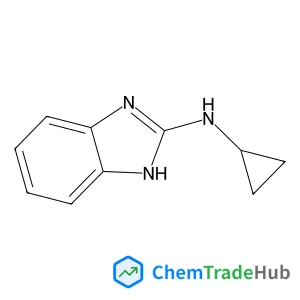
N-Cyclopropyl-1H-benzimidazol-2-amine
CAS Number: 941266-08-6
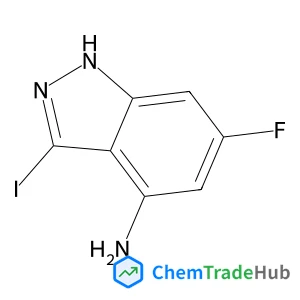
4-AMINO-6-FLUORO-3-IODO (1H)INDAZOLE
CAS Number: 885523-02-4
Other Suppliers for Axitinib Impurity 2




Basic Information
Molecular Formula
C44H36N8O2S2
Molecular Weight
772.94 g/mol
Physical State
Pale Beige
Physical Properties
Melting Point
> 244°C (dec.)
Density
1.46±0.1 g/cm3(Predicted)
Chemical Identifiers
SMILES
CNC(=O)c1ccccc1Sc1ccc2c(C3C(c4ccccn4)C(c4n[nH]c5cc(Sc6ccccc6C(=O)NC)ccc45)C3c3ccccn3)n[nH]c2c1
InChIKey
XYIIIGZESRABMF-UHFFFAOYSA-N
Database References
FAQ
Axitinib Impurity 2 (CAS: 1428728-83-9) falls under the regulatory guidelines of the Chemical Abstracts Service (CAS) and is subject to regulations by authorities such as REACH in the European Union, TSCA in the United States, and the Globally Harmonized System of Classification and Labeling of Chemicals (GHS). Manufacturers and distributors should comply with safety data sheets (SDS) and hazardous material transport regulations.
In the synthesis of Axitinib Impurity 2 (CAS: 1428728-83-9), there are alternative reagents and pathways that can be used to avoid impurities. Common substitutes include using purer starting materials and more selective catalysts. Alternative synthetic routes may also be explored to minimize the formation of impurities.
The market for Axitinib Impurity 2 (CAS: 1428728-83-9) is closely tied to the broader market for Axitinib, a tyrosine kinase inhibitor used in the treatment of renal cell carcinoma. Research trends are focused on improving the efficacy and safety of Axitinib, which drives the need for high-quality impurity control. Market trends indicate a demand for more precise and efficient synthesis methods to ensure regulatory compliance and product quality.
Waste containing Axitinib Impurity 2 (CAS: 1428728-83-9) should be collected in appropriate containers and stored under controlled conditions to prevent degradation and contamination. The waste should be treated by incineration or other professional waste disposal methods to ensure compliance with environmental regulations. Proper precautions should be taken to minimize environmental impact and ensure safety during handling and disposal.
Safety Notice
Please verify product specifications and safety data before use. Contact the supplier for detailed safety information.
Always follow proper handling procedures
Contact Information
3641133981@qq.com