



AD
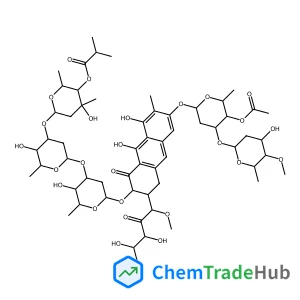
AburaMycin A, NSC 131187(CAS: 6992-70-7)
CAS Number
Related Products
![3-[4-Fluoro-2-(trifluoromethyl)phenyl]propanoic acid](https://static.chemtradehub.com/structs/916/916420-73-0-ee37.webp)
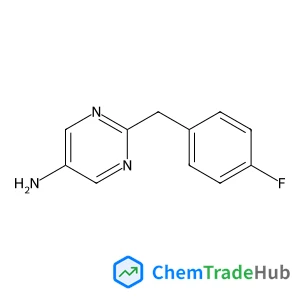
2-(4-Fluorobenzyl)-5-pyrimidinamine
CAS Number: 1152557-45-3
![Methyl [4-cyano-3-(3-thienyl)-1H-pyrazol-1-yl]acetate](https://static.chemtradehub.com/structs/209/2098083-01-1-68bf.webp)
![3-[4-Cyclopentyl-5-(methylsulfanyl)-4H-1,2,4-triazol-3-yl]-1-propanamine hydroiodide (1:1)](https://static.chemtradehub.com/structs/119/1197609-28-1-10f2.webp)
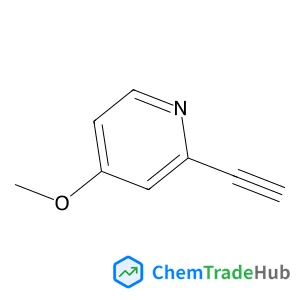
2-Ethynyl-4-methoxypyridine
CAS Number: 1211533-95-7
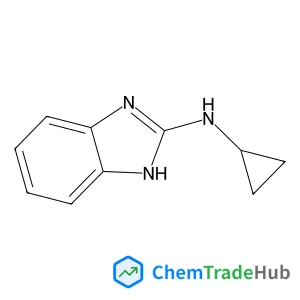
N-Cyclopropyl-1H-benzimidazol-2-amine
CAS Number: 941266-08-6
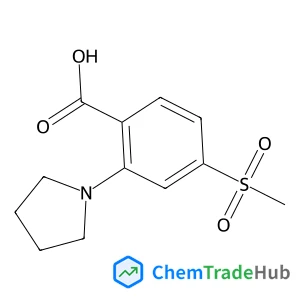
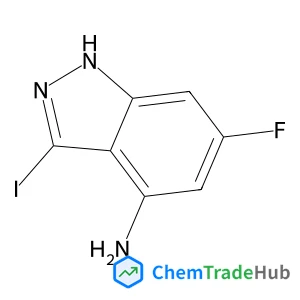
4-AMINO-6-FLUORO-3-IODO (1H)INDAZOLE
CAS Number: 885523-02-4
Other Suppliers for AburaMycin A, NSC 131187



Basic Information
Molecular Formula
C59H86O26
Molecular Weight
1211.3 g/mol
Chemical Identifiers
SMILES
CC1C(C(CC(O1)OC2C(CC3=C(C2=O)C(=C4C(=C3)C=C(C(=C4O)C)OC5CC(C(C(O5)C)OC(=O)C)OC6CC(C(C(O6)C)OC)O)O)C(C(=O)C(C(C)O)O)OC)OC7CC(C(C(O7)C)O)OC8CC(C(C(O8)C)OC(=O)C(C)C)(C)O)O
InChIKey
WPLCTUHONLQGIX-TWTCTLMISA-N
Database References
MDL Number
MFCD01745432
FAQ
AburaMycin A (CAS: 6992-70-7) falls under the regulatory guidelines of the Globally Harmonized System of Classification and Labeling of Chemicals (GHS), including specific hazard categories such as carcinogen, mutagen, and toxic to aquatic environments. Additionally, it is subject to the European Union’s Registration, Evaluation, Authorization and Restriction of Chemicals (REACH) and may require reporting to the US Environmental Protection Agency (EPA) under the Toxic Substances Control Act (TSCA).
Alternative reagents for synthesizing similar compounds include various natural products and semi-synthetic derivatives such as analogous diterpenoids. Isomers and structural analogs like dehydroaburitoxin and related diterpenes can serve as viable alternatives, providing similar biological activities without the specific properties of AburaMycin A (CAS: 6992-70-7).
The market for AburaMycin A (CAS: 6992-70-7) is currently focused on its potential as an antitumor agent. Research trends indicate ongoing investigations into its mechanisms of action and therapeutic applications, with increasing interest in its use as a lead compound for developing new anticancer drugs. The market is expected to grow as more studies validate its efficacy and safety in clinical settings.
Waste containing AburaMycin A (CAS: 6992-70-7) should be collected in appropriate containers and disposed of through professional waste disposal services. Incineration is a common method, but it must be done in a controlled environment to minimize environmental impact. Environmental protection measures include proper containment to prevent leakage and regular monitoring of the disposal site for any residual contamination. Compliance with local environmental regulations is essential for safe disposal.
Safety Notice
Please verify product specifications and safety data before use. Contact the supplier for detailed safety information.
Always follow proper handling procedures
Contact Information
3641133981@qq.com