



AD
2-(4-Chlorophenyl)-3-oxopropanenitrile(CAS: 62538-21-0)

CAS Number
Related Products
![3-[4-Fluoro-2-(trifluoromethyl)phenyl]propanoic acid](https://static.chemtradehub.com/structs/916/916420-73-0-ee37.webp)

2-(4-Fluorobenzyl)-5-pyrimidinamine
CAS Number: 1152557-45-3

![Methyl [4-cyano-3-(3-thienyl)-1H-pyrazol-1-yl]acetate](https://static.chemtradehub.com/structs/209/2098083-01-1-68bf.webp)
![3-[4-Cyclopentyl-5-(methylsulfanyl)-4H-1,2,4-triazol-3-yl]-1-propanamine hydroiodide (1:1)](https://static.chemtradehub.com/structs/119/1197609-28-1-10f2.webp)
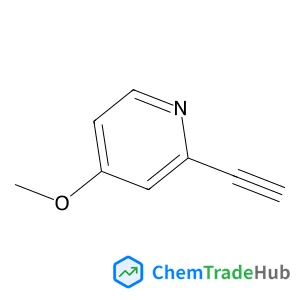
2-Ethynyl-4-methoxypyridine
CAS Number: 1211533-95-7

N-Cyclopropyl-1H-benzimidazol-2-amine
CAS Number: 941266-08-6


4-AMINO-6-FLUORO-3-IODO (1H)INDAZOLE
CAS Number: 885523-02-4
Other Suppliers for 2-(4-Chlorophenyl)-3-oxopropanenitrile





Basic Information
Molecular Formula
C9H6ClNO
Molecular Weight
168.62 g/mol
Physical Properties
Melting Point
157 ºC
Chemical Identifiers
SMILES
C1=CC(=CC=C1C(C=O)C#N)Cl
InChIKey
DAEXXSXAEMFPHQ-UHFFFAOYSA-N
Database References
MDL Number
MFCD00052669
FAQ
2-(4-Chlorophenyl)-3-oxopropanenitrile (CAS: 62538-21-0) is regulated under the Globally Harmonized System of Classification and Labelling of Chemicals (GHS) as a hazardous chemical. In the European Union, it falls under the REACH regulations, requiring manufacturers and importers to register the substance with the European Chemicals Agency (ECHA). The FDA and EPA may also have specific requirements for its handling and use in the U.S., including documentation, labeling, and environmental protection measures.
There are several alternatives to 2-(4-Chlorophenyl)-3-oxopropanenitrile (CAS: 62538-21-0) in synthesis, depending on desired properties and reaction conditions. Some common substitutes include 2-(3-chlorophenyl)-3-oxopropanenitrile, 2-(4-fluorophenyl)-3-oxopropanenitrile, and 2-(phenyl)-3-oxopropanenitrile. Researchers often explore these alternatives to find the most effective and cost-efficient reagents for their specific applications.
The market for 2-(4-Chlorophenyl)-3-oxopropanenitrile (CAS: 62538-21-0) is driven by its use in pharmaceuticals, pesticides, and fine chemicals. Recent research trends focus on exploring its applications in medicinal chemistry and developing new synthetic routes for improved efficiency and reduced environmental impact. The trend towards greener chemistry and sustainable manufacturing processes is also influencing the use of this compound in various industries.
Waste containing 2-(4-Chlorophenyl)-3-oxopropanenitrile (CAS: 62538-21-0) should be collected in appropriate containers and stored under controlled conditions to prevent contamination. It should be neutralized if necessary and then disposed of through incineration or professional waste disposal services. Environmental precautions include ensuring that waste does not enter waterways or soil and that all handlers follow safety protocols to avoid exposure. Adherence to local and international regulations for hazardous waste management is crucial.
Safety Notice
Please verify product specifications and safety data before use. Contact the supplier for detailed safety information.
Always follow proper handling procedures
Contact Information
3641133981@qq.com