



AD
1H-Indazole-7-carbonitrile(CAS: 256228-64-5)
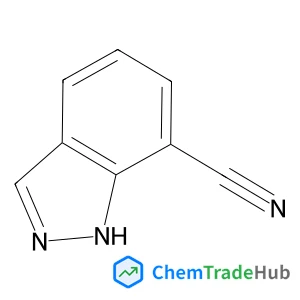
CAS Number
Related Products

(9Z)-9-Tetradecenoic acid
CAS Number: 544-64-9
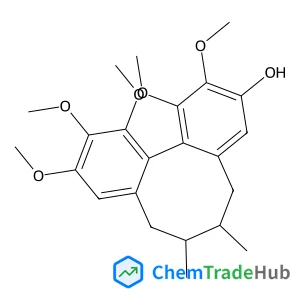
Gomisin K1
CAS Number: 75629-20-8
![2-Methyl-2-propanyl (1R,5R)-5-hydroxy-3-azabicyclo[4.1.0]heptane-3-carboxylate](https://static.chemtradehub.com/structs/230/2305079-71-2-b0dc.webp)
![2-Oxa-7-azaspiro[3.5]nonane acetate (1:1)](https://static.chemtradehub.com/structs/131/1313369-52-6-2eb1.webp)
![4-Nitrophenyl N-[(benzyloxy)carbonyl]-D-phenylalaninate](https://static.chemtradehub.com/structs/257/2578-85-0-6c76.webp)
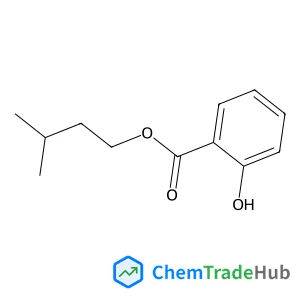
3-Methylbutyl salicylate
CAS Number: 87-20-7
![4-{[4-(4-Chlorophenyl)-1,3-thiazol-2-yl]amino}phenol hydrochloride (1:1)](https://static.chemtradehub.com/structs/117/1177741-83-1-b09e.webp)
![2-[4-(5-Amino-2-pyridinyl)-1-piperazinyl]-1-ethanol](https://static.chemtradehub.com/structs/101/1017221-34-9-ca8d.webp)
Other Suppliers for 1H-Indazole-7-carbonitrile







Basic Information
Molecular Formula
C8H5N3
Molecular Weight
132.17 g/mol
Physical Properties
Boiling Point
370.3±15.0 ºC (760 Torr),
Flash Point
126.7±5.6 ºC,
Chemical Identifiers
SMILES
C1=CC2=C(C(=C1)C#N)NN=C2
InChIKey
QXSXSDGUHOPEDJ-UHFFFAOYSA-N
Database References
MDL Number
MFCD10696804
FAQ
1H-Indazole-7-carbonitrile (CAS: 256228-64-5) is subject to regulatory guidelines under the Globally Harmonized System of Classification and Labelling of Chemicals (GHS), which includes handling and storage instructions. It may also be regulated under REACH in the EU, and FDA/EPA for use in pharmaceutical and environmental safety contexts. Companies must ensure compliance with local and international regulations to ensure safe transportation, storage, and disposal.
In the synthesis of similar compounds, alternatives to 1H-Indazole-7-carbonitrile (CAS: 256228-64-5) include various nitrogen heterocycles like indoles and benzimidazoles. Isomers such as 1H-Benzimidazol-2(3H)-carbonitrile can be used as a substitute. Common alternative reagents include nitriles derived from different aromatic rings or other functional groups. These alternatives offer similar reactivity and can be chosen based on specific synthetic requirements.
The market for 1H-Indazole-7-carbonitrile (CAS: 256228-64-5) is driven by its use in pharmaceuticals, particularly as a precursor for drug development. Research trends focus on its application in antiviral, anticancer, and anti-inflammatory agents. The demand is growing due to its versatile pharmacological properties. Additionally, there is increasing interest in its synthetic applications in materials chemistry and agrochemicals.
Waste containing 1H-Indazole-7-carbonitrile (CAS: 256228-64-5) should be collected in compatible, labeled containers and stored away from incompatible materials. Proper waste disposal should involve professional treatment or incineration in compliance with local regulations. Environmental protection measures include monitoring for any leakage or spillage to prevent contamination. Companies must ensure compliance with hazardous waste management guidelines to protect both human health and the environment.
Safety Notice
Please verify product specifications and safety data before use. Contact the supplier for detailed safety information.
Always follow proper handling procedures
Contact Information
chenling@zzstandard.com