AD
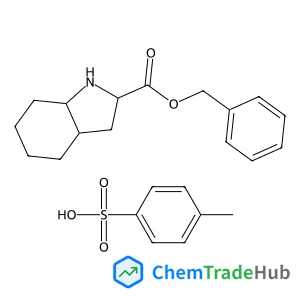
(2S,3aS,7aS)-Benzyl octahydro-1H-indole-2-carboxylate 4-methylbenzenesulfonate(CAS: 94062-52-9)
CAS Number
Related Products
![(2R)-2,7,8-Trimethyl-2-[(4R,8R)-4,8,12-trimethyltridecyl]-6-chromanol](https://static.chemtradehub.com/structs/54-/54-28-4-155c.webp)
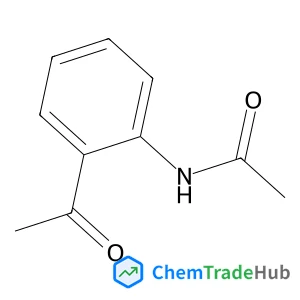
N-(2-Acetylphenyl)acetamide
CAS Number: 5234-26-4
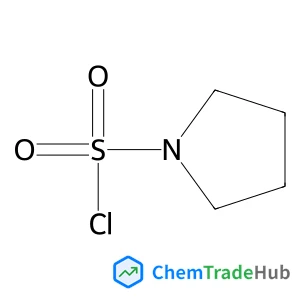
1-Pyrrolidinesulfonyl chloride
CAS Number: 1689-02-7
![3-Hexyl-2-[3-(3-hexyl-1,3-benzoxazol-2(3H)-ylidene)-1-propen-1-yl]-1,3-benzoxazol-3-ium iodide](https://static.chemtradehub.com/structs/532/53213-82-4-e483.webp)
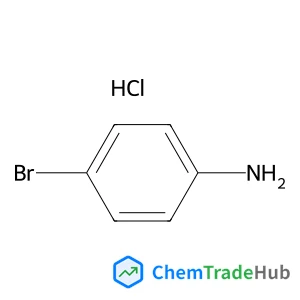
4-Bromoaniline hydrochloride (1:1)
CAS Number: 624-19-1
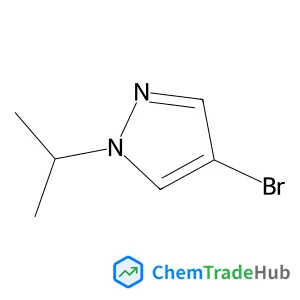
4-Bromo-1-isopropyl-1H-pyrazole
CAS Number: 313735-62-5
Other Suppliers for (2S,3aS,7aS)-Benzyl octahydro-1H-indole-2-carboxylate 4-methylbenzenesulfonate



Basic Information
Molecular Formula
C23H29NO5S
Molecular Weight
431.55 g/mol
Physical Properties
Melting Point
158-162°C
Chemical Identifiers
SMILES
CC1=CC=C(C=C1)S(=O)(=O)O.C1CCC2C(C1)CC(N2)C(=O)OCC3=CC=CC=C3
InChIKey
PTLASYHTXGUCJU-WDTSGDEMSA-N
Database References
MDL Number
MFCD09751101
FAQ
(2S,3aS,7aS)-Benzyl octahydro-1H-indole-2-carboxylate 4-methylbenzenesulfonate is a crystalline solid with a molecular weight of approximately 418.53 g/mol. It has a low solubility in water but is more soluble in organic solvents like ethanol and acetone. This compound exhibits excellent stability under normal conditions but can react with strong acids or bases. It is often used in organic synthesis due to its reactivity and selective properties.
(2S,3aS,7aS)-Benzyl octahydro-1H-indole-2-carboxylate 4-methylbenzenesulfonate is typically synthesized through a multistep process involving the coupling of benzyl octahydro-1H-indole-2-carboxylic acid with 4-methylbenzenesulfonyl chloride in the presence of a compatible base. Common catalysts include triethylamine or diisopropylethylamine, and the reaction is carried out under mild conditions. The overall yield is around 70-80%, with good regioselectivity.
(2S,3aS,7aS)-Benzyl octahydro-1H-indole-2-carboxylate 4-methylbenzenesulfonate is primarily used in the pharmaceutical and fine chemicals industries for the synthesis of complex organic molecules. It is also utilized in the development of sensors and semiconductors, where its unique chemical properties contribute to the functionality of these materials.
When handling (2S,3aS,7aS)-Benzyl octahydro-1H-indole-2-carboxylate 4-methylbenzenesulfonate, it is crucial to wear appropriate personal protective equipment (PPE) such as gloves, goggles, and a lab coat. This compound should be handled in a well-ventilated area or a fume hood to minimize inhalation risks. In case of a spill, it should be cleaned up immediately using appropriate absorbent materials. Always refer to the Safety Data Sheet (SDS) for detailed safety information and emergency procedures.
Safety Notice
Please verify product specifications and safety data before use. Contact the supplier for detailed safety information.
Always follow proper handling procedures