



AD
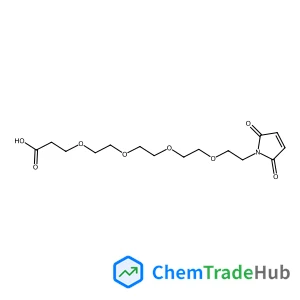
1-(2,5-Dioxo-2,5-dihydro-1H-pyrrol-1-yl)-3,6,9,12-tetraoxapentadecan-15-oic acid(CAS: 518044-41-2)
CAS Number
Related Products
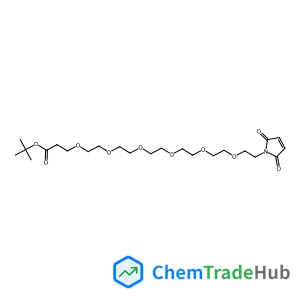
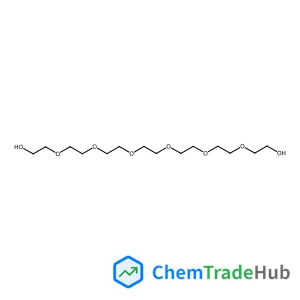
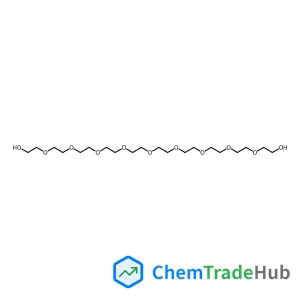
3,6,9,12,15,18-Hexaoxaicosane-1,20-diol
CAS Number: 5617-32-3
![3-[2-(2-{[3-(2,5-Dioxo-2,5-dihydro-1H-pyrrol-1-yl)propanoyl]amino}ethoxy)ethoxy]propanoic acid](https://static.chemtradehub.com/structs/756/756525-98-1-6b53.webp)
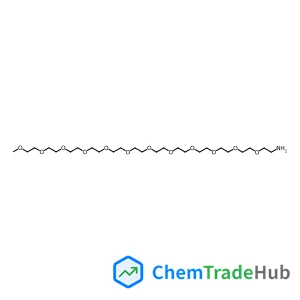
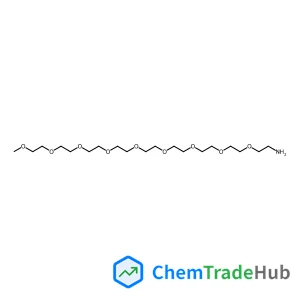
m-PEG12-amine
CAS Number: 1977493-48-3
![2-[2-(2-Azidoethoxy)ethoxy]ethanol](https://static.chemtradehub.com/structs/865/86520-52-7-eac4.webp)
2-[2-(2-Azidoethoxy)ethoxy]ethanol
CAS Number: 86520-52-7
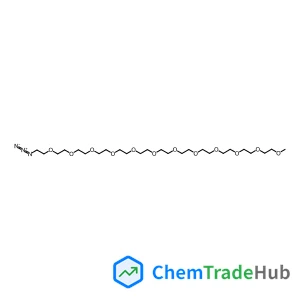
m-PEG12-azide
CAS Number: 89485-61-0
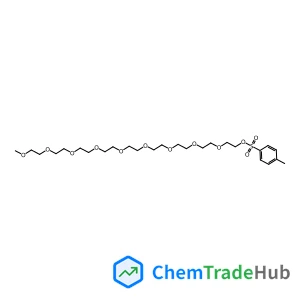
M-Peg10-tos
CAS Number: 211859-75-5
Other Suppliers for 1-(2,5-Dioxo-2,5-dihydro-1H-pyrrol-1-yl)-3,6,9,12-tetraoxapentadecan-15-oic acid






Basic Information
Molecular Formula
C15H23NO8
Molecular Weight
345.35 g/mol
Chemical Identifiers
SMILES
O=C(O)CCOCCOCCOCCOCCN1C(C=CC1=O)=O
InChIKey
BTFZSOVKVDCKQD-UHFFFAOYSA-N
Database References
MDL Number
MFCD18916986
FAQ
The compound is subject to various regulatory guidelines depending on its intended use. In the EU, it must comply with REACH regulations. For industrial use, it should follow GHS classification for labeling and safety data sheets. In the US, it is regulated by the FDA for pharmaceutical use and by the EPA for environmental concerns. Always consult the latest regulatory databases and contact relevant authorities for specific guidelines.
There are several alternatives that can be used as substitutes in synthesis, including other carboxylic acids or functionalized fatty acids. Common alternatives include palmitic acid and its derivatives, which can serve similar functions in various applications. It's important to evaluate the specific requirements of your synthesis to determine the most suitable alternative.
Market trends for this compound are currently driven by its potential applications in pharmaceuticals and biotechnology. Research is focusing on its use as a precursor in the synthesis of more complex molecules and as a bioactive compound. The demand is expected to grow as more applications are discovered, particularly in areas like drug discovery and personalized medicine.
Waste containing this compound should be collected in appropriate containers and labeled with the correct hazard information. Disposal should follow local regulations and environmental protection guidelines. For large quantities or hazardous waste, professional waste disposal services should be used. Incineration is another option, but it must be conducted in a controlled environment to prevent environmental contamination. Always consult local regulations and safety guidelines for proper handling and disposal.
Safety Notice
Please verify product specifications and safety data before use. Contact the supplier for detailed safety information.
Always follow proper handling procedures
Contact Information
Contact Person
Zhiyan Huang
zyhuang@snnu.edu.cn