



AD
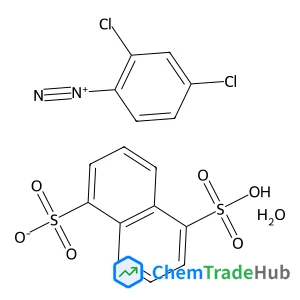
2,4-Dichlorobenzenediazonium 5-sulfo-1-naphthalenesulfonate hydrate (1:1:1)(CAS: 123333-91-5)
CAS Number
Related Products
![3-[4-Fluoro-2-(trifluoromethyl)phenyl]propanoic acid](https://static.chemtradehub.com/structs/916/916420-73-0-ee37.webp)
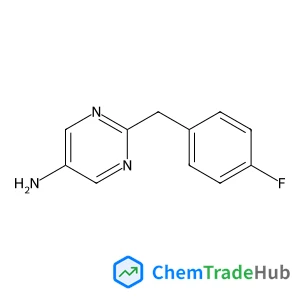
2-(4-Fluorobenzyl)-5-pyrimidinamine
CAS Number: 1152557-45-3
![Methyl [4-cyano-3-(3-thienyl)-1H-pyrazol-1-yl]acetate](https://static.chemtradehub.com/structs/209/2098083-01-1-68bf.webp)
![3-[4-Cyclopentyl-5-(methylsulfanyl)-4H-1,2,4-triazol-3-yl]-1-propanamine hydroiodide (1:1)](https://static.chemtradehub.com/structs/119/1197609-28-1-10f2.webp)
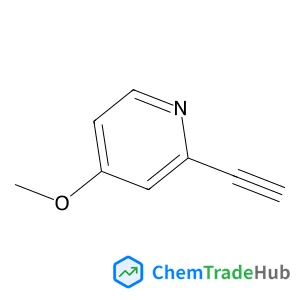
2-Ethynyl-4-methoxypyridine
CAS Number: 1211533-95-7
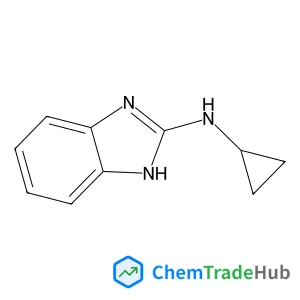
N-Cyclopropyl-1H-benzimidazol-2-amine
CAS Number: 941266-08-6
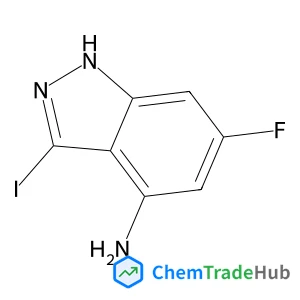
4-AMINO-6-FLUORO-3-IODO (1H)INDAZOLE
CAS Number: 885523-02-4
Other Suppliers for 2,4-Dichlorobenzenediazonium 5-sulfo-1-naphthalenesulfonate hydrate (1:1:1)





Basic Information
Molecular Formula
C16H12Cl2N2O7S2
Molecular Weight
497.33 g/mol
Physical Properties
Melting Point
195℃
Chemical Identifiers
SMILES
c1cc2c(cccc2S(=O)(=O)[O-])c(c1)S(=O)(=O)O.c1cc(c(cc1Cl)Cl)[N+]#N.O
InChIKey
SPGAUZWLXGQOLT-UHFFFAOYSA-M
Database References
MDL Number
MFCD08457580
FAQ
This compound is subject to several regulatory guidelines. Under the Globally Harmonized System of Classification and Labelling of Chemicals (GHS), it falls under Category 2 for skin corrosion/irritation. In the European Union, it is regulated under REACH for potential hazards. The U.S. EPA and FDA also have specific requirements for the handling, storage, and use of this compound in various applications.
Yes, several alternatives can be used in synthesis. For example, 2,4-dichlorobenzenesulfonic acid or 5-sulfo-1-naphthalenesulfonic acid can serve as effective substitutes. These alternatives offer similar functionalities and may be preferred based on cost, availability, and specific application requirements.
The market for this compound has seen a steady growth due to its use in various industries. Research trends indicate increased interest in its applications in dyeing and pigmentation. Recent studies focus on optimizing its synthesis methods and exploring its potential in chemical modification reactions, particularly in the production of pigments and dyes.
Waste containing this compound should be collected in appropriate containers and properly labeled. Disposal should follow local environmental regulations and waste management guidelines. For large quantities, professional waste disposal services are recommended. Incineration is a common method, but precautions must be taken to ensure complete combustion and avoid environmental pollution. Additionally, waste disposal should comply with the regulations stipulated by the EPA and other relevant authorities.
Safety Notice
Please verify product specifications and safety data before use. Contact the supplier for detailed safety information.
Always follow proper handling procedures
Contact Information
3641133981@qq.com