



AD
(3S)-3-Hydroxybutanoic acid(CAS: 6168-83-8)
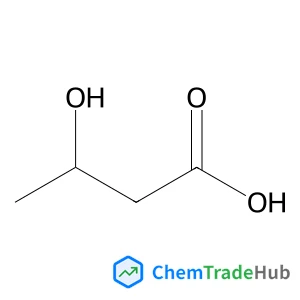
CAS Number
Related Products
![(3Z,6R,14aR,14bR)-3-Ethylidene-6-hydroxy-6-methyl-5-methylene-3,4,5,6,9,11,13,14,14a,14b-decahydro[1,6]dioxacyclododecino[2,3,4-gh]pyrrolizine-2,7-dione 12-oxide](https://static.chemtradehub.com/structs/387/38710-26-8-724c.webp)
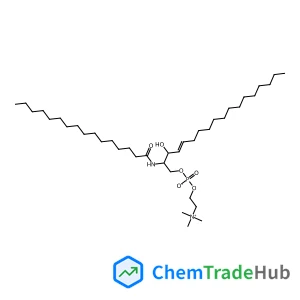
Sphingomyelin d18:1-C16:0
CAS Number: 383907-87-7
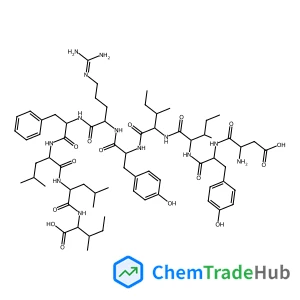
VP7 (31-40) peptide
CAS Number: 152687-39-3
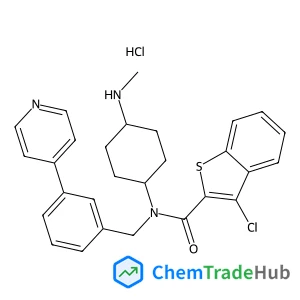
SAG hydrochloride
CAS Number: 2095432-58-7
![(3S)-2-[(2S)-2-[[(2S)-1-ethoxy-1-oxo-4-phenylbutan-2-yl]amino]propanoyl]-6,7-dimethoxy-3,4-dihydro-1H-isoquinoline-3-carboxylic acid;hydrochloride](https://static.chemtradehub.com/structs/825/82586-52-5-119f.webp)
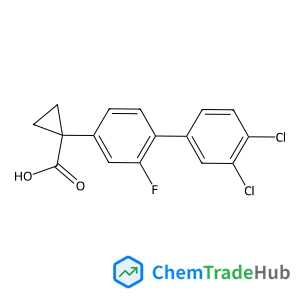
Temporins; Temporin G
CAS Number: 188713-78-2
![2-Hydroxy-5-[(E)-2-(4-nitrophenyl)diazen-1-yl]benzoic acid](https://static.chemtradehub.com/structs/224/2243-76-7-ec6a.webp)
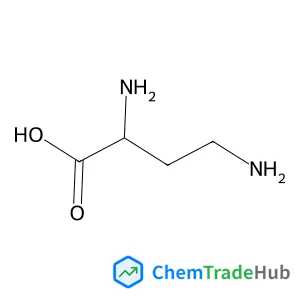
(2S)-2,4-diaminobutanoic acid
CAS Number: 1758-80-1
Other Suppliers for (3S)-3-Hydroxybutanoic acid





Basic Information
Molecular Formula
C4H8O3
Molecular Weight
104.1 g/mol
Physical Properties
Melting Point
45-50 ºC
Chemical Identifiers
SMILES
CC(CC(=O)O)O
InChIKey
WHBMMWSBFZVSSR-VKHMYHEASA-N
Database References
MDL Number
MFCD00137685
FAQ
The (3S)-3-Hydroxybutanoic acid (CAS: 6168-83-8) is classified under the Globally Harmonized System of Classification and Labelling of Chemicals (GHS) as a skin irritant. It is also subject to the European Union's Registration, Evaluation, Authorisation and Restriction of Chemicals (REACH) regulations, which require detailed safety data sheets and potential restrictions on its use. Additionally, the food and drug administration (FDA) and environmental protection agency (EPA) may have specific labeling and handling requirements depending on its intended use.
In the synthesis of (3S)-3-Hydroxybutanoic acid (CAS: 6168-83-8), common alternatives include (3R)-3-hydroxybutanoic acid and its racemic mixture. Other substitutes involve the use of different precursors or reagents, such as (R)- and (S)-glyceraldehyde, which can be used to synthesize the corresponding (3R)- and (3S)-isomers through racemization and resolution techniques.
The market for (3S)-3-Hydroxybutanoic acid (CAS: 6168-83-8) is growing due to its use as a precursor in pharmaceuticals, flavor and fragrance industries, and as a component in skin care products. Research trends focus on developing cost-effective and sustainable synthesis methods, exploring its potential in drug discovery, and understanding its biological activities, such as its role as a metabolic intermediate and potential therapeutic applications.
Waste containing (3S)-3-Hydroxybutanoic acid (CAS: 6168-83-8) should be collected in appropriate containers, labeled as hazardous, and stored in a well-ventilated area. For disposal, it is recommended to consult a licensed waste management company for incineration or other professional waste disposal methods. Environmental protection precautions include proper containment to prevent leaks and spills, and adherence to local and regional hazardous waste management regulations.
Safety Notice
Please verify product specifications and safety data before use. Contact the supplier for detailed safety information.
Always follow proper handling procedures
Contact Information
Contact Person
Gong Siyu
3193328036@qq.com
Mobile
17801761073
Telephone
010-50973130
Visit Website
https://www.solarbio.comAddress
Beijing Solabio Technology Co., Ltd.