



AD
1-({[(2-Methyl-2-propanyl)oxy]carbonyl}amino)-1,2,3,4-tetrahydro-1-naphthalenecarboxylic acid(CAS: 898404-93-8)
![1-({[(2-Methyl-2-propanyl)oxy]carbonyl}amino)-1,2,3,4-tetrahydro-1-naphthalenecarboxylic acid](https://static.chemtradehub.com/structs/898/898404-93-8-81f4.webp "1-({[(2-Methyl-2-propanyl)oxy]carbonyl}amino)-1,2,3,4-tetrahydro-1-naphthalenecarboxylic acid")
CAS Number
Related Products
![1-[4-Chloro-6-(methylsulfanyl)-5-pyrimidinyl]methanamine](https://static.chemtradehub.com/structs/885/885269-49-8-e182.webp)
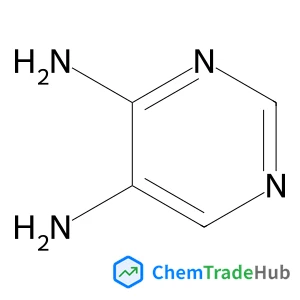
4,5-Pyrimidinediamine
CAS Number: 13754-19-3

2-Bromotriphenylene
CAS Number: 19111-87-6
![N-(6-Ethylthieno[2,3-d]pyrimidin-4-yl)glycine](https://static.chemtradehub.com/structs/313/313534-29-1-ef9e.webp)
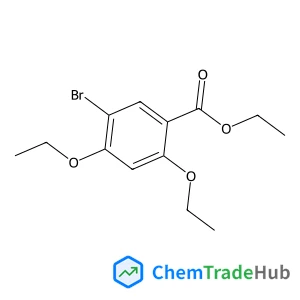
Ethyl 5-bromo-2,4-diethoxybenzoate
CAS Number: 1131587-93-3
Other Suppliers for 1-({[(2-Methyl-2-propanyl)oxy]carbonyl}amino)-1,2,3,4-tetrahydro-1-naphthalenecarboxylic acid
![1-({[(2-Methyl-2-propanyl)oxy]carbonyl}amino)-1,2,3,4-tetrahydro-1-naphthalenecarboxylic acid — SuZhouAiMaTe Biotechnology Co Ltd](https://static.chemtradehub.com/suppliers/67cecfa32b2de6e8e95a64d0/67cecfa32b2de6e8e95a64d0-logo.webp)
![1-({[(2-Methyl-2-propanyl)oxy]carbonyl}amino)-1,2,3,4-tetrahydro-1-naphthalenecarboxylic acid — Shanghai Jixiang Biotechnology Co., Ltd.](https://static.chemtradehub.com/suppliers/67ce6f4d2b2de6e8e95a45bf/67ce6f4d2b2de6e8e95a45bf-logo.webp)
![1-({[(2-Methyl-2-propanyl)oxy]carbonyl}amino)-1,2,3,4-tetrahydro-1-naphthalenecarboxylic acid — JiangSuAiKangShengWuYiYaoYanFa Co Ltd](https://static.chemtradehub.com/suppliers/67cec9452b2de6e8e95a52fa/67cec9452b2de6e8e95a52fa-logo.webp)
![1-({[(2-Methyl-2-propanyl)oxy]carbonyl}amino)-1,2,3,4-tetrahydro-1-naphthalenecarboxylic acid — ShenZhenAiTaHuaXue Co Ltd](https://static.chemtradehub.com/suppliers/67ced0fb2b2de6e8e95a67fa/67ced0fb2b2de6e8e95a67fa-logo.webp)
![1-({[(2-Methyl-2-propanyl)oxy]carbonyl}amino)-1,2,3,4-tetrahydro-1-naphthalenecarboxylic acid — ShangHaiChuangSai Technology Co Ltd](https://static.chemtradehub.com/suppliers/67cecce82b2de6e8e95a5e02/67cecce82b2de6e8e95a5e02-logo.webp)
Basic Information
Molecular Formula
C16H21NO4
Molecular Weight
291.35 g/mol
Physical Properties
Boiling Point
466.6±44.0℃/760mmHg
Chemical Identifiers
SMILES
CC(C)(C)OC(=O)NC1(CCCC2=CC=CC=C21)C(=O)O
InChIKey
YMXQUKSKLXESDO-UHFFFAOYSA-N
Database References
MDL Number
MFCD04115523
FAQ
1-({[(2-Methyl-2-propanyl)oxy]carbonyl}amino)-1,2,3,4-tetrahydro-1-naphthalenecarboxylic acid falls under various regulatory guidelines. It is classified under the GHS (Global Harmonized System of Classification and Labelling of Chemicals) as a hazardous chemical. For specific regulatory requirements, manufacturers and handlers should refer to REACH (Registration, Evaluation, Authorization and Restriction of Chemicals) regulations in the European Union, and FDA (Food and Drug Administration) and EPA (Environmental Protection Agency) guidelines in the United States. Compliance with these guidelines is crucial to ensure safety and environmental protection.
Several alternatives to 1-({[(2-Methyl-2-propanyl)oxy]carbonyl}amino)-1,2,3,4-tetrahydro-1-naphthalenecarboxylic acid exist in synthesis. Common alternatives include similar naphthalene derivatives with different functional groups, such as carboxamides or esters. Substituting with isomers or analogs can also offer alternative routes. For instance, 1-(2-Hydroxypropylcarbamoyl)-1,2,3,4-tetrahydro-1-naphthalenecarboxylic acid can serve as a viable substitute under certain conditions. Detailed evaluation of these alternatives is essential for selecting the most suitable reagent for a specific application.
The market for 1-({[(2-Methyl-2-propanyl)oxy]carbonyl}amino)-1,2,3,4-tetrahydro-1-naphthalenecarboxylic acid is driven by its applications in pharmaceuticals, agrochemicals, and fine chemicals. Research trends indicate a focus on developing new synthetic methods and exploring its biological activities. With increasing demand for green chemistry and sustainable products, there is a growing interest in finding eco-friendly alternatives. Market trends suggest that this compound will continue to play a significant role in various chemical industries, particularly in areas where its unique properties offer advantages over traditional compounds.
Waste containing 1-({[(2-Methyl-2-propanyl)oxy]carbonyl}amino)-1,2,3,4-tetrahydro-1-naphthalenecarboxylic acid should be managed carefully to ensure safety and environmental protection. Collect waste in appropriate containers and label them with the chemical name and CAS number. For small amounts, consider incineration or chemical treatment to neutralize the compound. Large quantities or hazardous waste should be disposed of via professional waste disposal services. Ensure compliance with local environmental regulations and obtain necessary permits. Proper handling and disposal methods are essential to prevent environmental contamination and ensure worker safety.
Safety Notice
Please verify product specifications and safety data before use. Contact the supplier for detailed safety information.
Always follow proper handling procedures
Contact Information
sales@haoreagent.com
Mobile
15813841136
Telephone
0755-89459231
Fax
0755-89459231
Visit Website
https://www.haoreagent.com/