



AD
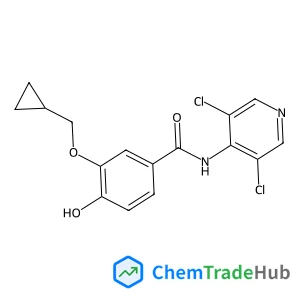
3-(Cyclopropylmethoxy)-N-(3,5-dichloro-4-pyridinyl)-4-hydroxybenzamide(CAS: 475271-62-6)
CAS Number
Related Products
![3-[4-Fluoro-2-(trifluoromethyl)phenyl]propanoic acid](https://static.chemtradehub.com/structs/916/916420-73-0-ee37.webp)
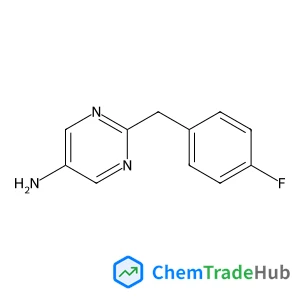
2-(4-Fluorobenzyl)-5-pyrimidinamine
CAS Number: 1152557-45-3
![Methyl [4-cyano-3-(3-thienyl)-1H-pyrazol-1-yl]acetate](https://static.chemtradehub.com/structs/209/2098083-01-1-68bf.webp)
![3-[4-Cyclopentyl-5-(methylsulfanyl)-4H-1,2,4-triazol-3-yl]-1-propanamine hydroiodide (1:1)](https://static.chemtradehub.com/structs/119/1197609-28-1-10f2.webp)
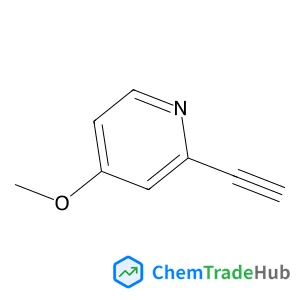
2-Ethynyl-4-methoxypyridine
CAS Number: 1211533-95-7
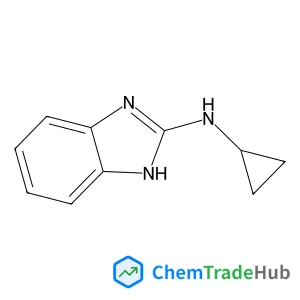
N-Cyclopropyl-1H-benzimidazol-2-amine
CAS Number: 941266-08-6
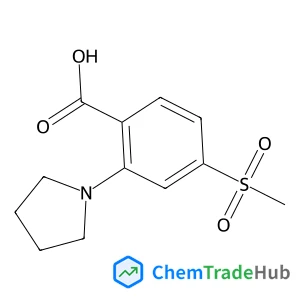
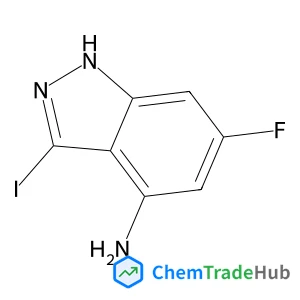
4-AMINO-6-FLUORO-3-IODO (1H)INDAZOLE
CAS Number: 885523-02-4
Other Suppliers for 3-(Cyclopropylmethoxy)-N-(3,5-dichloro-4-pyridinyl)-4-hydroxybenzamide





Basic Information
Molecular Formula
C16H14Cl2N2O3
Molecular Weight
353.21 g/mol
Physical Properties
Boiling Point
448.6±45.0°C at 760 mmHg
Chemical Identifiers
SMILES
c1cc(c(cc1C(=O)Nc2c(cncc2Cl)Cl)OCC3CC3)O
InChIKey
IJTMJUHUWQHBEA-UHFFFAOYSA-N
Database References
MDL Number
MFCD23703091
FAQ
This compound is a crystalline solid with a molecular weight of approximately 394.12 g/mol. It has a low solubility in water (0.1 g/100 mL at 25°C) but is more soluble in organic solvents like methanol and dimethylformamide. It shows moderate reactivity towards nucleophiles and exhibits good stability under neutral to slightly acidic conditions. The compound is a white or off-white powder with a melting point range of 155-158°C.
The compound is typically synthesized via a multi-step reaction involving protection of a hydroxyl group, subsequent alkylation, and the formation of a pyridyl derivative. Key reagents include cyclopropylmethanol, dichloropyridine, and a suitable coupling agent. The reaction is carried out under mild conditions and requires careful control of pH and temperature to achieve high selectivity and yield. Common catalysts include triphenylphosphine and various base systems.
This compound is primarily used in the pharmaceutical industry for its potential as an intermediate in drug synthesis. It is also explored in the sensor technology sector for its reactivity and electronic properties. Additionally, it may have applications in the polymer industry as a functional monomer or additive. Its use in semiconductors is limited but could be relevant for specific applications requiring precise molecular structure control.
Proper handling requires the use of personal protective equipment (PPE) such as gloves, goggles, and a lab coat. This compound should be handled in a well-ventilated area or a fume hood due to its potential for respiratory irritation. Spills should be cleaned up immediately with appropriate absorbent materials and disposed of according to local hazardous waste regulations. Always refer to the Safety Data Sheet (SDS) for comprehensive handling recommendations and emergency procedures. Storage should be in a cool, dry place away from direct sunlight and incompatible materials.
Safety Notice
Please verify product specifications and safety data before use. Contact the supplier for detailed safety information.
Always follow proper handling procedures
Contact Information
3641133981@qq.com