



AD
POLYGLYCERYL-6 STEARATE(CAS: 95461-65-7)
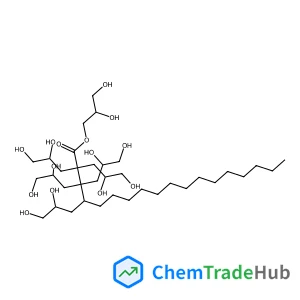
CAS Number
Related Products
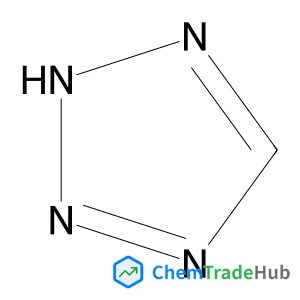
2H-Tetrazole
CAS Number: 288-94-8
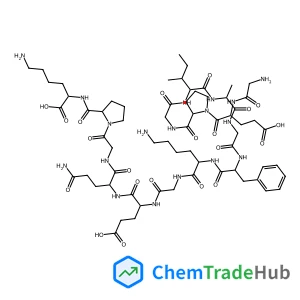
Collagen(cattle skin) (9CI)
CAS Number: 9064-67-9
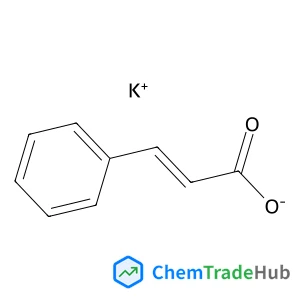
Potassium (2E)-3-phenylacrylate
CAS Number: 16089-48-8
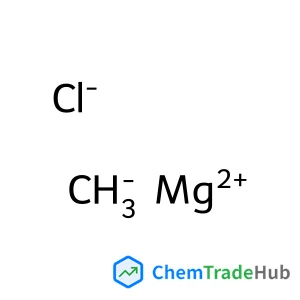
Chloro(methyl)magnesium
CAS Number: 676-58-4
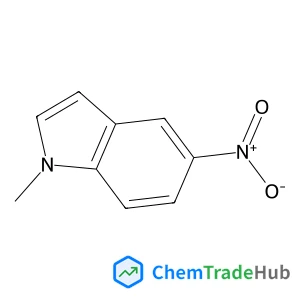
1-Methyl-5-nitro-1H-indole
CAS Number: 29906-67-0
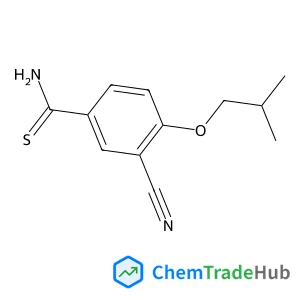
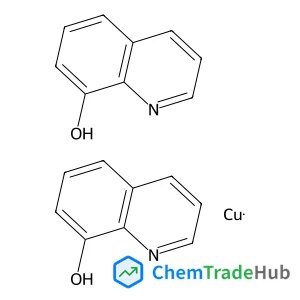
Bis(8-quinolinolato)copper(II)
CAS Number: 10380-28-6
![2-[4-(1-Hydroxy-4-{4-[hydroxy(diphenyl)methyl]-1-piperidinyl}butyl)phenyl]-2-methylpropanoic acid hydrochloride (1:1)](https://static.chemtradehub.com/structs/153/153439-40-8-f2bf.webp)
Other Suppliers for POLYGLYCERYL-6 STEARATE

Basic Information
Molecular Formula
C36H72O14
Molecular Weight
728.95 g/mol
EINECS
000-000-0
Chemical Identifiers
SMILES
O(CC(CO)O)C(C(CC(CO)O)(CC(CO)O)C(CC(CO)O)(CC(CO)O)C(CC(CO)O)CCCCCCCCCCCCCC)=O
InChIKey
KDDUIJTXNGADSK-UHFFFAOYSA-N
FAQ
Polyglyceryl-6 Stearate (CAS: 95461-65-7) is a white, waxy solid with a crystalline form at room temperature. Its molecular weight is approximately 650 g/mol. It has limited solubility in water but good solubility in many organic solvents. Chemically, it is relatively stable and non-reactive under normal conditions. It is commonly used as an emulsifier and thickener in cosmetics and personal care products.
POLYGLYCERYL-6 STEARATE (CAS: 95461-65-7) is typically synthesized through esterification of stearic acid with a polyglycerol having 6 hydroxyl groups. This process is catalyzed by a strong acid or a metal salt. The reaction involves the condensation of stearic acid with the polyglycerol molecule, yielding a product with a high degree of selectivity and yield. The process is carried out under mild conditions to ensure the formation of the desired product.
POLYGLYCERYL-6 STEARATE (CAS: 95461-65-7) is widely used in the cosmetics and personal care industry as an emulsifier, thickener, and stabilizer. It is also utilized in the food industry as a food additive for its emulsifying properties. Additionally, it has applications in the pharmaceutical industry as a skin penetration enhancer and in the polymer industry for its stabilization and rheology-modifying properties.
When handling POLYGLYCERYL-6 STEARATE (CAS: 95461-65-7), it is important to wear appropriate personal protective equipment (PPE) such as gloves, goggles, and a lab coat. The compound should be handled in a well-ventilated area or in a fume hood to avoid inhalation of dust. In case of a spill, it should be cleaned up carefully following proper waste disposal procedures. Always refer to the Safety Data Sheet (SDS) for detailed handling instructions and emergency procedures.
Safety Notice
Please verify product specifications and safety data before use. Contact the supplier for detailed safety information.
Always follow proper handling procedures