



AD
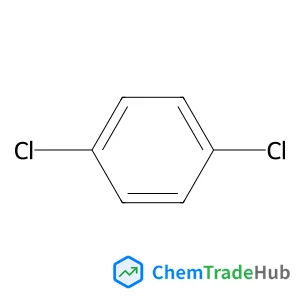
1,4-Dichloro(~2~H_4_)benzene(CAS: 3855-82-1)
CAS Number
Related Products
![(2R)-2,7,8-Trimethyl-2-[(4R,8R)-4,8,12-trimethyltridecyl]-6-chromanol](https://static.chemtradehub.com/structs/54-/54-28-4-155c.webp)

N-(2-Acetylphenyl)acetamide
CAS Number: 5234-26-4
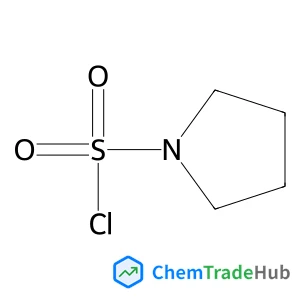
1-Pyrrolidinesulfonyl chloride
CAS Number: 1689-02-7
![3-Hexyl-2-[3-(3-hexyl-1,3-benzoxazol-2(3H)-ylidene)-1-propen-1-yl]-1,3-benzoxazol-3-ium iodide](https://static.chemtradehub.com/structs/532/53213-82-4-e483.webp)

4-Bromoaniline hydrochloride (1:1)
CAS Number: 624-19-1

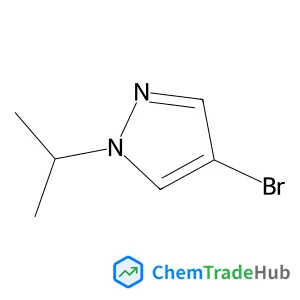
4-Bromo-1-isopropyl-1H-pyrazole
CAS Number: 313735-62-5

Other Suppliers for 1,4-Dichloro(~2~H_4_)benzene






Basic Information
Molecular Formula
C6D4Cl2
Molecular Weight
151.03 g/mol
Physical Properties
Melting Point
52-54 °C (lit.)
Boiling Point
173 °C(lit.)
Chemical Identifiers
SMILES
C1=CC(=CC=C1Cl)Cl
InChIKey
OCJBOOLMMGQPQU-RHQRLBAQSA-N
Database References
MDL Number
MFCD00000605
FAQ
1,4-Dichloro(~2~H_4_)benzene (CAS: 3855-82-1) is subject to various regulatory guidelines. It falls under the Globally Harmonized System of Classification and Labelling of Chemicals (GHS) as a hazardous substance, requiring proper labeling and safety data sheets. In the European Union, it is regulated under REACH (Registration, Evaluation, Authorization and Restriction of Chemicals). The U.S. Food and Drug Administration (FDA) and Environmental Protection Agency (EPA) also have specific requirements for handling and reporting this chemical.
There are several alternatives to 1,4-Dichloro(~2~H_4_)benzene (CAS: 3855-82-1) in synthesis. Common alternatives include 1,3-Dichlorobenzene and 1,2-Dichlorobenzene. Other reagents like dichloromethane can also be used as a solvent for similar reactions. It is important to consider the reactivity, cost, and environmental impact when choosing an alternative.
The market for 1,4-Dichloro(~2~H_4_)benzene (CAS: 3855-82-1) is primarily driven by its use in rubber manufacturing and as a chemical intermediate. Research trends are focusing on exploring its role in developing new materials and pharmaceuticals. Recent studies have also investigated its potential in the treatment of certain diseases, although these applications are still in the early stages of development.
Waste containing 1,4-Dichloro(~2~H_4_)benzene (CAS: 3855-82-1) should be managed according to local and international environmental protection regulations. Typically, waste liquid should be collected in appropriate containers and stored in a secure location. Incineration is a common disposal method, but professional waste disposal services should be used to ensure compliance with safety and environmental standards. Protective measures, such as wearing personal protective equipment (PPE), must be followed during handling to prevent exposure.
Safety Notice
Please verify product specifications and safety data before use. Contact the supplier for detailed safety information.
Always follow proper handling procedures
