



AD
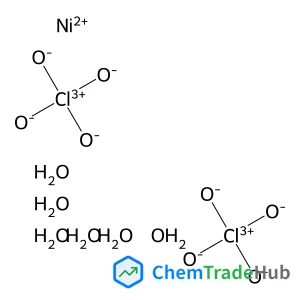
NICKEL(II) PERCHLORATE HEXAHYDRATE(CAS: 13520-61-1)
CAS Number
Related Products

1,3,5-Tris(bromomethyl)benzene
CAS Number: 18226-42-1
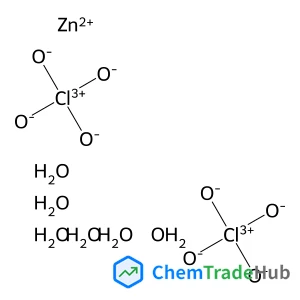
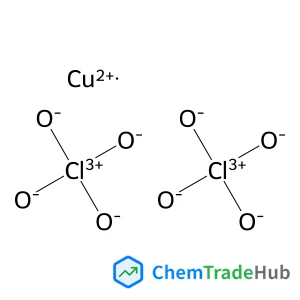
Copper(2+) diperchlorate
CAS Number: 10294-46-9

4-Oxo-4H-pyran-2,6-dicarboxylic acid
CAS Number: 99-32-1

3,5-Dibromo-2-hydroxybenzoic acid
CAS Number: 3147-55-5
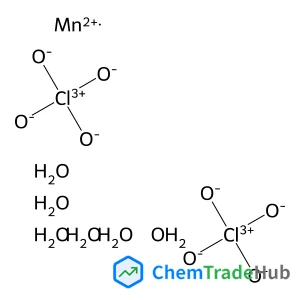
MANGANESE (II) PERCHLORATE
CAS Number: 15364-94-0

Chelidamic acid
CAS Number: 138-60-3
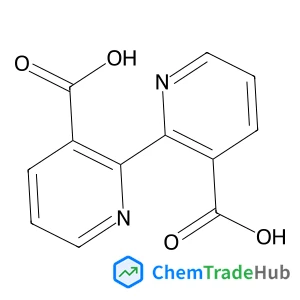
2,2'-Bipyridine-3,3'-dicarboxylic acid
CAS Number: 4433-01-6
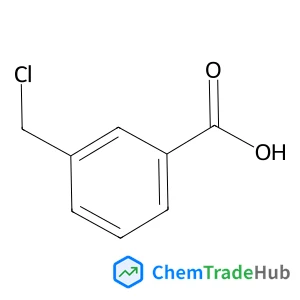
3-(Chloromethyl)benzoic acid
CAS Number: 31719-77-4
Other Suppliers for NICKEL(II) PERCHLORATE HEXAHYDRATE







Basic Information
Molecular Formula
Cl2H12NiO14
Molecular Weight
365.68 g/mol
Physical Properties
Melting Point
140 °C (lit.)
Boiling Point
°Cat760mmHg
Density
g/cm3
Flash Point
°C
Water Solubility
Very soluble in water. Soluble in many organic solvents
Chemical Identifiers
SMILES
O.O.O.O.O.O.[O-]Cl(=O)(=O)=O.[O-]Cl(=O)(=O)=O.[Ni+2]
InChIKey
WHGYCGOFTBFDLW-UHFFFAOYSA-L
Database References
MDL Number
MFCD00011138
FAQ
NICKEL(II) PERCHLORATE HEXAHYDRATE (CAS: 13520-61-1) falls under regulatory guidelines set by the Globally Harmonized System of Classification and Labeling of Chemicals (GHS) as a hazardous substance. It is classified as toxic and corrosive. In the European Union, it is regulated under REACH (Registration, Evaluation, Authorization and Restriction of Chemicals) and the Control of Substances Hazardous to Health (COSHH) regulations. Additionally, the Environmental Protection Agency (EPA) and the Food and Drug Administration (FDA) have specific requirements for its handling and disposal.
Alternatives to NICKEL(II) PERCHLORATE HEXAHYDRATE (CAS: 13520-61-1) in synthesis include other nickel complexes such as NICKEL(II) ACETATE, NICKEL(II) CHLORIDE, and NICKEL(II) SULFATE. These can be used depending on the specific reaction conditions and reactivity requirements. However, NICKEL(II) PERCHLORATE HEXAHYDRATE is preferred in some applications due to its high solubility and stability.
The market for NICKEL(II) PERCHLORATE HEXAHYDRATE (CAS: 13520-61-1) is stable, with increasing research trends in catalysis due to its use as a catalyst in organic synthesis. There is also growing interest in its application in electroplating and battery technology. Market trends indicate a steady demand, with research focusing on its environmental impact and safe handling practices.
Waste containing NICKEL(II) PERCHLORATE HEXAHYDRATE (CAS: 13520-61-1) should be collected in proper containers labeled with hazard warnings. It should be neutralized and treated before disposal to prevent environmental contamination. Professional waste disposal services are recommended for safe disposal. Environmental protection measures include ensuring no leaks and proper containment to avoid water or soil contamination.
Safety Notice
Please verify product specifications and safety data before use. Contact the supplier for detailed safety information.
Always follow proper handling procedures
Contact Information
1768689320@qq.com