



AD
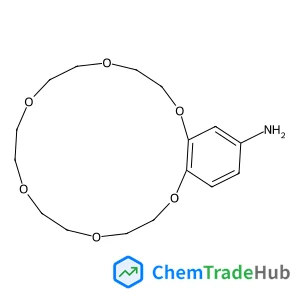
2,3,5,6,8,9,11,12,14,15-Decahydro-1,4,7,10,13,16-benzohexaoxacyclooctadecin-18-amine(CAS: 68941-06-0)
CAS Number
Related Products
![Naphtho[1,2-c]furan-1,3-dione](https://static.chemtradehub.com/structs/534/5343-99-7-5dbe.webp)
Naphtho[1,2-c]furan-1,3-dione
CAS Number: 5343-99-7
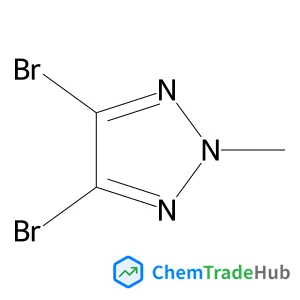
4,5-Dibromo-2-methyl-2H-1,2,3-triazole
CAS Number: 28938-17-2
![1-[Chloro(1-pyrrolidinyl)methylene]pyrrolidinium tetrafluoroborate](https://static.chemtradehub.com/structs/115/115007-14-2-7aa4.webp)

4-Bromo-2,6-difluoropyridine
CAS Number: 903513-58-6
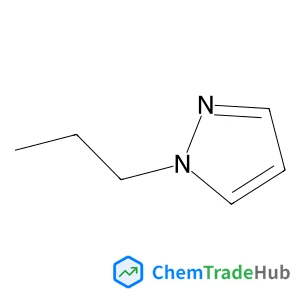
1-propyl-1H-pyrazole
CAS Number: 32500-67-7
![N~5~-[N-(Mesitylsulfonyl)carbamimidoyl]-N~2~-{[(2-methyl-2-propanyl)oxy]carbonyl}-L-ornithine](https://static.chemtradehub.com/structs/682/68262-71-5-07ff.webp)
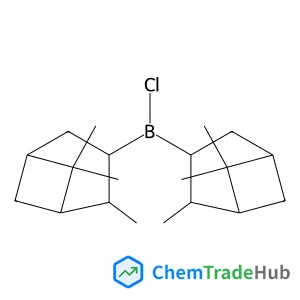
(-)-DIP-chloride (~60% in Heptane)
CAS Number: 85116-37-6
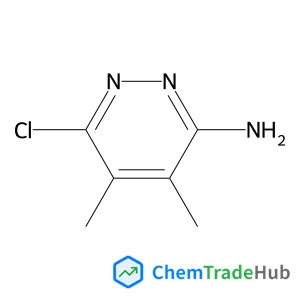
6-Chloro-4,5-dimethyl-3-pyridazinamine
CAS Number: 76593-36-7
Other Suppliers for 2,3,5,6,8,9,11,12,14,15-Decahydro-1,4,7,10,13,16-benzohexaoxacyclooctadecin-18-amine






Basic Information
Molecular Formula
C16H25NO6
Molecular Weight
327.38 g/mol
Physical Properties
Melting Point
53-58 ºC
Boiling Point
511.9°C at 760 mmHg
Density
1.099
Flash Point
284.1°C
Chemical Identifiers
SMILES
C1COCCOCCOC2=C(C=CC(=C2)N)OCCOCCO1
InChIKey
PZXYILUXRGTFGD-UHFFFAOYSA-N
Database References
MDL Number
MFCD00210009
FAQ
2,3,5,6,8,9,11,12,14,15-Decahydro-1,4,7,10,13,16-benzohexaoxacyclooctadecin-18-amine (CAS: 68941-06-0) is a white crystalline solid with a molecular weight of approximately 548.67 g/mol. It has a low solubility in water but is soluble in common organic solvents like ethanol and acetonitrile. Chemically, it is quite stable but may react with strong acids. It is not flammable and does not have a significant reactivity under normal conditions.
2,3,5,6,8,9,11,12,14,15-Decahydro-1,4,7,10,13,16-benzohexaoxacyclooctadecin-18-amine (CAS: 68941-06-0) can be synthesized through a multistep process involving the condensation of appropriate alcohols and subsequent functionalization. Commonly, a key step involves the use of a palladium catalyst for the cross-coupling reaction, leading to high selectivity and yield.
2,3,5,6,8,9,11,12,14,15-Decahydro-1,4,7,10,13,16-benzohexaoxacyclooctadecin-18-amine (CAS: 68941-06-0) is primarily used in the pharmaceutical industry for its potential as a bioactive compound. It is also utilized in the polymer industry for its unique properties, and in the sensor and semiconductor industries for its electronic and optical characteristics.
When handling 2,3,5,6,8,9,11,12,14,15-Decahydro-1,4,7,10,13,16-benzohexaoxacyclooctadecin-18-amine (CAS: 68941-06-0), it is important to wear appropriate personal protective equipment (PPE) such as gloves, safety glasses, and a lab coat. Ensure that the work is conducted in a well-ventilated area or a fume hood. Spills should be managed using appropriate absorbents, and the material safety data sheet (MSDS) should be consulted for detailed safety information.
Safety Notice
Please verify product specifications and safety data before use. Contact the supplier for detailed safety information.
Always follow proper handling procedures

Contact Information
Contact Person
Jin Jinle (National Unified Telephone Line)
hnjjlchem@126.com
Telephone
10106090
Visit Website
https://www.jinjinlechem.com/Address
Changsha Kaifu District Tongtai Street Zhongshan Road 589 Kaifu Wangdawei Square C District 3rd Office Building 2905