



AD
4-(4,4,5,5-Tetramethyl-1,3,2-dioxaborolan-2-yl)furan-2-carbaldehyde(CAS: 846023-58-3)
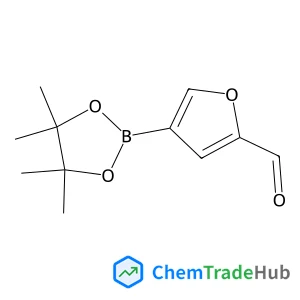
CAS Number
Related Products
![3-[4-Fluoro-2-(trifluoromethyl)phenyl]propanoic acid](https://static.chemtradehub.com/structs/916/916420-73-0-ee37.webp)
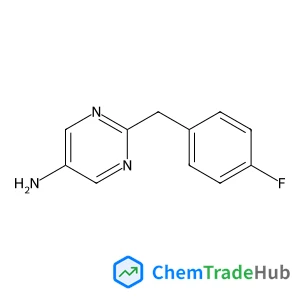
2-(4-Fluorobenzyl)-5-pyrimidinamine
CAS Number: 1152557-45-3
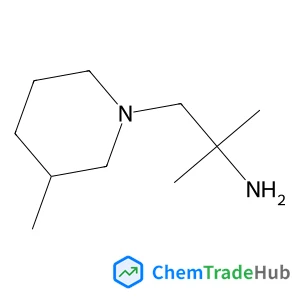
![Methyl [4-cyano-3-(3-thienyl)-1H-pyrazol-1-yl]acetate](https://static.chemtradehub.com/structs/209/2098083-01-1-68bf.webp)
![3-[4-Cyclopentyl-5-(methylsulfanyl)-4H-1,2,4-triazol-3-yl]-1-propanamine hydroiodide (1:1)](https://static.chemtradehub.com/structs/119/1197609-28-1-10f2.webp)
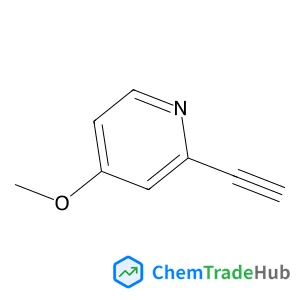
2-Ethynyl-4-methoxypyridine
CAS Number: 1211533-95-7
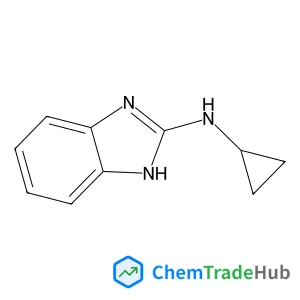
N-Cyclopropyl-1H-benzimidazol-2-amine
CAS Number: 941266-08-6
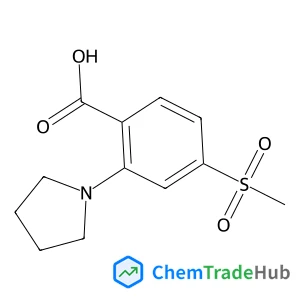
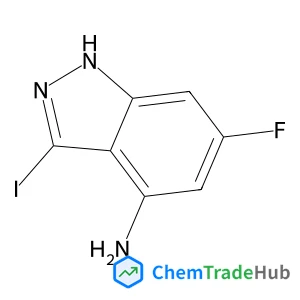
4-AMINO-6-FLUORO-3-IODO (1H)INDAZOLE
CAS Number: 885523-02-4
Other Suppliers for 4-(4,4,5,5-Tetramethyl-1,3,2-dioxaborolan-2-yl)furan-2-carbaldehyde









Basic Information
Molecular Formula
C11H15BO4
Molecular Weight
222.05 g/mol
Physical Properties
Boiling Point
338.1 °C at 760 mmHg
Density
1.1
Flash Point
158.3 °C
Chemical Identifiers
SMILES
B1(OC(C(O1)(C)C)(C)C)C2=COC(=C2)C=O
InChIKey
YHEMDDZDHYKQGZ-UHFFFAOYSA-N
Database References
MDL Number
MFCD06657890
FAQ
4-(4,4,5,5-Tetramethyl-1,3,2-dioxaborolan-2-yl)furan-2-carbaldehyde (CAS: 846023-58-3) falls under various regulatory guidelines such as REACH in the European Union, which requires registration if the substance is manufactured or imported in quantities greater than 1 ton per year. In the U.S., it is also subject to the EPA's Toxic Substances Control Act (TSCA) for safety and environmental protection. Additionally, the FDA regulates its use in products intended for human contact or consumption.
Alternative reagents for 4-(4,4,5,5-Tetramethyl-1,3,2-dioxaborolan-2-yl)furan-2-carbaldehyde include boronic acids and other boron-containing compounds. Isomers such as 4-(4,4,5,5-Tetramethyl-1,3,2-dioxaborolan-2-yl)pyrrole-2-carbaldehyde can also be used as substitutes depending on the specific reaction conditions and desired product.
The market for 4-(4,4,5,5-Tetramethyl-1,3,2-dioxaborolan-2-yl)furan-2-carbaldehyde is growing due to its applications in organic synthesis, particularly in boron-containing reactions. Research trends include its use in catalysis and as a boron donor in cross-coupling reactions. The trend shows increasing interest in developing more efficient and environmentally friendly synthetic methods.
Waste containing 4-(4,4,5,5-Tetramethyl-1,3,2-dioxaborolan-2-yl)furan-2-carbaldehyde (CAS: 846023-58-3) should be collected in appropriate containers and disposed of through professional waste disposal services. Incineration is a common method, but ensure it is conducted in a controlled environment to minimize environmental impact. Follow local hazardous waste regulations and guidelines for storage, transportation, and disposal to ensure safety and compliance.
Safety Notice
Please verify product specifications and safety data before use. Contact the supplier for detailed safety information.
Always follow proper handling procedures
Contact Information
3641133981@qq.com