



AD
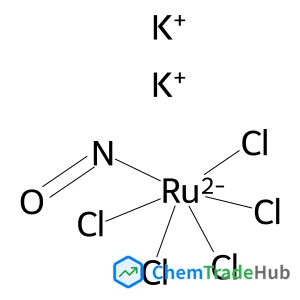
dipotassium;pentachloro(nitroso)ruthenium(2-)(CAS: 14854-54-7)
CAS Number
Related Products
![4-Sulfothiacalix[4]arene sodium salt](https://static.chemtradehub.com/structs/211/211561-04-5-c419.webp)
4-Sulfothiacalix[4]arene sodium salt
CAS Number: 211561-04-5

4-Bromoisoquinolin-5-ol
CAS Number: 651310-41-7
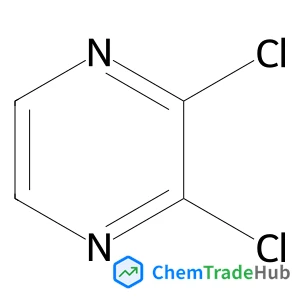
2,3-dichloropyrazine
CAS Number: 4858-85-9
![3-[4-(Aminomethyl)-1,3-thiazol-2-yl]aniline](https://static.chemtradehub.com/structs/885/885280-76-2-68fa.webp)
![Sodium 6-methyl-2-thioxo-5,6,7,8-tetrahydro-2H-pyrido[4,3-d]pyrimidin-4a-ide](https://static.chemtradehub.com/structs/125/1255717-42-0-d896.webp)
![{(2S,6R)-4-Benzyl-6-[(benzyloxy)methyl]-2-morpholinyl}methanol](https://static.chemtradehub.com/structs/158/1581750-87-9-8b86.webp)
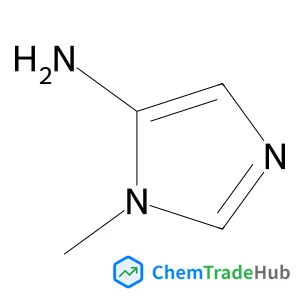
1-Methyl-1H-imidazol-5-amine
CAS Number: 66787-75-5
![(1R)-2-{[(2-Methyl-2-propanyl)oxy]carbonyl}-5-(methylsulfonyl)-1-isoindolinecarboxylic acid](https://static.chemtradehub.com/structs/210/2101238-70-2-41e6.webp)
Other Suppliers for dipotassium;pentachloro(nitroso)ruthenium(2-)





Basic Information
Molecular Formula
Cl5K2NORu
Molecular Weight
386.54 g/mol
EINECS
238-919-6
Physical Properties
Melting Point
220 °C (dec.) (lit.)
Boiling Point
°Cat760mmHg
Density
g/cm3
Flash Point
°C
Water Solubility
Soluble in water.
Chemical Identifiers
SMILES
N(=O)[Ru-2](Cl)(Cl)(Cl)(Cl)Cl.[K+].[K+]
InChIKey
WNVHAHDPZULZJL-UHFFFAOYSA-I
Database References
MDL Number
MFCD00049789
FAQ
What regulatory guidelines apply to dipotassium;pentachloro(nitroso)ruthenium(2-) (CAS: 14854-54-7)?
Dipotassium;pentachloro(nitroso)ruthenium(2-) (CAS: 14854-54-7) is regulated under the Globally Harmonized System of Classification and Labeling of Chemicals (GHS), REACH regulations in the EU, and FDA/EPA requirements for chemical safety. It must be labeled with appropriate hazard statements and pictograms to ensure safe handling and transportation. Detailed safety data sheets (SDS) should be available for workers and emergency responders.
While dipotassium;pentachloro(nitroso)ruthenium(2-) (CAS: 14854-54-7) is a specialized compound, alternatives include other ruthenium complexes with different ligands. Common isomers and analogs include bis(triphenylphosphine)ruthenium(II) chloride and ruthenium(II) trichloride. These alternatives offer similar reactivity profiles in many synthetic applications, though they may vary in stability and reactivity.
Research into dipotassium;pentachloro(nitroso)ruthenium(2-) (CAS: 14854-54-7) is limited, but there is growing interest in its catalytic properties for organic synthesis and potential use in medicinal chemistry. Market trends suggest a niche demand for specialized ruthenium complexes, driven by advancements in materials science and pharmaceutical development. However, the compound's high reactivity and toxicity make it challenging to handle and commercialize.
Waste containing dipotassium;pentachloro(nitroso)ruthenium(2-) (CAS: 14854-54-7) should be carefully collected and neutralized to reduce hazards, followed by incineration or professional waste disposal services. Environmental precautions include using appropriate personal protective equipment (PPE) and ensuring compliance with local and national hazardous waste disposal regulations. Detailed waste management plans should be developed to minimize environmental impact.
Safety Notice
Please verify product specifications and safety data before use. Contact the supplier for detailed safety information.
Always follow proper handling procedures

Contact Information
3004779232@qq.com
Mobile
18013972705
Telephone
025-66061636
Visit Website
http://www.aikonchem.com/