



AD
6-Chloro-2-methylpyridine-3-carbaldehyde(CAS: 884495-36-7)
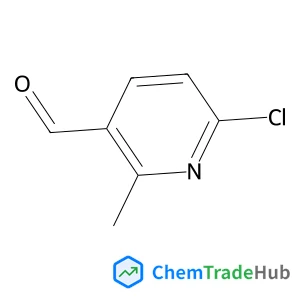
CAS Number
Related Products
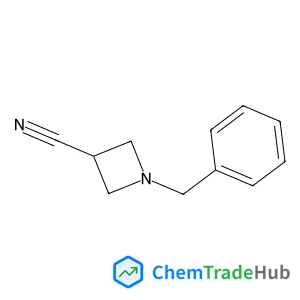
1-Benzyl-3-azetidinecarbonitrile
CAS Number: 94985-26-9

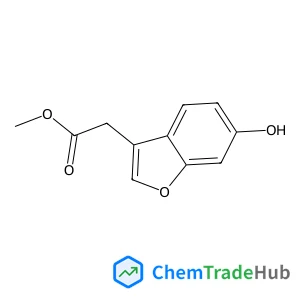
![Tert-butyl 2,6-diazaspiro[3.4]octane-6-carboxylate](https://static.chemtradehub.com/structs/885/885270-86-0-9a0a.webp)
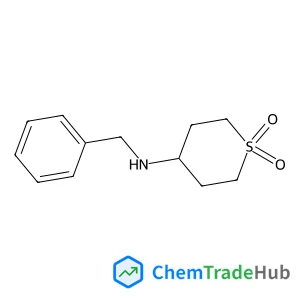


3-Fluoroazetidine hydrochloride (1:1)
CAS Number: 617718-46-4
Other Suppliers for 6-Chloro-2-methylpyridine-3-carbaldehyde




Basic Information
Molecular Formula
C7H6ClNO
Molecular Weight
155.58 g/mol
Physical Properties
Boiling Point
256.728 °C at 760 mmHg
Density
1.27
Flash Point
256.728 °C at 760 mmHg
Chemical Identifiers
SMILES
CC1=C(C=CC(=N1)Cl)C=O
InChIKey
BLLSRSWUYXEXNF-UHFFFAOYSA-N
Database References
MDL Number
MFCD07368876
FAQ
6-Chloro-2-methylpyridine-3-carbaldehyde (CAS: 884495-36-7) is a white or off-white crystalline solid with a molecular weight of approximately 193.6 g/mol. It has low water solubility but good solubility in organic solvents like ethanol and acetone. It is less reactive than other aldehydes but can undergo typical aldehyde reactions such as nucleophilic addition and oxidation. It is stable under normal conditions but should be stored in a cool, dry place away from direct sunlight.
6-Chloro-2-methylpyridine-3-carbaldehyde (CAS: 884495-36-7) can be synthesized by the condensation of 6-chloro-2-methylpyridine with formaldehyde in the presence of an acid catalyst, such as hydrochloric acid. The reaction is carried out in a suitable organic solvent. The yield is typically around 70-80%, and the selectivity is high, giving a pure product with good chemical stability.
6-Chloro-2-methylpyridine-3-carbaldehyde (CAS: 884495-36-7) is primarily used in the pharmaceutical industry for the synthesis of certain drugs and intermediates. It also finds applications in the development of new materials, particularly in the production of polymers and sensors. Its chemical properties make it suitable for use in the semiconductor industry as well.
When handling 6-Chloro-2-methylpyridine-3-carbaldehyde (CAS: 884495-36-7), it is important to use appropriate personal protective equipment (PPE) such as gloves, goggles, and a lab coat. The compound should be stored in a cool, dry place to prevent degradation. In case of a spill, it should be handled with care, using a fume hood, and cleaned up according to standard laboratory safety procedures. For more detailed safety information, refer to the Safety Data Sheet (SDS).
Safety Notice
Please verify product specifications and safety data before use. Contact the supplier for detailed safety information.
Always follow proper handling procedures
Contact Information
sales@bocpharma.com