AD
3-Nitropyridine-2,4-diamine(CAS: 24501-21-1)
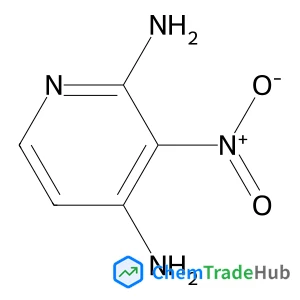
CAS Number
Related Products
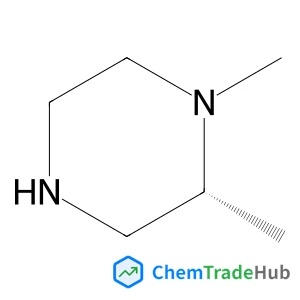
(2R)-1,2-Dimethylpiperazine
CAS Number: 623586-02-7
![(2S)-4-Hydroxy-7-(hydroxymethyl)-2-(2-hydroxy-2-propanyl)-2,3-dihydro-5H-furo[3,2-g]chromen-5-one](https://static.chemtradehub.com/structs/496/49624-66-0-7116.webp)

O~15~-Heptanoylretinol
CAS Number: 88641-44-5
![1-Methoxy-2-[1-(4-methoxyphenyl)propyl]benzene](https://static.chemtradehub.com/structs/334/33451-22-8-2ef2.webp)
CAS Number: 1350524-27-4
Other Suppliers for 3-Nitropyridine-2,4-diamine








Basic Information
Molecular Formula
C5H6N4O2
Molecular Weight
154.13 g/mol
Chemical Identifiers
SMILES
C1=CN=C(C(=C1N)[N+](=O)[O-])N
InChIKey
LXNNKGSAWMJWJN-UHFFFAOYSA-N
Database References
MDL Number
MFCD01646408
FAQ
3-Nitropyridine-2,4-diamine (CAS: 24501-21-1) is regulated under various guidelines, including GHS (Globally Harmonized System) for classification as an oxidizing agent and combustible solid. Under REACH regulations, it requires registration if manufactured or imported in quantities greater than 1 tonne per year. FDA and EPA have specific requirements for handling and disposal related to its health and environmental impacts. It is essential to comply with local and national regulations for safe handling and storage.
For synthesis, alternatives to 3-Nitropyridine-2,4-diamine (CAS: 24501-21-1) include other heterocyclic amines and nitro compounds. Common alternatives such as 2,4-diamino-3-nitropyridine and 1,3-diamino-2-nitropyridine offer similar functionality. These alternatives can be chosen based on specific reaction conditions, availability, and cost. It is important to evaluate the reactivity and safety of these alternatives in the context of the intended synthesis.
The market for 3-Nitropyridine-2,4-diamine (CAS: 24501-21-1) is driven by its applications in pharmaceuticals, dyes, and pigments. Research trends suggest an increasing focus on its use in pharmaceutical intermediates due to its ability to act as a precursor in the synthesis of various drug molecules. The market is also exploring its use in organic synthesis as a versatile reagent. However, the trend is closely monitored due to its hazardous properties, leading to stricter regulations and safer alternatives.
Waste containing 3-Nitropyridine-2,4-diamine (CAS: 24501-21-1) should be collected in suitable containers labeled with appropriate hazard symbols. It is crucial to neutralize the waste with a suitable base before disposal to reduce the risk of fire or explosion. Incineration is a preferred method for disposal, but it must be done in a controlled environment. Professional waste disposal services should be used to ensure compliance with environmental protection laws. Always follow local regulations for handling and disposing of hazardous chemicals.
Safety Notice
Please verify product specifications and safety data before use. Contact the supplier for detailed safety information.
Always follow proper handling procedures