



AD
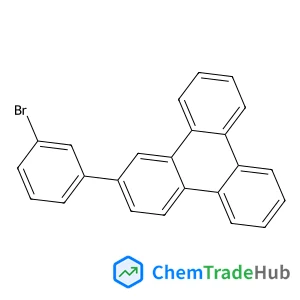
2-(3-Bromophenyl)triphenylene(CAS: 1313514-53-2)
CAS Number
Related Products
![10-Bromo-7H-benzo[c]carbazole](https://static.chemtradehub.com/structs/169/1698-16-4-dc3e.webp)
10-Bromo-7H-benzo[c]carbazole
CAS Number: 1698-16-4
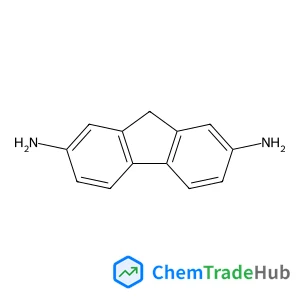
9H-Fluorene-2,7-diamine
CAS Number: 525-64-4
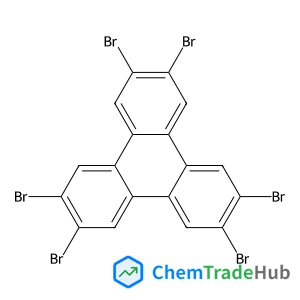
2,3,6,7,10,11-Hexabromotriphenylene
CAS Number: 82632-80-2
![4-[Bis(4-methylphenyl)amino]benzaldehyde](https://static.chemtradehub.com/structs/429/42906-19-4-6e19.webp)

![[4-(Diphenylamino)phenyl]boronic acid](https://static.chemtradehub.com/structs/201/201802-67-7-0007.webp)
[4-(Diphenylamino)phenyl]boronic acid
CAS Number: 201802-67-7
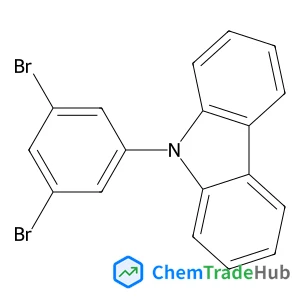
9-(3,5-Dibromophenyl)-9H-carbazole
CAS Number: 750573-26-3
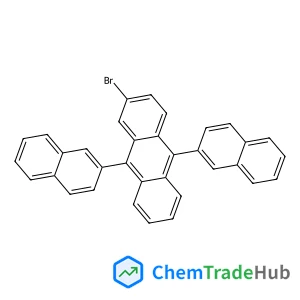
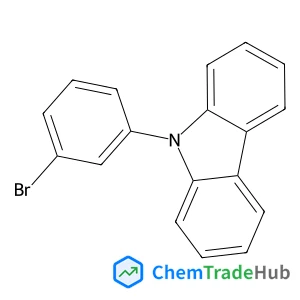
9-(3-Bromophenyl)-9H-carbazole
CAS Number: 185112-61-2
Other Suppliers for 2-(3-Bromophenyl)triphenylene



Basic Information
Molecular Formula
C24H15Br
Molecular Weight
383.29 g/mol
Physical Properties
Melting Point
147.0 to 151.0 deg-C
Chemical Identifiers
SMILES
BrC1=CC(C2=CC=C3C4=CC=CC=C4C5=CC=CC=C5C3=C2)=CC=C1
InChIKey
KWXFBIBEVROWEF-UHFFFAOYSA-N
Database References
MDL Number
MFCD28384139
FAQ
The regulation of 2-(3-Bromophenyl)triphenylene (CAS: 1313514-53-2) primarily falls under the Global Harmonized System (GHS) for Classification and Labeling of Chemicals. It is also subject to the Registration, Evaluation, Authorization and Restriction of Chemicals (REACH) regulation in the European Union. In the United States, it is regulated by the EPA under TSCA (Toxic Substances Control Act) and by the FDA for any pharmaceutical applications. Detailed safety data sheets (SDS) and proper labeling are required to ensure compliance with these regulations.
There are several alternatives to 2-(3-Bromophenyl)triphenylene in synthesis, including brominated derivatives of other polycyclic aromatic hydrocarbons such as 9-bromoanthracene and 1-bromo-9,10-dihydrophenanthrene. Isomers and analogs like 2-(3-chlorophenyl)triphenylene can also be used as effective substitutes depending on the desired properties and reaction conditions. Common reagents include bromine and various aryl halides, which can be employed to modify the structure of these compounds.
The market for 2-(3-Bromophenyl)triphenylene (CAS: 1313514-53-2) is currently limited but shows potential in research applications due to its unique structural properties. Recent trends indicate growing interest in its use as a building block for complex organic molecules and materials. Research is also exploring its applications in drug discovery and as a precursor in the synthesis of other compounds. Market demand is expected to increase with further advancements in these fields.
Waste containing 2-(3-Bromophenyl)triphenylene (CAS: 1313514-53-2) should be handled carefully to prevent environmental contamination and ensure occupational safety. Collection and storage should be in accordance with local regulations and safety guidelines. Incineration is a common method for disposal, provided it is conducted in an environmentally controlled incinerator. Alternatively, professional waste disposal services can be utilized to ensure compliance with environmental protection measures. Proper personal protective equipment (PPE) and waste handling protocols must be followed to mitigate any potential hazards.
Safety Notice
Please verify product specifications and safety data before use. Contact the supplier for detailed safety information.
Always follow proper handling procedures