



AD
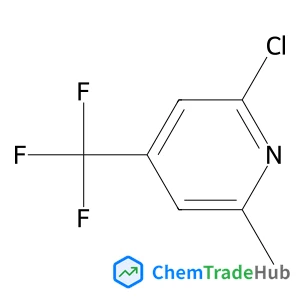
2-Chloro-6-methyl-4-(trifluoromethyl)pyridine(CAS: 22123-14-4)
CAS Number
Related Products
![Naphtho[1,2-c]furan-1,3-dione](https://static.chemtradehub.com/structs/534/5343-99-7-5dbe.webp)
Naphtho[1,2-c]furan-1,3-dione
CAS Number: 5343-99-7

4,5-Dibromo-2-methyl-2H-1,2,3-triazole
CAS Number: 28938-17-2
![1-[Chloro(1-pyrrolidinyl)methylene]pyrrolidinium tetrafluoroborate](https://static.chemtradehub.com/structs/115/115007-14-2-7aa4.webp)
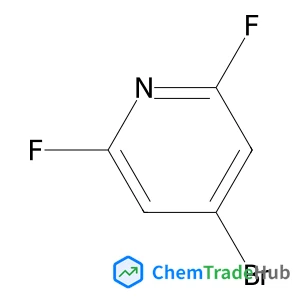
4-Bromo-2,6-difluoropyridine
CAS Number: 903513-58-6

1-propyl-1H-pyrazole
CAS Number: 32500-67-7
![N~5~-[N-(Mesitylsulfonyl)carbamimidoyl]-N~2~-{[(2-methyl-2-propanyl)oxy]carbonyl}-L-ornithine](https://static.chemtradehub.com/structs/682/68262-71-5-07ff.webp)

(-)-DIP-chloride (~60% in Heptane)
CAS Number: 85116-37-6


6-Chloro-4,5-dimethyl-3-pyridazinamine
CAS Number: 76593-36-7
Other Suppliers for 2-Chloro-6-methyl-4-(trifluoromethyl)pyridine


Basic Information
Molecular Formula
C7H5ClF3N
Molecular Weight
195.57 g/mol
Physical Properties
Boiling Point
66 ºC (15 mmHg)
Chemical Identifiers
SMILES
CC1=CC(=CC(=N1)Cl)C(F)(F)F
InChIKey
SXLBWNSGCIEART-UHFFFAOYSA-N
Database References
MDL Number
MFCD00052900
FAQ
What regulatory guidelines apply to 2-Chloro-6-methyl-4-(trifluoromethyl)pyridine (CAS: 22123-14-4)?
2-Chloro-6-methyl-4-(trifluoromethyl)pyridine (CAS: 22123-14-4) is classified as a hazardous substance under the Globally Harmonized System of Classification and Labeling of Chemicals (GHS), requiring appropriate safety data sheets (SDS) and labels. In the European Union, it is regulated under REACH for registration, evaluation, authorization, and restriction of chemicals. Additionally, the U.S. EPA and FDA have specific requirements for handling, storage, and disposal to prevent environmental and health risks.
Alternatives to 2-Chloro-6-methyl-4-(trifluoromethyl)pyridine (CAS: 22123-14-4) in synthesis include derivatives such as 2-bromo-6-methyl-4-(trifluoromethyl)pyridine or other pyridine derivatives. Other synthetic routes may involve using different functional groups, like using amino or hydroxy groups as substitutes, which can be more environmentally friendly and less toxic.
The market for 2-Chloro-6-methyl-4-(trifluoromethyl)pyridine (CAS: 22123-14-4) is primarily driven by its use in pharmaceuticals and agrochemicals due to its unique chemical properties. Research trends are focusing on its potential as a precursor for drug synthesis and its role in organic synthesis methods. There is also growing interest in its environmental impact and sustainable alternatives, which may influence future demand trends.
Waste containing 2-Chloro-6-methyl-4-(trifluoromethyl)pyridine (CAS: 22123-14-4) should be collected in sealed containers and disposed of through professional waste disposal services. Incineration is a common method for its disposal, but adequate measures must be taken to ensure complete combustion and minimal emission of harmful compounds. Environmental protection precautions include proper ventilation and the use of appropriate personal protective equipment (PPE) to prevent exposure. Compliance with local and international regulations is essential.
Safety Notice
Please verify product specifications and safety data before use. Contact the supplier for detailed safety information.
Always follow proper handling procedures

Contact Information
Contact Person
Jin Jinle (National Unified Telephone Line)
hnjjlchem@126.com
Telephone
10106090
Visit Website
https://www.jinjinlechem.com/Address
Changsha Kaifu District Tongtai Street Zhongshan Road 589 Kaifu Wangdawei Square C District 3rd Office Building 2905