



AD
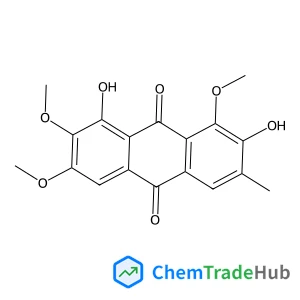
1,7-Dihydroxy-2,3,8-trimethoxy-6-methyl-9,10-anthraquinone(CAS: 70588-05-5)
CAS Number
Related Products
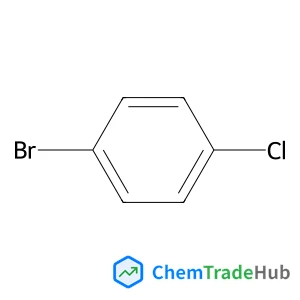
1-Bromo-4-chlorobenzene
CAS Number: 106-39-8
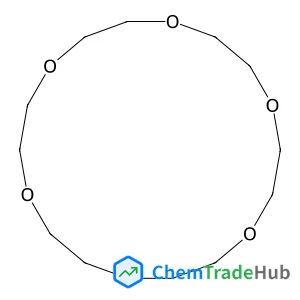
1,4,7,10,13,16-hexaoxacyclooctadecane
CAS Number: 17455-13-9
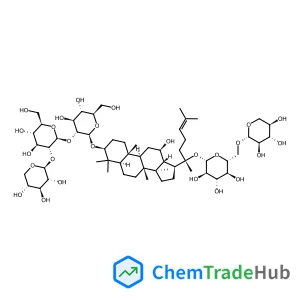
Notoginsenoside Fc
CAS Number: 88122-52-5
![3-Hydroxy-5-(6-hydroxy-7,7-dimethyl-6,7-dihydro-5H-furo[3,2-g]chromen-2-yl)phenyl beta-D-xylopyranoside](https://static.chemtradehub.com/structs/102/102841-43-0-c884.webp)
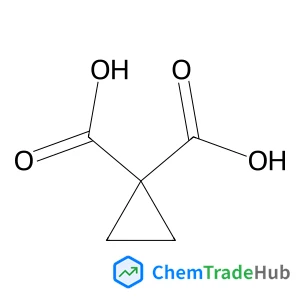
1,1-Cyclopropanedicarboxylic acid
CAS Number: 598-10-7
![3-{[3-(1-Aziridinyl)propanoyl]oxy}-2-({[3-(1-aziridinyl)propanoyl]oxy}methyl)-2-(hydroxymethyl)propyl 3-(1-aziridinyl)propanoate](https://static.chemtradehub.com/structs/571/57116-45-7-615c.webp)
![3-(3-{[(Dimethylcarbamoyl)amino]methyl}-3,5,5-trimethylcyclohexyl)-1,1-dimethylurea](https://static.chemtradehub.com/structs/399/39992-90-0-4222.webp)
Other Suppliers for 1,7-Dihydroxy-2,3,8-trimethoxy-6-methyl-9,10-anthraquinone





Basic Information
Molecular Formula
C18H16O7
Molecular Weight
344.32 g/mol
Physical State
Powder
Physical Properties
Boiling Point
614.9 ℃ at 760 mmHg
Density
1.409
Flash Point
614.9 °C at 760 mmHg
Chemical Identifiers
SMILES
CC1=CC2=C(C(=C1O)OC)C(=O)C3=C(C(=C(C=C3C2=O)OC)OC)O
InChIKey
CFLNHFUPWNRWJA-UHFFFAOYSA-N
Database References
MDL Number
MFCD13195592
FAQ
1,7-Dihydroxy-2,3,8-trimethoxy-6-methyl-9,10-anthraquinone (CAS: 70588-05-5) is subject to various regulatory guidelines including GHS classification for hazardous chemicals, REACH regulations in the European Union, and FDA/EPA requirements for safety and environmental standards. Regulatory compliance is essential for its handling, storage, and disposal to ensure worker safety and environmental protection.
While 1,7-Dihydroxy-2,3,8-trimethoxy-6-methyl-9,10-anthraquinone (CAS: 70588-05-5) is a specific compound, there are alternative anthraquinone derivatives, such as emodin, rhein, and chrysophanol, which can be used in synthetic processes. These alternatives offer similar functional groups and properties but may differ in reactivity and availability.
The market for 1,7-Dihydroxy-2,3,8-trimethoxy-6-methyl-9,10-anthraquinone (CAS: 70588-05-5) is driven by its applications in pharmaceuticals and natural products research. Recent research trends focus on its potential as an anti-inflammatory and antioxidant agent. Market trends indicate increasing demand in the pharmaceutical and cosmetics industries, with ongoing studies exploring its therapeutic potential.
Waste containing 1,7-Dihydroxy-2,3,8-trimethoxy-6-methyl-9,10-anthraquinone (CAS: 70588-05-5) should be managed according to regulatory guidelines. Proper waste collection, segregation, and incineration are recommended to ensure environmental safety. Professional waste disposal services should be utilized to handle the waste, and appropriate precautions should be taken to prevent contamination and ensure safe disposal.
Safety Notice
Please verify product specifications and safety data before use. Contact the supplier for detailed safety information.
Always follow proper handling procedures
Contact Information
Contact Person
Mr. Wang
174160056@qq.com