



AD
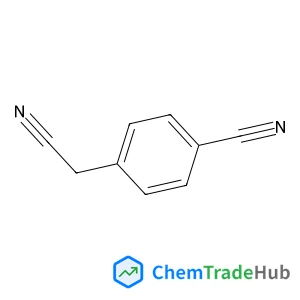
4-(Cyanomethyl)benzonitrile(CAS: 876-31-3)
CAS Number
Related Products

(9Z)-9-Tetradecenoic acid
CAS Number: 544-64-9

Gomisin K1
CAS Number: 75629-20-8
![2-Methyl-2-propanyl (1R,5R)-5-hydroxy-3-azabicyclo[4.1.0]heptane-3-carboxylate](https://static.chemtradehub.com/structs/230/2305079-71-2-b0dc.webp)
![2-Oxa-7-azaspiro[3.5]nonane acetate (1:1)](https://static.chemtradehub.com/structs/131/1313369-52-6-2eb1.webp)
![4-Nitrophenyl N-[(benzyloxy)carbonyl]-D-phenylalaninate](https://static.chemtradehub.com/structs/257/2578-85-0-6c76.webp)

3-Methylbutyl salicylate
CAS Number: 87-20-7
![4-{[4-(4-Chlorophenyl)-1,3-thiazol-2-yl]amino}phenol hydrochloride (1:1)](https://static.chemtradehub.com/structs/117/1177741-83-1-b09e.webp)
![2-[4-(5-Amino-2-pyridinyl)-1-piperazinyl]-1-ethanol](https://static.chemtradehub.com/structs/101/1017221-34-9-ca8d.webp)
Other Suppliers for 4-(Cyanomethyl)benzonitrile




Basic Information
Molecular Formula
C9H6N2
Molecular Weight
17.03 g/mol
Physical Properties
Melting Point
100-104 °C (lit.)
Boiling Point
180-181℃
Density
1.056
Flash Point
71°(160°F)
Chemical Identifiers
SMILES
N#CCc1ccc(C#N)cc1
InChIKey
QILKKAFYAFEWGU-UHFFFAOYSA-N
Database References
MDL Number
MFCD00060305
FAQ
4-(Cyanomethyl)benzonitrile is a crystalline solid with a molecular weight of approximately 147.14 g/mol. It is slightly soluble in water but miscible with common organic solvents like ethanol and acetone. This compound is moderately reactive, particularly towards nucleophiles, and can undergo substitution and addition reactions. Its physical properties include a melting point of 71-72°C and a density of 1.11 g/cm³.
4-(Cyanomethyl)benzonitrile can be synthesized via the cyanation of 4-methylbenzyl alcohol. This process involves treating the alcohol with a cyanide source, such as sodium cyanide, in the presence of a catalyst like tetrabutylammonium chloride. The reaction conditions are typically carried out in an aprotic solvent at room temperature, yielding a high purity product with good selectivity and yield.
4-(Cyanomethyl)benzonitrile is primarily used in the pharmaceutical industry for the synthesis of certain drugs, particularly those requiring intermediate nitrile functionalities. It also finds applications in the polymer industry for the modification of polymer properties, and in the sensor sector for the development of chemical sensors. This compound is less commonly used in semiconductors, but may be utilized in specific applications due to its reactivity.
When handling 4-(Cyanomethyl)benzonitrile, it is essential to wear appropriate personal protective equipment (PPE), including gloves, safety goggles, and a lab coat. Work in a well-ventilated area or a fume hood to minimize inhalation risk. Spills should be cleaned up using appropriate absorbent materials and disposed of according to local regulations. Always refer to the Safety Data Sheet (SDS) for detailed handling and safety information.
Safety Notice
Please verify product specifications and safety data before use. Contact the supplier for detailed safety information.
Always follow proper handling procedures
Contact Information
chenling@zzstandard.com