



AD
2-Nitrobenzenethiol(CAS: 4875-10-9)
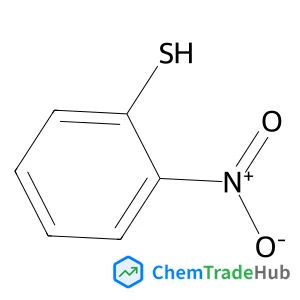
CAS Number
Related Products
![4-Sulfothiacalix[4]arene sodium salt](https://static.chemtradehub.com/structs/211/211561-04-5-c419.webp)
4-Sulfothiacalix[4]arene sodium salt
CAS Number: 211561-04-5
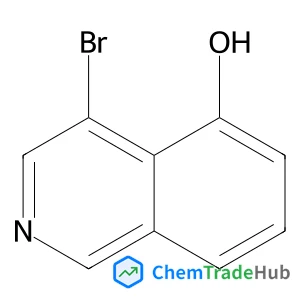
4-Bromoisoquinolin-5-ol
CAS Number: 651310-41-7
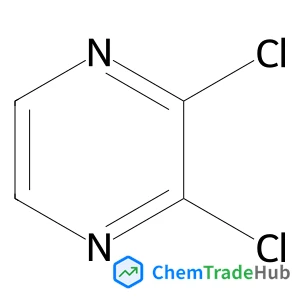
2,3-dichloropyrazine
CAS Number: 4858-85-9
![3-[4-(Aminomethyl)-1,3-thiazol-2-yl]aniline](https://static.chemtradehub.com/structs/885/885280-76-2-68fa.webp)
![Sodium 6-methyl-2-thioxo-5,6,7,8-tetrahydro-2H-pyrido[4,3-d]pyrimidin-4a-ide](https://static.chemtradehub.com/structs/125/1255717-42-0-d896.webp)
![{(2S,6R)-4-Benzyl-6-[(benzyloxy)methyl]-2-morpholinyl}methanol](https://static.chemtradehub.com/structs/158/1581750-87-9-8b86.webp)
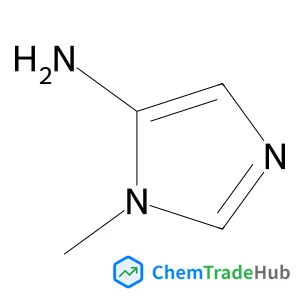
1-Methyl-1H-imidazol-5-amine
CAS Number: 66787-75-5
![(1R)-2-{[(2-Methyl-2-propanyl)oxy]carbonyl}-5-(methylsulfonyl)-1-isoindolinecarboxylic acid](https://static.chemtradehub.com/structs/210/2101238-70-2-41e6.webp)
Other Suppliers for 2-Nitrobenzenethiol







Basic Information
Molecular Formula
C6H5NO2S
Molecular Weight
155.18 g/mol
Chemical Identifiers
SMILES
C1=CC=C(C(=C1)[N+](=O)[O-])S
InChIKey
JKIFPWHZEZQCQA-UHFFFAOYSA-N
Database References
MDL Number
MFCD00797853
FAQ
2-Nitrobenzenethiol (CAS: 4875-10-9) falls under the regulation of various agencies and international guidelines. According to GHS (Globally Harmonized System of Classification and Labelling of Chemicals), it is classified as a skin and eye irritant. In the European Union, it is regulated under REACH (Registration, Evaluation, Authorization and Restriction of Chemicals) for safety data sheets and hazard communication. The FDA and EPA also have specific requirements related to the use and handling of this compound in the U.S., focusing on its toxicological properties and environmental impact.
For the synthesis of products similar to 2-Nitrobenzenethiol (CAS: 4875-10-9), researchers and chemists may consider using 2-Amino-5-nitrotoluene or 2-Thiophenethiol as alternatives. These compounds offer similar reactivity and can serve as effective substitutes in various chemical reactions, particularly in organic synthesis and pharmaceutical applications. However, the choice of alternative will depend on specific reaction conditions and desired product properties.
The market for 2-Nitrobenzenethiol (CAS: 4875-10-9) is driven by its use in the development of dyes, pigments, and pharmaceuticals. Research trends indicate a growing interest in its applications in the synthesis of new materials and as a reagent in organic transformations. Emerging research fields, such as the development of new analytical techniques and the exploration of its potential as a precursor in the preparation of other nitro compounds, are also contributing to its market growth and relevance in the scientific community.
Handling waste containing 2-Nitrobenzenethiol (CAS: 4875-10-9) requires careful consideration to ensure safety and compliance with environmental regulations. Waste should be collected in appropriate containers and labeled with the correct hazard information. For disposal, it is recommended to use professional waste disposal services that are equipped to handle hazardous chemicals. Incineration is a common method, but it must be done in a controlled manner to prevent the release of harmful pollutants. Additionally, proper environmental protection measures, such as containment and neutralization of any potential acidic or toxic residues, should be implemented to minimize environmental impact.
Safety Notice
Please verify product specifications and safety data before use. Contact the supplier for detailed safety information.
Always follow proper handling procedures

Contact Information
3004779232@qq.com
Mobile
18013972705
Telephone
025-66061636
Visit Website
http://www.aikonchem.com/