



AD
6-Methylpyridazin-3(2H)-one monohydrobromide(CAS: 94248-99-4)

CAS Number
Related Products
![4-Sulfothiacalix[4]arene sodium salt](https://static.chemtradehub.com/structs/211/211561-04-5-c419.webp)
4-Sulfothiacalix[4]arene sodium salt
CAS Number: 211561-04-5
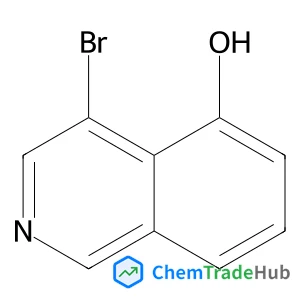
4-Bromoisoquinolin-5-ol
CAS Number: 651310-41-7
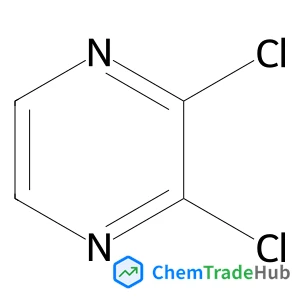
2,3-dichloropyrazine
CAS Number: 4858-85-9
![3-[4-(Aminomethyl)-1,3-thiazol-2-yl]aniline](https://static.chemtradehub.com/structs/885/885280-76-2-68fa.webp)
![Sodium 6-methyl-2-thioxo-5,6,7,8-tetrahydro-2H-pyrido[4,3-d]pyrimidin-4a-ide](https://static.chemtradehub.com/structs/125/1255717-42-0-d896.webp)
![{(2S,6R)-4-Benzyl-6-[(benzyloxy)methyl]-2-morpholinyl}methanol](https://static.chemtradehub.com/structs/158/1581750-87-9-8b86.webp)

1-Methyl-1H-imidazol-5-amine
CAS Number: 66787-75-5

![(1R)-2-{[(2-Methyl-2-propanyl)oxy]carbonyl}-5-(methylsulfonyl)-1-isoindolinecarboxylic acid](https://static.chemtradehub.com/structs/210/2101238-70-2-41e6.webp)
Other Suppliers for 6-Methylpyridazin-3(2H)-one monohydrobromide




Basic Information
Molecular Formula
C5H7BrN2O
Molecular Weight
191.03 g/mol
Physical Properties
Melting Point
184.5-185 ºC
Flash Point
95.4℃
Chemical Identifiers
SMILES
CC1=NNC(=O)C=C1.Br
InChIKey
REHDHXORJFGFPO-UHFFFAOYSA-N
Database References
MDL Number
MFCD16620340
FAQ
The compound 6-Methylpyridazin-3(2H)-one monohydrobromide (CAS: 94248-99-4) is subject to various regulatory guidelines, including the Globally Harmonized System of Classification and Labeling of Chemicals (GHS), which categorizes it based on its physical and health hazards. In the European Union, it falls under the Registration, Evaluation, Authorization and Restriction of Chemicals (REACH) regulation, which may require specific notifications and documentation. The U.S. Food and Drug Administration (FDA) and Environmental Protection Agency (EPA) may also have specific requirements for its handling, storage, and disposal, particularly concerning its potential environmental impacts.
There are several alternatives to 6-Methylpyridazin-3(2H)-one monohydrobromide (CAS: 94248-99-4) in synthesis. Common alternatives include other pyridazinone derivatives such as 2-Methylpyridazin-3(2H)-one or 4-Methylpyridazin-3(2H)-one. Other reagents like bromine or brominating agents can also be used as substitutes, depending on the specific reaction conditions and desired product.
The market for 6-Methylpyridazin-3(2H)-one monohydrobromide (CAS: 94248-99-4) is currently stable, with growing interest in its application in pharmaceutical and agrochemical industries. Research trends are focusing on its use as a precursor in the synthesis of various bioactive compounds. Recent studies have also explored its potential in treating certain diseases, leading to increased demand and investment in related research.
Waste containing 6-Methylpyridazin-3(2H)-one monohydrobromide (CAS: 94248-99-4) should be managed according to local and national regulations. Generally, it should be collected in appropriate containers and disposed of through incineration or professional waste disposal services. Environmental protection measures include ensuring no spillage or release into the environment, using appropriate personal protective equipment, and following safe handling and disposal procedures to minimize environmental impact.
Safety Notice
Please verify product specifications and safety data before use. Contact the supplier for detailed safety information.
Always follow proper handling procedures

Contact Information
3004779232@qq.com
Mobile
18013972705
Telephone
025-66061636
Visit Website
http://www.aikonchem.com/