



AD
2,3-Dimercaptosuccinic Acid(CAS: 2418-14-6)
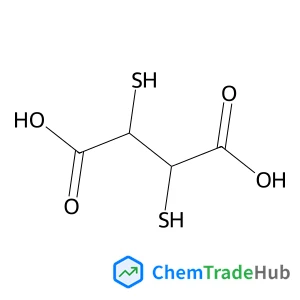
CAS Number
Related Products
![4-Sulfothiacalix[4]arene sodium salt](https://static.chemtradehub.com/structs/211/211561-04-5-c419.webp)
4-Sulfothiacalix[4]arene sodium salt
CAS Number: 211561-04-5
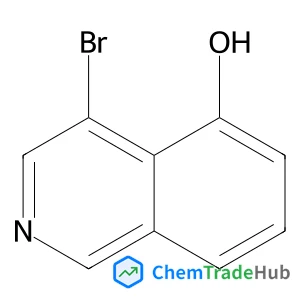
4-Bromoisoquinolin-5-ol
CAS Number: 651310-41-7
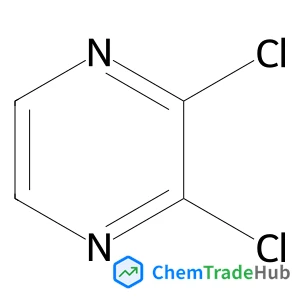
2,3-dichloropyrazine
CAS Number: 4858-85-9
![3-[4-(Aminomethyl)-1,3-thiazol-2-yl]aniline](https://static.chemtradehub.com/structs/885/885280-76-2-68fa.webp)
![Sodium 6-methyl-2-thioxo-5,6,7,8-tetrahydro-2H-pyrido[4,3-d]pyrimidin-4a-ide](https://static.chemtradehub.com/structs/125/1255717-42-0-d896.webp)
![{(2S,6R)-4-Benzyl-6-[(benzyloxy)methyl]-2-morpholinyl}methanol](https://static.chemtradehub.com/structs/158/1581750-87-9-8b86.webp)
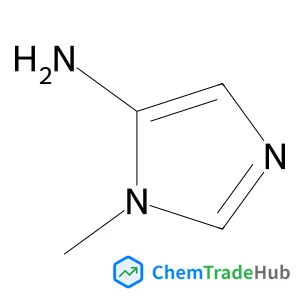
1-Methyl-1H-imidazol-5-amine
CAS Number: 66787-75-5
![(1R)-2-{[(2-Methyl-2-propanyl)oxy]carbonyl}-5-(methylsulfonyl)-1-isoindolinecarboxylic acid](https://static.chemtradehub.com/structs/210/2101238-70-2-41e6.webp)
Other Suppliers for 2,3-Dimercaptosuccinic Acid




Basic Information
Molecular Formula
C4H6O4S2
Molecular Weight
182.22 g/mol
Physical Properties
Melting Point
196-198 ºC
Boiling Point
267.6°C at 760 mmHg
Chemical Identifiers
SMILES
C(C(C(=O)O)S)(C(=O)O)S
InChIKey
ACTRVOBWPAIOHC-UHFFFAOYSA-N
Database References
MDL Number
MFCD00004859
Beilstein Registry Number
1725149
FAQ
2,3-Dimercaptosuccinic Acid (CAS: 2418-14-6) falls under the scope of the Globally Harmonized System of Classification and Labeling of Chemicals (GHS) as a skin and eye irritant. It is also regulated under REACH in the European Union, requiring suppliers to provide a safety data sheet (SDS) and register the substance if the annual tonnage exceeds 1 ton. FDA and EPA may also require specific labeling and storage instructions to ensure safe handling in the US.
Several alternatives to 2,3-Dimercaptosuccinic Acid (CAS: 2418-14-6) are available depending on the specific application. For example, 1,3-Dimercaptosuccinic Acid (DMSA) can be used as a chelating agent in some scenarios. Other alternatives include ethylenediaminetetraacetic acid (EDTA) and calcium disodium ethylenediaminetetraacetate (CDETA), which may be suitable for different types of metal chelation.
The market for 2,3-Dimercaptosuccinic Acid (CAS: 2418-14-6) is growing due to its use as a chelating agent and metal scavenger in various industries, including pharmaceuticals and environmental remediation. Research trends are focusing on its applications in medical treatments, such as the management of heavy metal poisoning, and in the development of new materials for industrial use. The trend is also aligned with increasing demand for eco-friendly chemistries and sustainable practices.
Waste containing 2,3-Dimercaptosuccinic Acid (CAS: 2418-14-6) should be stored in a sealed container and disposed of according to local regulations. It is advisable to neutralize the waste with a suitable base before disposal to minimize environmental impact. Incineration or professional waste disposal services are recommended for large quantities to ensure safety and compliance with environmental protection laws.
Safety Notice
Please verify product specifications and safety data before use. Contact the supplier for detailed safety information.
Always follow proper handling procedures

Contact Information
3004779232@qq.com
Mobile
18013972705
Telephone
025-66061636
Visit Website
http://www.aikonchem.com/