



AD
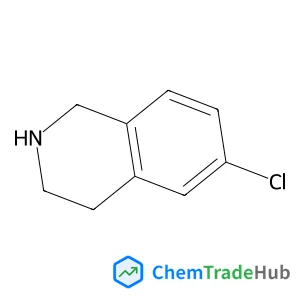
6-Chloro-1,2,3,4-tetrahydroisoquinoline(CAS: 33537-99-4)
CAS Number
Related Products
![Ethyl 5,6-dihydro-4H-pyrrolo[3,2,1-ij]quinoline-1-carboxylate](https://static.chemtradehub.com/structs/124/124730-53-6-3463.webp)
![N-1H-Imidazo[4,5-d]pyridazin-7-ylbenzamide](https://static.chemtradehub.com/structs/108/108880-46-2-6d07.webp)
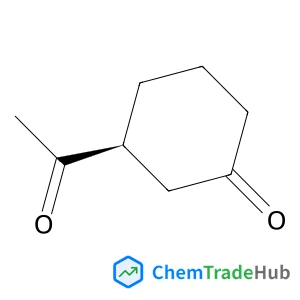
(3S)-3-Acetylcyclohexanone
CAS Number: 1932251-08-5
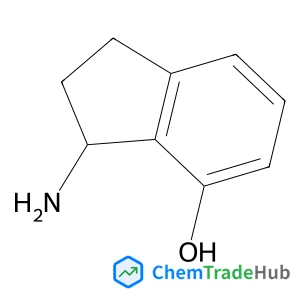
3-amino-2,3-dihydro-1H-inden-4-ol
CAS Number: 58350-01-9
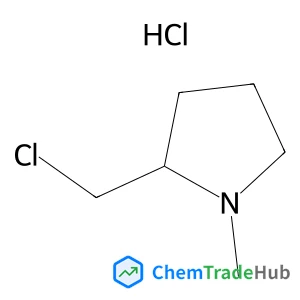

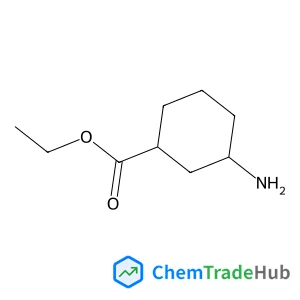
Ethyl 3-aminocyclohexanecarboxylate
CAS Number: 53084-60-9
![5-Bromo-1H-pyrazolo[3,4-c]pyridine-3-carboxylic acid](https://static.chemtradehub.com/structs/208/2089651-75-0-0fa0.webp)
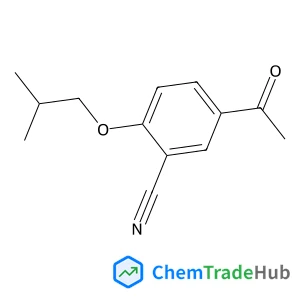
5-Acetyl-2-isobutoxybenzonitrile
CAS Number: 1198617-51-4
Other Suppliers for 6-Chloro-1,2,3,4-tetrahydroisoquinoline







Basic Information
Molecular Formula
C9H10ClN
Molecular Weight
167.64 g/mol
Chemical Identifiers
SMILES
C1CNCC2=C1C=C(C=C2)Cl
InChIKey
NSURINBXOVVUNR-UHFFFAOYSA-N
Database References
MDL Number
MFCD06739156
FAQ
6-Chloro-1,2,3,4-tetrahydroisoquinoline (CAS: 33537-99-4) has a crystalline form and a molecular weight of approximately 204.63 g/mol. It is slightly soluble in water and more soluble in organic solvents like ethanol and acetone. This compound is known for its moderate reactivity, particularly towards nucleophiles and electrophiles. It is also a basic compound, which can affect its solubility and reactivity in aqueous solutions.
6-Chloro-1,2,3,4-tetrahydroisoquinoline (CAS: 33537-99-4) is typically synthesized via a multistep process involving the formation of an isoquinoline ring from a chloroarene and a secondary amine. The synthesis usually requires a catalyst, such as a Lewis acid, and involves selective substitution reactions. The overall yield is around 70-80%, and the method involves careful control of reaction conditions to achieve high product purity.
6-Chloro-1,2,3,4-tetrahydroisoquinoline (CAS: 33537-99-4) is used in various industries, particularly in pharmaceuticals and agrochemicals. It serves as a precursor for synthesizing drugs and pesticides due to its biological activity. Additionally, it finds applications in the production of certain dyes and pigments. Its properties make it suitable for use in research and development of new products in these sectors.
When handling 6-Chloro-1,2,3,4-tetrahydroisoquinoline (CAS: 33537-99-4), it is essential to wear appropriate personal protective equipment (PPE), including gloves, safety glasses, and a lab coat. Work should be conducted in a fume hood to minimize exposure to vapors. Spills should be cleaned up immediately using absorbent materials, and the area should be well-ventilated. Always consult the Safety Data Sheet (SDS) for detailed handling and emergency procedures.
Safety Notice
Please verify product specifications and safety data before use. Contact the supplier for detailed safety information.
Always follow proper handling procedures
Contact Information
sales02@chemsoon.com