



AD
6-Chloro-4-iodo-1H-indazole(CAS: 885519-56-2)
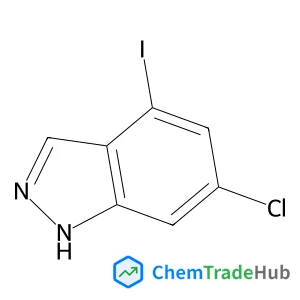
CAS Number
Related Products
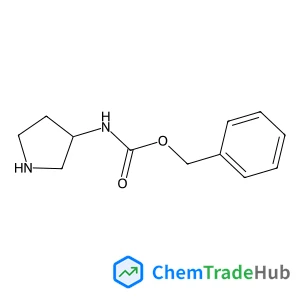
Benzyl (3S)-3-pyrrolidinylcarbamate
CAS Number: 176970-12-0
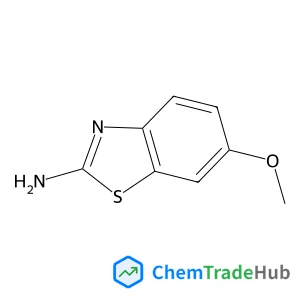
6-Methoxy-1,3-benzothiazol-2-amine
CAS Number: 1747-60-0
![6-Bromo-1H-pyrrolo[3,2-b]pyridine-3-carboxylic acid](https://static.chemtradehub.com/structs/119/1190319-56-2-f551.webp)
![5-bromo-1H-pyrrolo[2,3-b]pyridine-6-carbonitrile](https://static.chemtradehub.com/structs/119/1190317-45-3-fdad.webp)
![6-Bromo-3-nitro-1H-pyrrolo[3,2-b]pyridine](https://static.chemtradehub.com/structs/119/1190311-94-4-ed82.webp)
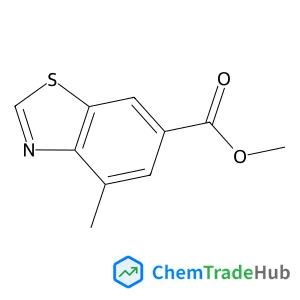
![2-Methyl-2-propanyl N-[(3S)-3-pyrrolidinyl]glycinate](https://static.chemtradehub.com/structs/169/169750-01-0-45f3.webp)
![2-Iodo-1-(phenylsulfonyl)-1H-pyrrolo[2,3-b]pyridine](https://static.chemtradehub.com/structs/282/282734-63-8-ba9c.webp)
Other Suppliers for 6-Chloro-4-iodo-1H-indazole






Basic Information
Molecular Formula
C7H4ClIN2
Molecular Weight
278.48 g/mol
Physical Properties
Density
2.156
Chemical Identifiers
SMILES
C1=C(C=C(C2=C1NN=C2)I)Cl
InChIKey
CZQKFAYNSDDHKA-UHFFFAOYSA-N
Database References
MDL Number
MFCD07781383
FAQ
6-Chloro-4-iodo-1H-indazole (CAS: 885519-56-2) is subject to the Globally Harmonized System of Classification and Labelling of Chemicals (GHS), REACH regulations, and FDA/EPA requirements. GHS classifies it as a hazardous substance based on its physical and chemical properties. REACH requires manufacturers and importers to register the substance if it exceeds the threshold quantity. FDA and EPA regulations apply to the use and disposal of the compound to ensure environmental safety and human health protection.
Alternatives to 6-Chloro-4-iodo-1H-indazole (CAS: 885519-56-2) include other heterocyclic compounds such as 1H-indazoles with different substituents. Common alternative reagents include chloroiodo compounds, which can be used to synthesize similar functionalized indazoles. These alternatives offer similar reactivity but with different physical and chemical properties, making them suitable for various applications in organic synthesis.
The market for 6-Chloro-4-iodo-1H-indazole (CAS: 885519-56-2) is growing due to its potential use in pharmaceuticals and agrochemicals. Research trends focus on exploring its efficacy in treating various diseases and pests. However, the compound's high cost and potential toxicity pose challenges. Market trends indicate increasing demand for safer and more cost-effective alternatives, driving innovation in synthetic methods and applications.
Waste containing 6-Chloro-4-iodo-1H-indazole (CAS: 885519-56-2) should be collected in proper containers and managed according to hazardous waste regulations. Incineration is a common method for disposal, but it should be done in a controlled environment to minimize environmental impact. Alternatively, professional waste disposal services can handle this waste safely. Environmental protection precautions include ensuring containment to prevent spills and using personal protective equipment during handling and disposal operations.
Safety Notice
Please verify product specifications and safety data before use. Contact the supplier for detailed safety information.
Always follow proper handling procedures