



AD
2-Phenylacetohydrazide(CAS: 937-39-3)
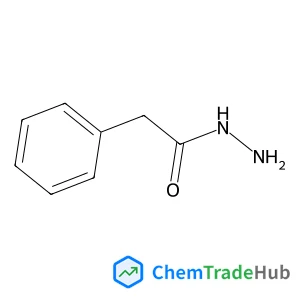
CAS Number
Related Products
![(2R)-2,7,8-Trimethyl-2-[(4R,8R)-4,8,12-trimethyltridecyl]-6-chromanol](https://static.chemtradehub.com/structs/54-/54-28-4-155c.webp)
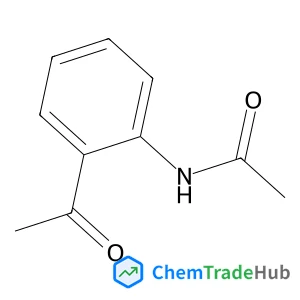
N-(2-Acetylphenyl)acetamide
CAS Number: 5234-26-4
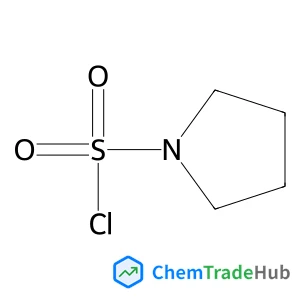
1-Pyrrolidinesulfonyl chloride
CAS Number: 1689-02-7
![3-Hexyl-2-[3-(3-hexyl-1,3-benzoxazol-2(3H)-ylidene)-1-propen-1-yl]-1,3-benzoxazol-3-ium iodide](https://static.chemtradehub.com/structs/532/53213-82-4-e483.webp)

4-Bromoaniline hydrochloride (1:1)
CAS Number: 624-19-1


4-Bromo-1-isopropyl-1H-pyrazole
CAS Number: 313735-62-5
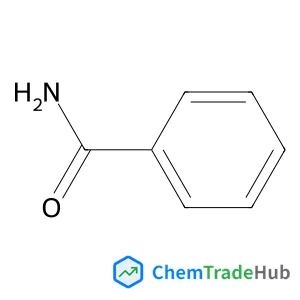

Other Suppliers for 2-Phenylacetohydrazide







Basic Information
Molecular Formula
C8H10N2O
Molecular Weight
150.18 g/mol
Physical Properties
Melting Point
115.0 to 119.0 deg-C
Boiling Point
271.72°C (rough estimate)
Density
1.1392 (rough estimate)
Flash Point
174.5 °C
Chemical Identifiers
SMILES
C1=CC=C(C=C1)CC(=O)NN
InChIKey
FPTCVTJCJMVIDV-UHFFFAOYSA-N
Database References
MDL Number
MFCD00007612
FAQ
2-Phenylacetohydrazide (CAS: 937-39-3) falls under the scope of several regulatory guidelines. It is classified according to the Globally Harmonized System of Classification and Labeling of Chemicals (GHS), which includes specific health and environmental hazards. In the European Union, it is regulated under REACH, requiring registration for substances above 1 tonne per year. Additionally, it may be subject to FDA and EPA regulations in the United States, focusing on its use in medical and agricultural products, respectively.
Several alternatives to 2-Phenylacetohydrazide (CAS: 937-39-3) exist in synthesis, including other hydrazides and analogous compounds. For instance, 2-Phenylacetohydrazide itself is an isomer of 2-acetylbenzohydrazide. Common alternative reagents include anilines, hydrazones, and other aromatic hydrazides. These alternatives can provide similar or superior functionalities depending on the specific application.
The market for 2-Phenylacetohydrazide (CAS: 937-39-3) is primarily driven by its use in pharmaceuticals, pesticides, and as an intermediate in chemical synthesis. Recent research trends highlight its potential in drug discovery and development, particularly as a chiral auxiliary. Market dynamics indicate growing interest in its use as a versatile reagent, with trends pointing towards increased demand in emerging markets and the exploration of new applications.
Waste containing 2-Phenylacetohydrazide (CAS: 937-39-3) should be managed according to local regulations and safety standards. Collection should be done in leak-proof containers, and storage should ensure separation from incompatible materials. For disposal, professional waste disposal services are recommended. Incineration is a common method, but it must be done in an environmentally controlled incinerator to prevent emissions. Additional precautions include using appropriate personal protective equipment and ensuring proper documentation of waste handling to meet regulatory requirements.
Safety Notice
Please verify product specifications and safety data before use. Contact the supplier for detailed safety information.
Always follow proper handling procedures
