



AD
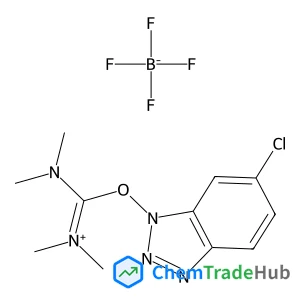
TCTU; 1-(Bis-dimethylamino-methylene)-5-chloro-3-oxy-1H-benzotriazol-1-ium Tetrafluoroborate(CAS: 330641-16-2)
CAS Number
Related Products

Ethyl 3-ethoxypropanoate
CAS Number: 763-69-9


trans-Cinnamic acid
CAS Number: 140-10-3
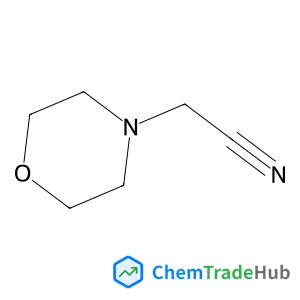
4-Morpholinylacetonitrile
CAS Number: 5807-02-3
![4-{[(2-amino-4-hydroxypteridin-6-yl)methyl]amino}benzoic acid](https://static.chemtradehub.com/structs/119/119-24-4-8084.webp)


4,6-Dichloro-2-phenylpyrimidine
CAS Number: 3740-92-9


Hexacosanoic acid
CAS Number: 506-46-7
Other Suppliers for TCTU; 1-(Bis-dimethylamino-methylene)-5-chloro-3-oxy-1H-benzotriazol-1-ium Tetrafluoroborate




Basic Information
Molecular Formula
C11H15BClF4N5O
Molecular Weight
355.53 g/mol
Physical Properties
Melting Point
201-205 ºC
Chemical Identifiers
SMILES
[B-](F)(F)(F)F.CN(C)C(=[N+](C)C)ON1C2=C(C=CC(=C2)Cl)N=N1
InChIKey
GBGVQFJZGHBZMC-UHFFFAOYSA-N
Database References
MDL Number
MFCD08461912
FAQ
TCTU (CAS: 330641-16-2) is subject to various regulatory guidelines. It falls under the classification of a hazardous substance under the GHS (Globally Harmonized System of Classification and Labelling of Chemicals). Specific requirements include proper labelling, storage, and handling procedures. Additionally, REACH regulations require manufacturers and importers to register TCTU if it is produced or imported in quantities over one tonne per year. FDA and EPA guidelines also apply, particularly for its use in pharmaceuticals and environmental applications.
There are several alternatives to TCTU (CAS: 330641-16-2) that can be used in synthesis, depending on the specific needs of the reaction. Some common alternatives include triphenylphosphine oxide, 1,3-dicyclohexylcarbodiimide (DCC), and other azole derivatives. These alternatives may offer similar functionality but differ in reactivity and compatibility with other reagents.
The market for TCTU (CAS: 330641-16-2) is showing steady growth due to its applications in the synthesis of various pharmaceuticals and materials. Research trends indicate increasing interest in its use as a coupling agent in organic synthesis. The trend is also towards developing safer and more environmentally friendly alternatives, reflecting a broader shift in the chemical industry towards sustainability and regulatory compliance.
Waste containing TCTU (CAS: 330641-16-2) should be disposed of according to strict environmental and safety regulations. Proper waste collection methods should be employed, and the waste should be neutralized before disposal. Incineration is one common method, but it must be done in a controlled environment to prevent the release of harmful substances. Alternatively, professional waste disposal services can handle the waste safely, ensuring compliance with regulatory standards and minimizing environmental impact.
Safety Notice
Please verify product specifications and safety data before use. Contact the supplier for detailed safety information.
Always follow proper handling procedures

Contact Information
Contact Person
Anpel Experimental
shanpel@anpel.com.cn
Mobile
15618996369
Visit Website
https://www.anpel.com.cn/Address
No. 59 Yehé Road, Songjiang District, Shanghai